
A J1772 plug fits exactly two kinds of inlet: a plain J1772 (Type 1) inlet, and the upper section of a CCS1 inlet, where it delivers AC charging only. It does not fit a CCS2 inlet, whose top section is the different Type 2 shape, and it does not fit a NACS inlet at all. Whether a plug fits is a question of shape first and charging type second — this is the full map.
Key Takeaways
- A J1772 plug fits two inlets: plain J1772, and the AC section of a CCS1 inlet.
- It never delivers DC — the CCS1 inlet’s DC pins need the full combined plug at a station.
- CCS2 and NACS inlets are different shapes; no fit, and the answer (if any) is an approved AC adapter.
- Adapter direction matters: the JT02 bridges a NACS AC charger to a J1772 car, AC only.
The Fit Map
| Inlet on the car | Does a J1772 plug fit? | What you get |
|---|---|---|
| J1772 (Type 1) inlet | Yes — its native fit | AC charging: Level 1 or Level 2, at the rate the charger and the car’s onboard charger allow |
| CCS1 inlet | Yes — into the upper section | AC charging only. The two DC pins below stay unused; DC fast charging needs the full CCS1 plug |
| CCS2 inlet | No | The top section is Type 2, a different shape. That car AC-charges with a Type 2 plug and fast-charges with a CCS2 plug |
| NACS inlet | No | A different, smaller connector that carries AC and DC through the same pins. A J1772 plug has no way in |
| CHAdeMO inlet | No | A separate, DC-only inlet. A car with one has a second inlet (J1772 or Type 2) for AC charging |
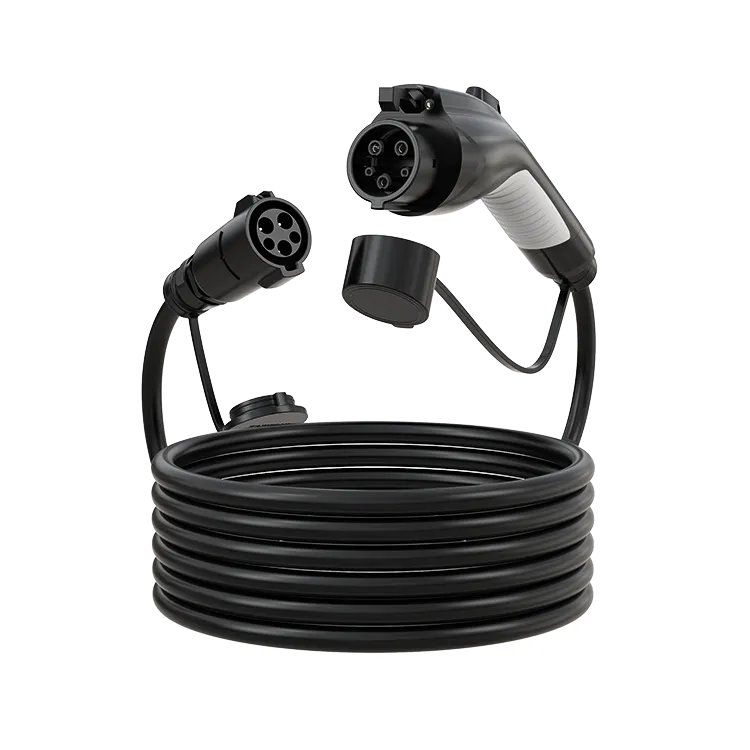
Why the CCS1 Fit Works — and Where It Stops
CCS1 was designed as J1772 plus two DC pins, so the combined inlet keeps the J1772 socket geometry on top. A J1772 plug seats, latches and signals exactly as it does in a plain inlet; the car charges on AC and converts it on board, as our explainer on whether J1772 works with CCS sets out. The limit is absolute, though: the plug touches no DC pins, so no adapter-free trick turns it into fast charging. The U.S. DOT classes make the gap plain — Level 2 AC runs at 7–19 kW (about 10–20 miles of range per hour), DC fast charging at 50–350 kW. And the fit is one-directional: the larger CCS1 plug will not go into a plain J1772 inlet.
The CCS2 “no” surprises some drivers, because CCS1 and CCS2 are siblings. But each was built on its own region’s AC plug — J1772 in North America, Type 2 in Europe — so a J1772 plug meets a different shape on a European car. If you are weighing the connectors themselves, what J1772 is covers the plug’s design, and whether EV chargers are universal covers the wider picture.
When the Answer Is an Adapter Instead
- J1772 charger, NACS car: the plug does not fit, but the job is AC charging, so the question becomes an adapter question — use only an adapter the car maker approves for AC charging, and check its rating against your charger.
- NACS charger, J1772 car: this is the direction EVDANCE’s JT02 NACS-to-J1772 adapter serves (AC only, up to 80 A, IP65) — it lets a J1772 car use NACS AC chargers such as destination and home units. It is never for DC fast charging or Superchargers.
- Any DC mismatch: DC adapters are a separate, stricter category — only automaker-approved adapters, and only where the station is open to the car. Never assume an AC adapter’s logic carries over.
For everyday charging, the worked example is simple: a J1772 portable such as the EV-AC04001U (40A, 9.6 kW, NEMA 14-50P, SAE J1772, IP66, 25 ft) charges both kinds of car it fits — the plain J1772 inlet and the CCS1 inlet’s AC section — at whatever the car’s onboard charger accepts.

Frequently Asked Questions
Can I fast-charge a CCS1 car with my J1772 home charger?
No. Plugged into a CCS1 inlet, a J1772 charger delivers AC at Level 2 rates. Fast charging needs the full CCS1 plug at a DC station, which engages the two DC pins your home plug never touches.
My car has two sockets. Which one takes the J1772 plug?
The round Type 1 socket. Cars with a separate CHAdeMO inlet carry it alongside their AC inlet; the J1772 plug belongs in the AC one. Combined-inlet (CCS1) cars have a single socket — the plug goes in the top section.
Does a Tesla take a J1772 plug?
Not directly — Tesla cars use the NACS inlet, so a J1772 charger needs the AC adapter route above. The mirror question, whether a Tesla can use J1772 chargers, covers that car’s side of it.
Related Reading
- Does J1772 Work With CCS? CCS Connectors Explained
- What Is J1772? The North American EV Plug Explained
- Can a Tesla Use J1772 Chargers?
- Are EV Chargers Universal?

