
No published list can settle whether a specific car has a native NACS port: fitment changed by model year and trim, so any list is out of date the day it appears. Three checks settle it — the maker’s documents for that exact model year, the inlet behind the charge-port door, and whether the car reaches NACS chargers directly or only through an adapter.
Key Takeaways
- No reliable model list exists: NACS fitment changed by model year and trim, so lists date immediately.
- Verify per car: the maker’s spec for the exact year, then the inlet itself.
- “NACS compatible” often means adapter access only; adapter DC use needs maker approval for that car and a station open to it.
Why “Which EVs Use NACS?” Has No List-Shaped Answer
NACS spread car by car, not brand by brand: the same model could carry a CCS1 inlet one year and a NACS inlet the next, sometimes both in one year across trims. Fitment is a property of one car with one build date, confirmed in that car’s own documents — the background is in our explainer on whether the Tesla charger is NACS.
Check One: The Maker’s Documents for the Exact Model Year
Start with paperwork:
- The specification sheet for that model year. “NACS inlet” (or “J3400”) means native; “CCS1” or “Combo 1” means the older two-part inlet.
- The owner’s manual for that year. Its charging chapter names and pictures the built-in inlet.
- The window sticker or build sheet on a used car. It follows the individual car; a model-range brochure does not.
Treat seller language carefully. “NACS compatible” and “NACS ready” often mean only that an adapter exists for the car. The question that cuts through it: “Is the inlet itself NACS, or does the car use an adapter?”
Check Two: Look at the Inlet
Open the charge-port door and the hardware answers directly. A native NACS inlet is one small, compact socket with nothing beneath it. A CCS1 inlet is visibly two-part: a round upper section with two large openings below it. The full three-way recognition picture is in our comparison of Type 2 vs J1772 vs NACS connectors.
| What you find | What it means | How the car charges |
|---|---|---|
| Maker’s spec for the exact year says NACS / J3400 | Native NACS port | NACS plugs directly, AC and DC; J1772 chargers via a directional adapter |
| Spec says CCS1, and an adapter is offered | Not native — adapter access | Charges on its own inlet; NACS stations via the adapter, conditions below |
| Listing says only “NACS compatible” | Unverified either way | Ask which of the two situations above applies |
Check Three: Native Is Not the Same as Adapter Access
The two situations give the driver different maps. A native car plugs straight into a NACS charger. A CCS1 car reaches a NACS station through an adapter, under conditions a native car never meets:
- For DC fast charging, the car maker must approve third-party DC adapter use for that exact car, and the station must be open to that car — both conditions, every time.
- For AC charging, an AC adapter is the bridge — a different, simpler part, AC only.
- The car’s own inlet never changes. At a CCS1 station the adapter comes off and the car charges as it always did — see whether EV charging adapters are safe.
Equipment Matched to What You Found
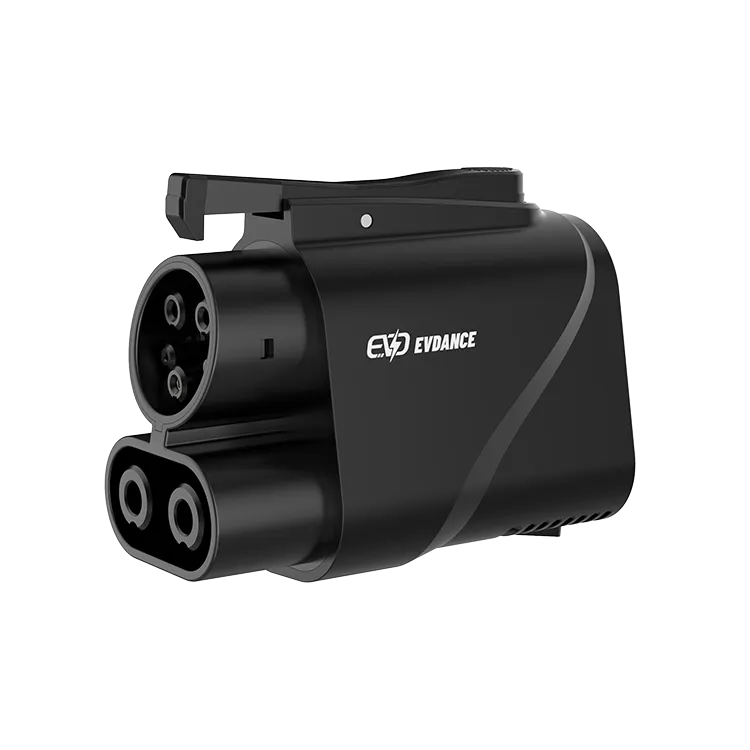
If the checks say native, the car takes NACS chargers directly: the EV-ACS4005T is a 40 A NACS portable charger (9.6 kW, NEMA 14-50P, adjustable 16/24/32/40 A, IP66, 25 or 28 ft cable). A J1772 car uses the JT02 (NACS-to-J1772, AC, up to 80 A, IP65) at NACS AC chargers — AC only, never a Supercharger. A CCS1 car whose maker approves a DC adapter uses the JT08 (up to 500 A / 1000 V, IP66) at NACS DC stations open to that car.

Frequently Asked Questions
My car came with an adapter in the trunk. Is it a native NACS car?
No. A supplied adapter equips the car to reach NACS chargers from a different inlet. The port is whatever the spec sheet and the inlet show — and the adapter route keeps its conditions, including maker approval for DC use.
Does a NACS port change which home charger I buy?
Yes — the plug has to match the inlet: a native NACS car wants a NACS home charger, a J1772 car wants J1772 equipment at home. The reverse journey is covered in whether a Tesla can use J1772 chargers.
Can a CCS1 car be converted to a native NACS port?
Not as a routine change: the inlet is built into the car, makers do not offer conversion as a standard service, and adapters are the supported route where the maker approves them. Anything beyond that is your maker’s call, in writing.
Related Reading
- Is the Tesla Charger NACS? NACS, J3400 and Adapters Explained
- Type 2 vs J1772 vs NACS: Which EV Charger Connector Does Your Market Need?
- Can a Tesla Use J1772 Chargers?
- Are EV Charging Adapters Safe?

