
Because “AC only” describes what the part was built to connect. An AC adapter maps the contacts of one AC plug shape onto another. DC fast charging needs a different contact set, a far higher current class, and a different kind of session — none of it inside an AC adapter. It is scope, not a locked feature: the DC job belongs to a different part.
Key Takeaways
- DC needs three things an AC adapter does not contain: the DC pin pair, a far higher current class, and a place in the DC session.
- On AC-only cars the limit is in the car as well: a plain J1772 inlet has no DC openings for any adapter to reach.
- “AC only” is a job description, not a defect — the DC job is a separate part with its own conditions.
Reason One: The Contacts Are a Different Set
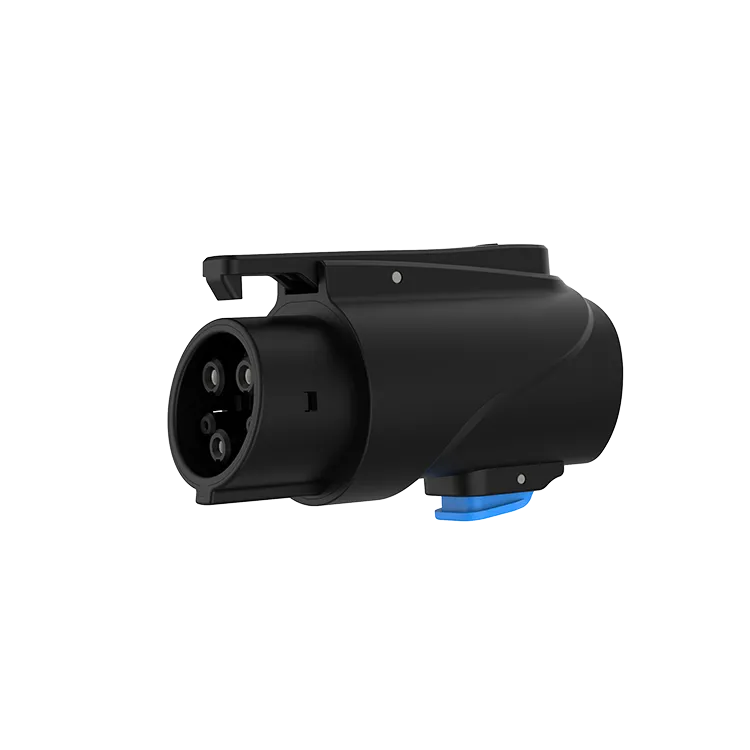
An AC connection is one arrangement of contacts: AC power contacts plus the small signal contacts, NACS-shaped on one side, J1772-shaped on the other. An AC adapter is a mapped path between those two sets — nothing else is in the part.
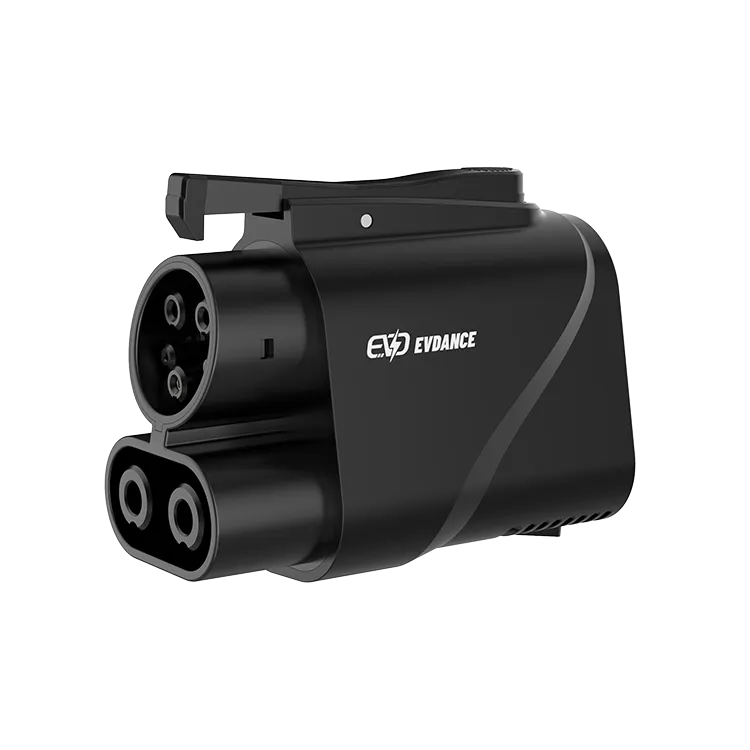
DC fast charging adds its own heavy contact pair — the two large pins below the J1772 section that make a CCS1 connection, as whether J1772 works with CCS explains. An AC adapter has no contacts there. And on many cars the limit is set before any adapter is chosen: a plain J1772 inlet has no openings for those pins at all, so no adapter could bring DC to it. The geometry decides at both ends.
Reason Two: The Current Class Is a Different Design
| Class | Stated ceiling (EVDANCE parts) | The session it was designed for |
|---|---|---|
| AC adapter | Up to 80 A, AC 250 V | Level 2 charging — 7–19 kW per U.S. DOT, paced by the car’s onboard charger |
| DC adapter | Up to 500 A | DC fast charging — 50–350 kW per DOT, delivered and controlled by the station |
A part is designed, built and rated for its class. The AC ceiling is generous for its own job and irrelevant to the other. Current is not the only difference, but it shows the pattern: not one product with a limiter fitted, but two designs starting from different sessions. Each standard’s purpose is covered in what J1772 is.
Reason Three: The Session Itself Is Different
In an AC session the charger supplies power and the car converts it, setting the pace. In a DC session the station has converted the power and controls delivery in a continuous negotiation with the car through the CCS connection. An AC adapter is a passive bridge inside the first kind of session; it has no place in the second, where everything depends on the DC pair it does not carry.
What “Adding DC” Would Actually Mean
It would mean a different part: a CCS1 face with the DC pins, a DC rating, and the two conditions governing DC adapter use — your car maker must approve a third-party DC adapter for your exact car, per the maker’s current document, and the station must be open to your car. That part exists as its own family. So “AC only” on a listing is not a missing feature or a cheaper tier; it is the part’s job in two words. The safety frame for choosing is in whether EV charging adapters are safe.
The Parts, on Stated Facts
The EVDANCE JT02 is the AC-only part: NACS to J1772, up to 80 A, AC 250 V, silver-plated copper terminals, IP65 — for home and destination AC chargers. The DC job belongs to the EVDANCE JT08 and the handled EVDANCE JT09, NACS-to-CCS1 DC adapters rated up to 500 A, IP66, used only where your car maker approves a third-party DC adapter for your car and the station is open to it.
Frequently Asked Questions
Can an AC adapter be modified or unlocked to carry DC?
No. There is nothing to unlock: the DC contacts and the DC rating are not in the part. Modifying a rated electrical part is not the route either — the DC job is a different part, bought as one.
If DC adapters exist, why sell AC-only ones at all?
Because most charging is AC — overnight at home, and at destination chargers — and the cars these adapters serve have J1772 inlets. For those cars at those chargers, the AC adapter is the complete answer.
My AC adapter is rated 80 A. Isn’t that plenty of current?
For AC, yes — it sits above what Level 2 chargers offer and cars accept, so the charger or car sets the rate. But current was never the only difference: the contact set and session differ too, and those are what “AC only” is about.
Related Reading
- What Is J1772? The North American EV Plug Explained
- Does J1772 Work With CCS? CCS Connectors Explained
- Are EV Charging Adapters Safe?
- Is the Tesla Charger NACS? NACS, J3400 and Adapters Explained

