
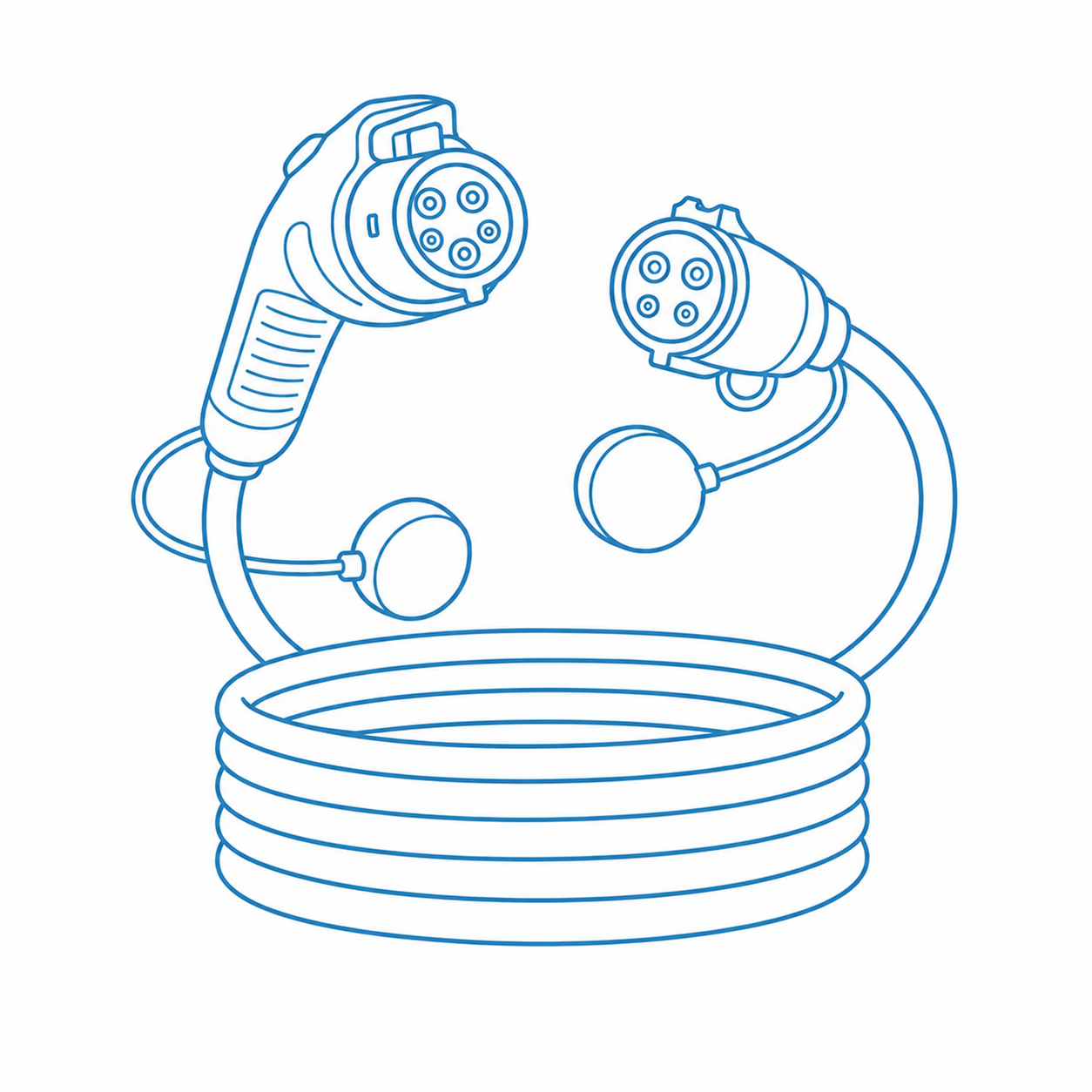
“Vehicle not detected” means the charger cannot tell that a car is connected at all. Before any charging negotiation, the charger registers the car’s presence through the connector; here, that first registration never happened, even though the plug feels plugged in. The cause sits on the short path between the connector face and the car’s inlet — most often the connector is not fully home. It is not dangerous: with nothing detected, no power flows.
Key Takeaways
- “Vehicle not detected” means the presence check itself failed — the car is not yet in the conversation, so settings cannot fix it.
- Start at the plug: reseat firmly, look for anything blocking the seat, inspect the cable run, and observe the car’s inlet.
- Never poke anything into the connector or inlet, and never force a connector that will not latch.
- If a second car is also invisible to your charger, stop: the charger is a service call.
Not Detected Is Not the Same as Waiting
The two messages sound alike but describe opposite ends of the plug-in sequence described in how home chargers work.
| What the charger reports | What it has registered | Where the problem sits |
|---|---|---|
| Vehicle not detected | Nothing — the presence check itself failed | The physical path: seating, contacts, cable, inlet, or the charger’s detection circuit |
| Waiting for vehicle | The car is present, but has not agreed to start | Settings and states: a sleeping car, a schedule, a limit already reached |
| Charging | Presence and agreement both complete | — |
That split decides your first move: settings cannot fix a detection failure. Start with the physical path.
The Cause Classes, From the Plug Inwards
- Connector not fully home. The most common cause. The plug looks inserted but the latch has not engaged, or the connector sits at a slight angle, so the presence contact never registers. Reseat it firmly, straight on, until the latch clicks.
- Something in the way. Dirt, grit, ice or a damaged seal can hold the plug a few millimetres short. Look for anything visible. Do not poke anything into the connector or the inlet; what you cannot clear by hand is a service item.
- Cable or connector damage. A cable crushed, cut or driven over can break the signal path while looking almost intact. Inspect the full run; the wear signs that end a cable’s life are covered in how long charging cables last.
- The car’s inlet. Bent, corroded or dirty contacts on the vehicle side break the same circuit. Observe only; cleaning or straightening contacts is the car maker’s service work, not owner work.
- The charger’s detection circuit. If the physical path is sound, the sensing inside the charger is the remaining class, and it is not user-serviceable. The isolation test below earns that conclusion.
The Isolation Test, and the Stop Line
Change one side at a time: a second car on your charger, or your car on a known-good charger — a public unit or a borrowed portable, as the charger-not-working checklist also suggests. Two results end the home checks:
- A second car is also not detected. Stop: with two cars invisible to it, the charger is a service call — record the message and call the manufacturer.
- Your car is not detected anywhere. The inlet or the car owns it; that is the car maker’s service route.
Portable chargers make this test easy to run. The EVDANCE EV-AC04001U 40A J1772 portable charger and the EV-ACS3210T 32A NACS portable charger both plug into a NEMA 14-50 outlet, so either can be carried to another car or outlet to split charger-side from car-side in minutes. Neither can repair a detection fault: a unit that fails on its own side goes to the manufacturer under warranty, not onto a workbench.

Frequently Asked Questions
Can weather cause a “vehicle not detected” message?
Yes, in one ordinary way: ice, packed snow or grit at the inlet can stop the connector seating fully — and an unseated connector is the most common cause of all. Clear what you can see, reseat firmly, and if the message survives, run the isolation test.
It worked yesterday with the same car. What changed?
Usually something small on the physical path: the connector not pushed the last few millimetres, debris picked up at a public charger, or cable damage that finally parted. Reseat first, inspect second; a fault that survives the isolation test belongs to whichever side it indicts.
Is it safe to keep unplugging and replugging?
Reseating while you test is fine. Forcing a connector that will not latch is not — force can bend the contacts you are trying to save. If a firm, straight plug-in does not register the car, stop and run the isolation test.
Related Reading
- Why Is My Electric Car Charger Not Working? A Driver’s Checklist
- How Long Do EV Charging Cables Last, and Can They Be Repaired?
- What Is J1772? The North American EV Plug Explained
- Why Won’t My EV Charger Disconnect? Stuck Connector Fixes

