
For most golf carts and low-speed vehicles, no — and you do not need one. Most of them charge with their own charger, matched to their battery, plugged into an ordinary household outlet. A car charger only comes into the picture if the vehicle happens to have a car-style charging inlet, which a minority of low-speed vehicles do. The inlet fitted to the vehicle, not the type of vehicle, is what decides.
Key Takeaways
- Most golf carts and low-speed vehicles charge from a household outlet with their own matched charger.
- A car charger works only when the vehicle has a car-style inlet, such as J1772 — the inlet decides, not the vehicle category.
- There is no standard adapter for the rest, and improvised connections should not be attempted.
A Car Charger Is Not a Battery Charger
The first thing to understand is that a home EV charger does not actually convert the power itself. As our explainer on how home EV chargers work sets out, the wallbox supplies AC power and handles the safety signalling, while the charger that does the conversion sits inside the car. A golf cart is arranged the other way round: its charging is handled by a charger built or specified for its own battery pack, usually the unit supplied with the vehicle, and that unit plugs into a normal wall outlet.
Because the two systems were designed separately, the plugs, the signals and the charging profile do not line up. That is also why there is no standard adapter that lets a cart use a car wallbox: the mismatch is electrical, not just the shape of the plug.

Which Vehicles Can Use One
| What you have | How it charges | Can it use a car charger? |
|---|---|---|
| A typical golf cart with its own charger | Its charger plugs into a household outlet | No — use the charger supplied for the cart |
| A low-speed vehicle with a J1772 inlet | Car-style AC charging | Yes — it charges like a small car |
| A vehicle with a maker-specific inlet or charging unit | Only its own specified charger | No |
If your vehicle does have a J1772 socket, it speaks the same language as most North American EVs, as our guide to what J1772 is explains. Everything else about charging it — the session, the rate, the safety checks — then works exactly as it does for a car.
How to Check What Yours Needs
- Look at the inlet. A round car-style socket is the giveaway. If the vehicle simply has a lead that ends in a household plug, it was never meant for a car charger.
- Read the label on the charger that came with it. The maker’s charger is matched to the pack’s voltage and chemistry; that unit is the specification.
- Check the manual’s charging section. If it names a car connector type, a car charger is an option. If it only describes its own charger, that is the whole answer.
What Not to Do
- Do not improvise adapters or leads to join equipment that was not designed to connect. A plug that can be forced together is not a charging standard.
- Do not try to replace a failed cart charger with a car wallbox. They are different kinds of equipment; replace it with the maker’s specified unit.
- If the inlet matches nothing car-shaped, ask the vehicle maker or a dealer for that brand. The question is about the vehicle, not about your home wiring.
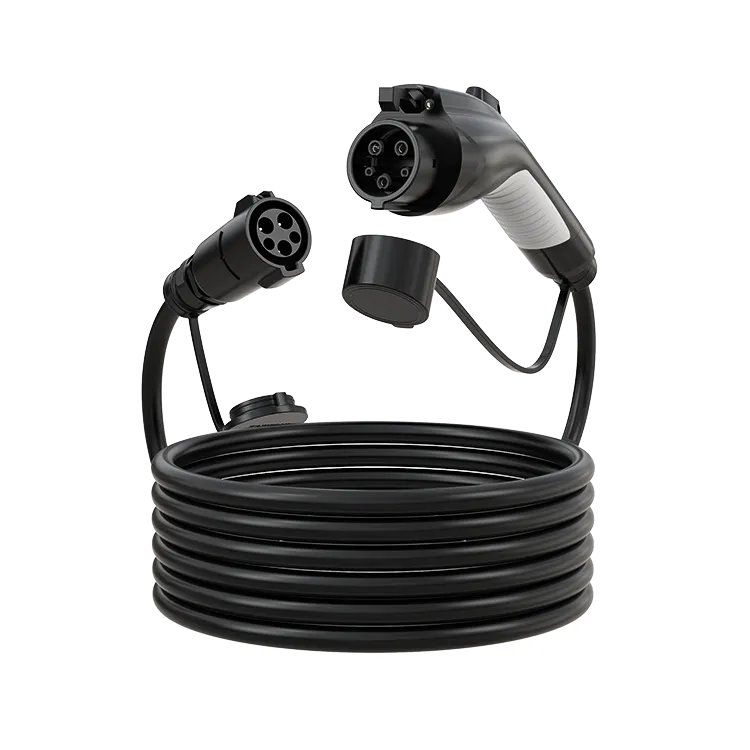
If your low-speed vehicle is one of the minority with a J1772 inlet, a portable car charger is the flexible way to feed it: the EVDANCE EV-AC04001U 40A J1772 portable charger plugs into a NEMA 14-50 outlet, and the vehicle simply draws what it accepts. For a full-size car, the same thinking applies at a larger scale, as our residential EV charging page sets out.
Frequently Asked Questions
Can I use an adapter to charge my golf cart at a car charger?
There is no standard adapter for that job, because the difference is in the charging system, not only the plug shape. Improvised leads are a safety risk and can damage the vehicle’s battery or charger.
Would a car charger charge my low-speed vehicle faster?
Only if it has a car-style inlet, and even then the vehicle sets the pace. Small packs fill quickly in any case: at Level 1 speeds of about 2–5 miles of range per hour, per U.S. DOT figures, a small battery is comfortably full overnight.
My cart’s own charger has stopped working. Can a wallbox take its place?
No. A wallbox is supply equipment for a car’s onboard charger, not a substitute battery charger. Replace the failed unit with the charger the vehicle maker specifies for that pack.
Related Reading
- How Do Home EV Chargers Work?
- What Is J1772? The North American EV Plug Explained
- Do I Need an EV Charger at Home?

