
Often, yes. Many public libraries have Level 2 chargers in their car parks, installed by the local authority or a charging network as part of the public charging provision for the area. You use one like any other public charger — park in the marked bay, plug in, start the session — with one catch to plan around: your access follows the car park, and the car park often follows the library’s opening hours.
Key Takeaways
- Many libraries host public Level 2 chargers in their car parks, run by a council or a network — not by the library.
- Level 2 adds roughly 10–20 miles of range per hour, so a library stop is a top-up, not a full charge.
- Access follows the car park’s hours; plan the session inside them.
- Payment, faults and support all belong to the operator named on the unit.
Why Libraries Have Chargers
Libraries are civic buildings on public land, usually with a car park, in the middle of the communities they serve. That makes them a practical place for a council or network to put public charging: the site exists, it is easy to find, and people already travel to it. The chargers are public infrastructure that happens to sit at a library, not a perk run by the library itself — so the staff inside generally cannot start a session for you, fix a faulty unit or extend your parking.
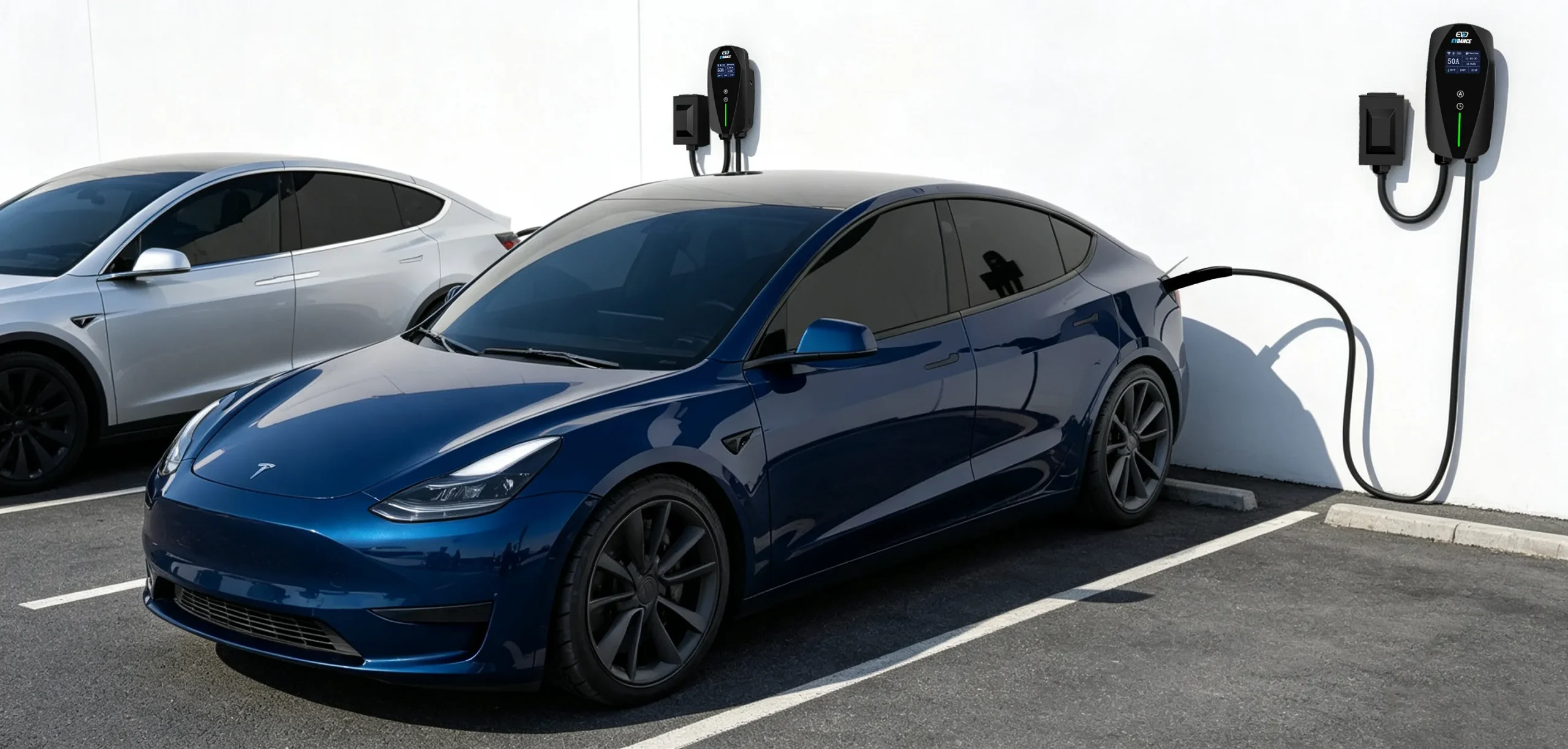
What a Library Charging Stop Looks Like
| Question | What to expect |
|---|---|
| Charger speed | Level 2 AC. Per U.S. DOT figures, Level 2 adds roughly 10–20 miles of range per hour — a useful top-up across a visit, not a full charge. |
| Access | Tied to the car park. If the car park locks when the library closes, your session and your exit are limited by those hours. |
| Payment | Set by whoever operates the post — typically a network app or card payment at the unit, as at other public chargers. |
| Who runs it | The local authority or a charging network. Faults go to the operator named on the unit, not to library staff. |
The session itself is the standard one described in our guide to how to use a public EV charger: connect, start, and stop the session properly before unplugging.
Before You Rely on One
- Find it on a map first. Not every library has chargers. Station locators list civic sites alongside commercial ones, as our guide to where to find EV charging stations explains.
- Check the closing time, not just the charger. A session that outlasts the car park helps no one. Match the charge you take to the visit you are making.
- Run the usual three checks. Connector, access and payment — the same checks as at any public charging station — before you settle in.
- Leave the bay when you are done. Civic chargers serve the whole neighbourhood; a finished car in the bay blocks the next driver.

The hardware in these car parks is typically a shared AC station rather than a rapid unit. EVDANCE’s EV-AC03201T is a dual-connector AC station sharing up to 43 kW across two cars, with app and RFID authorisation and OCPP 1.6J for the operator’s network — the pattern councils and networks use for public sites with longer stays. Site operators can compare it with the rest of the commercial EV charging range.
Frequently Asked Questions
Is library charging free?
Sometimes, but do not assume it. The operator sets the terms: some civic posts are free to use, others charge per kWh or per hour through an app or card. The unit or its listing shows which before you start.
Can I leave my car charging after the library closes?
Only if the car park stays open and the posted terms allow it. Many civic car parks close with the building, so plan your session inside opening hours and check the signs on site.
The library charger is not working. Who do I tell?
The operator named on the unit — usually a network with a support number or an app report button. Library staff did not install the post and cannot reset or repair it.
Related Reading
- How to Use a Public EV Charger (and How to Stop It)
- Where to Find EV Charging Stations: Maps, Apps and Tips
- Can You Use Any EV Charging Station?

