
If your car has a NACS inlet, the EV-ACT5006T plugs straight in — no adapter — and can supply up to 48A (11.5 kW) of Level 2 AC charging, with your car’s onboard charger setting the actual rate. For Rivian and Lucid owners the deciding factor is the model year: both brands built their earlier cars with J1772 inlets and have been fitting NACS inlets to newer models, so check the inlet on your car rather than going by the badge.
Key Takeaways
- NACS-inlet cars use the EV-ACT5006T directly, at up to 48A (11.5 kW).
- Rivian and Lucid divide by model year: earlier cars are J1772, newer ones NACS.
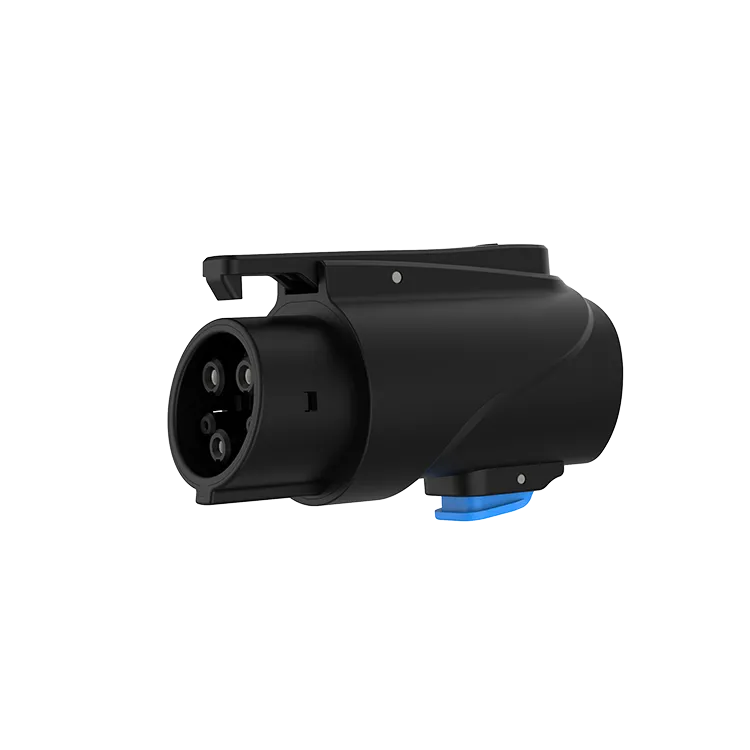
- J1772-inlet cars connect through a NACS-to-J1772 AC adapter such as the JT02, with the car maker’s approval.
- Your car’s onboard charger, not the wallbox, sets the actual charging rate.

The Two Inlets You Will Meet
NACS — now standardised by SAE as J3400, and explained in our guide to whether the Tesla charger is NACS — is the slim connector Tesla cars have carried for years and that other brands are adopting. The older North American inlet is J1772: a round connector for AC charging, which gains two large DC pins below it on cars fitted with CCS1. The background to the switch is in our explainer on charging a Tesla and the move to NACS in North America.
| Your car’s inlet | Works with the EV-ACT5006T? | How |
|---|---|---|
| NACS | Yes, directly | Plug the charger’s NACS connector straight in; up to 48A AC |
| J1772 | Yes, with an adapter | A NACS-to-J1772 AC adapter such as the JT02 (up to 80A) bridges the charger’s plug to your inlet |
| CCS1 | Yes, with the same adapter | Home AC charging uses the J1772 part of the inlet; the DC pins are for fast-charging stations, not a wall charger |
What Decides Your Charging Speed
The wall charger offers power; the car accepts it. Level 2 charging runs at 7–19 kW in the U.S. DOT’s typical bands, and the EV-ACT5006T sits in that band at up to 11.5 kW. A car whose onboard charger accepts less will simply charge at its own limit — the session works normally, just at the car’s pace. Compatibility is therefore two questions, not one: does the connector fit (the table above), and how much AC power does your car take (its manual or spec sheet has the figure).
The Adapter Route, Briefly
For a J1772-inlet Rivian or Lucid, the bridge is an AC adapter — the JT02 converts a NACS charger’s connector for a J1772 car and is rated up to 80A, above this charger’s 48A output. Two conditions matter with any adapter: it is for AC charging only, never for DC fast chargers, and the car maker’s approval decides which adapters it accepts — check before relying on one daily.
Frequently Asked Questions
Can a Rivian charge on the EV-ACT5006T?
Yes. A Rivian fitted with a NACS inlet plugs in directly. One with the earlier J1772 inlet charges through a NACS-to-J1772 AC adapter, subject to the car maker’s approval of the adapter.
Does it work with Lucid cars the same way?
The same inlet rule applies: NACS-inlet cars connect directly, J1772-inlet cars use the AC adapter. Check which inlet your model year carries — the connector shapes are visibly different.
Will every NACS car charge at the full 48A?
Only if its onboard charger accepts 11.5 kW. Cars with a lower AC limit charge at their own rate; the charger does not force power the car has not asked for.
Related Reading
- Is the Tesla Charger NACS? NACS, J3400 and Adapters Explained
- Charging a Tesla: Type 2 in Europe, NACS in North America
- Type 2 vs J1772 vs NACS: Which EV Charger Connector Does Your Market Need?

