
The 1.77-inch display on the EVDANCE EV-ACS4005T turns a charging session into three numbers: supply voltage, current drawn, and energy delivered. Together they answer the driver’s three questions: is power reaching the car, is it charging at the rate I set, and how much energy has the session added?
Key Takeaways
- Voltage tells you the supply is healthy — expect about 240 V on a NEMA 14-50 circuit.
- Current should match the step you set (16–40 A); a lower figure usually means the car is the limit.
- Energy in kWh is the costing number: multiply by your tariff — 30 kWh at the 18.31¢ average is about $5.49.
- A fault message is not a number to interpret — stop, and follow the manual or the manufacturer.

Voltage: Is Power Reaching the Car?
The voltage figure is the supply at the outlet; on the NEMA 14-50 circuit this charger is made for, expect about 240 V. Treat it as a health check, not a setting: it may move slightly under load. One that is far from what the same outlet usually shows — or that swings while nothing changes — is a question for a licensed electrician about the circuit, not a setting to adjust.
Current: Is It Charging at the Rate You Set?
The current figure is the live draw, in amps — the number you control. The EV-ACS4005T adjusts between 16, 24, 32 and 40 A, and at full rate the display should show a figure close to the step you selected:
| What you set | Expected display current | Power at about 240 V |
|---|---|---|
| 16 A | About 16 A | About 3.8 kW |
| 24 A | About 24 A | About 5.8 kW |
| 32 A | About 32 A | About 7.7 kW |
| 40 A | About 40 A | About 9.6 kW — the unit’s rating |
The power row is plain arithmetic — volts times amps, divided by 1,000 — and it confirms the 40 A setting really delivers the rated 9.6 kW. If the current settles well below the step you chose, the limit is usually not the charger: the session runs at the lowest figure in the chain, so a car that accepts less, or a charge limit set in the car, holds the number down from the first minute. How displays fit among charger features generally is covered in our wallbox features explainer.
Energy: What the Session Has Delivered
The energy figure counts kilowatt-hours delivered in the session — the number that connects charging to money and range. Two uses:
- Costing a session. Multiply the kWh by your electricity price. At the U.S. average residential price of 18.31 cents per kWh (EIA), a session delivering 30 kWh costs about $5.49; substitute your own tariff for your real figure.
- Judging a top-up. Compare the kWh delivered with what your car uses per mile, and you have the range the session bought.
When a Number Looks Wrong
Most odd readings have ordinary causes. Current that falls away late in a session is the car tapering as its battery fills — normal, and driven by the car. Current that never reaches your setting points to the car’s own limit. A session that stops early is worth the standard checks — connector seated, setting as intended, breaker untripped — which the driver’s checklist for a charger that is not working works through in order. One distinction matters: numbers are the session’s story, but a fault message on the screen is a different kind of signal — text telling you a protection has tripped. If one appears, or the same problem repeats, stop and follow the manual or call the manufacturer; EVDANCE’s standard warranty runs 3 years.
The Display in Daily Use
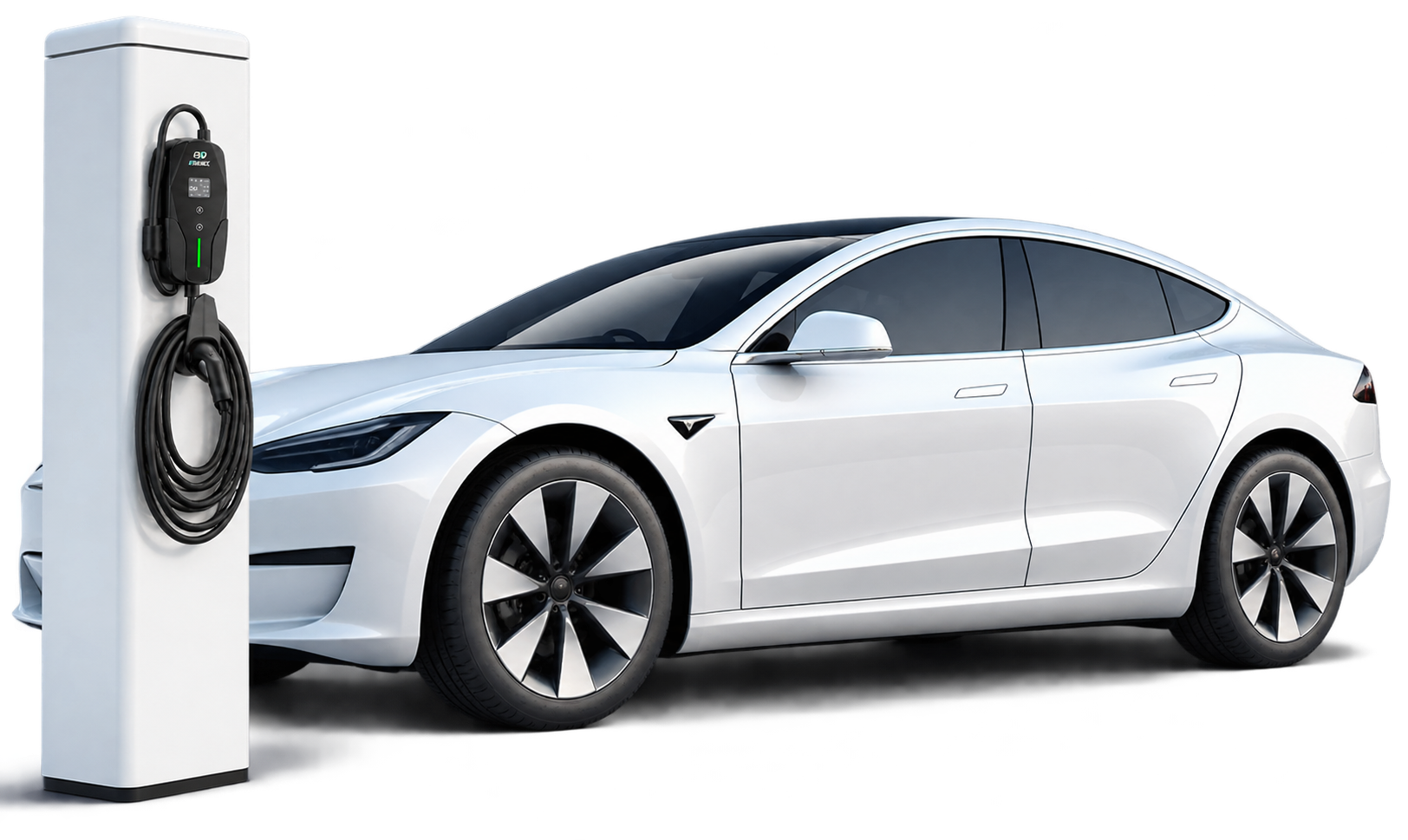
The reading happens on the unit itself: the EV-ACS4005T 40A NACS portable charger pairs its 1.77-inch display with a NEMA 14-50P plug, 16–40 A adjustment, a 25 or 28 ft cable and an IP66 body. The habit is a two-second glance — voltage normal, current at the step you set, energy counting up.
Frequently Asked Questions
Why does the current drop near the end of a charge?
The car asks for less as its battery fills, so a falling current late in a session is the car’s taper, not the charger weakening.
Why does the display show less than 40 A on the 40 A setting?
The session runs at the lowest limit in the chain: charger setting, circuit, and the car’s onboard charger. If the car accepts less than 40 A, or a limit is set in the car, the display shows that lower figure from the start.
Can I trust the energy figure for working out costs?
Yes — it is the energy the charger delivered in the session. Multiply it by your tariff for the session’s cost; your own bill, not the 18.31-cent national average, is the exact source.
Related Reading
- Wallbox Home Charger Features Explained: Display, Scheduling, and Load Management
- Do Portable EV Chargers Work? How Speed Depends on the Outlet
- Why Is My Electric Car Charger Not Working? A Driver’s Checklist
- Why Is My EV Charger Flashing Red?

