
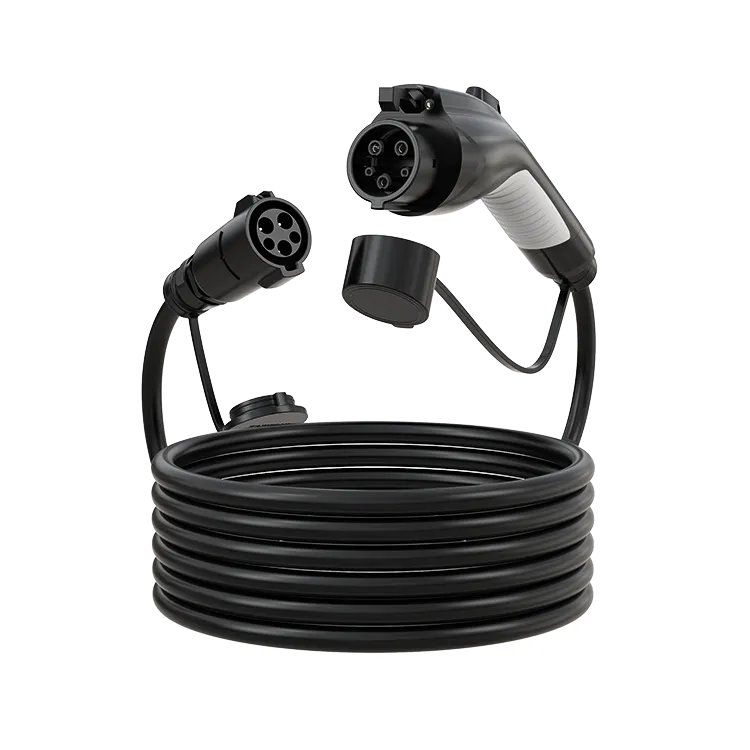
A backup charger is the unit that turns a failed wallbox from a stranded car into a minor delay. The EV-AC04001U works as that spare because it needs no installation: it plugs into a NEMA 14-50 outlet on a 50 A circuit and charges any J1772 car at up to 40 A (9.6 kW) — the same output class as many home wallboxes.
Key Takeaways
- A plug-in portable deploys in minutes: same 14-50 outlet, same 40 A class as many wallboxes.
- Its best day is the wallbox’s worst: a fault, a repair wait, a new home’s gap.
- Test it a few times a year and store it dry and loosely coiled; an untested spare is a hope, not a plan.
- It covers charging, not power: no outlet and no outage is fixed by a spare charger.
The Days It Earns Its Place
Home chargers do fail — a fault light that will not clear, a damaged cable, a unit waiting on an electrician or a warranty part. How long a household lasts without home charging depends on the car, the commute and the nearest public post, but the shape is always the same: the car works, the charging does not. A plug-in portable answers it the same evening, if an outlet exists:
| Situation | What the backup does | What must already be in place |
|---|---|---|
| Wallbox down, and it was a plug-in model | Charges tonight on the very outlet the wallbox used | The NEMA 14-50 receptacle on its 50 A circuit |
| Wallbox down, hard-wired model | Charges from any other suitable 14-50 in the home | An outlet on a 50 A circuit within cable reach |
| Between homes, or a rental gap before a wallbox is fitted | Full-speed charging from day one | A 14-50 outlet at the new place — confirm before you rely on it |
| A visiting J1772 EV or second car, while the main charger is busy or down | Keeps the second car moving without queueing for one working charger | An outlet the guest car can reach |
The repair window matters: chargers are durable but not immortal (see how long home EV chargers last), and a warranty process runs in days, not minutes. The backup covers those days.
A Spare Only Works If It Works
An untested spare is a hope, not a plan:
- Run it a few times a year. Charge for fifteen minutes; confirm the latch clicks and the car takes power. Faults found on a quiet Saturday are trivia; the same fault on the night the wallbox died is a crisis.
- Store it dry, loosely coiled, off the floor. The housing is rated IP66, so garage dust and damp are fine; a puddle or a driven-over cable is not.
- Glance at it when you check the main cable: latch, pins, jacket nicks — twice a year.
- Keep it where the failure finds you. By the outlet covers the home failure; in the car, it also covers arriving somewhere with no working charger.

What a Backup Does Not Cover
It charges one car at a time, at AC speed. It will not match a DC fast charger’s pace, and it cannot create an outlet: with no suitable 14-50, the fix is a licensed electrician, not the portable. Nor does it back up the house’s power — in an outage there is nothing to draw. Within those limits its coverage is real, because a portable charger’s speed depends on the outlet behind it, and a 14-50 on a 50 A circuit gives it the full 9.6 kW.
As a spare, the EV-AC04001U brings a 25 ft J1772 cable, an IP66 housing and a 3-year warranty of its own. It needs no circuit of its own and no electrician to deploy — exactly what a backup is for.
Frequently Asked Questions
My wallbox is new. Is a backup overkill?
It depends on how stranded a failure would leave you. A one-car household with a long commute and no public charger nearby has a strong case; a two-car household near public posts can wait for the repair. The question is the cost of a dead week, not the wallbox’s age.
Can the portable fully stand in for the wallbox during a long repair?
For most routines, yes: at 9.6 kW it covers overnight charging as a 40 A wallbox does. Only the largest batteries on a tight turnaround will miss a 48 A unit. It is a full-speed stand-in, not an emergency trickle.
Where should I keep it?
Dry, loosely coiled, off the floor — a shelf by the outlet for home failures, or in the car for cover away from home. Either way, test it a few times a year: the day you need it should not be the day you test it.
Related Reading
- Do Portable EV Chargers Work? How Speed Depends on the Outlet
- What Is a NEMA 14-50 Outlet? A Guide for EV Owners
- How Long Do Home EV Chargers Last?
- Can You Leave an EV Charging Overnight?

