
The plug is the half of the connection you own; checking it takes sixty seconds: the EV-AC04001U‘s NEMA 14-50P blades should be straight, evenly coloured and smooth, its face free of scorch marks, its body and cable entry uncracked. Dirt is the only finding you fix yourself, with a dry wipe. Anything heat has touched — tint, pitting, distortion — is a stop-use sign: a damaged plug is a manufacturer matter under the 3-year warranty, never a home repair.
Key Takeaways
- The plug check is sixty seconds: blades straight, evenly coloured and smooth; face unmarked; cable entry sound.
- Dirt is the only finding you fix yourself. Tinting, pitting, bends and scorch marks all mean stop.
- A damaged plug is never a home repair — part of the certified assembly, it goes the 3-year warranty route.
- Support the cable’s weight, pull straight, seat the plug fully: most plug wear is habit-shaped.
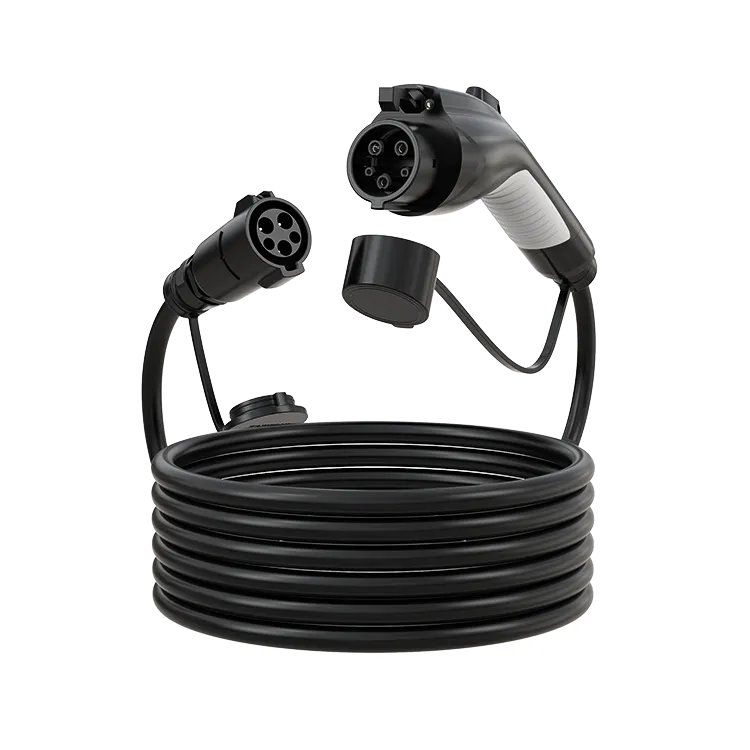
The Sixty-Second Check
- Blades straight. A bent blade no longer meets the receptacle’s contacts squarely, and every session levers against it. Note it — never straighten one with tools.
- Blades evenly coloured. Bright, uniform metal is normal; a straw or blue heat tint, or a dark patch on one blade, is heat history at that contact.
- Blades smooth. Run a fingertip along a cool, unplugged blade: pitting or a rough, sandpapery patch means arcing has been eating the surface.
- Face and body clean. Scorch marks, a smell of hot plastic, or cracks in the plug body end the inspection: stop there.
- Cable entry sound. The cable should leave the plug body without kinks, cuts, or the sheath pulling away.
- Fit feels firm. It should push fully home and sit snugly. A loose, sagging fit usually indicts the receptacle’s grip rather than the plug — that side belongs to an electrician.
| What you see | The reading | The action |
|---|---|---|
| Dust and ordinary dirt | Normal handling | Wipe it dry; carry on |
| One blade tinted or darkened | Heat has been at that contact | Stop using it; contact EVDANCE support |
| Pitting or rough patches on a blade | Arcing damage | Stop; support, and have an electrician check the receptacle |
| A bent blade | Mechanical damage | Do not force it in; stop; support |
| Scorch marks, cracks, a melted smell | Heat damage to the plug itself | Stop; support; an electrician checks the outlet before anything is plugged in again |
| The plug sits loose or sags | Usually the receptacle’s grip, not the plug | The electrician’s side — have the outlet inspected |
Habits That Keep the Plug Young
- Support the cable’s weight. A heavy cable hanging from the plug levers the blades against the contacts all night; a hook or holster near the outlet unloads it.
- Pull straight, by the body. Unplug with a straight pull on the plug body. A sideways yank on the cable bends blades a fraction at a time.
- Keep it off the floor between sessions. Capped or hooked up, the blades stay clean; grit on a dirty blade is tomorrow’s pitting.
- Seat it fully, every time. A half-seated plug concentrates the load on part of each blade — the exact recipe for a tinted blade later.
A cable carrying 40 A for hours feels slightly warm along its length — normal; our guide to whether EV charging cables get hot draws that line. Heat concentrated at the plug is different: information about a contact. For the outlet across from it, see whether a NEMA 14-50 outlet is a fire hazard — condition, not outlet type, decides.

Why There Is No Home Repair
The plug is part of the EV-AC04001U‘s sealed, certified assembly. Filing a pitted blade, bending one back, or swapping the plug yourself replaces a tested component with an untested one, and steps outside the unit’s cover — a real one: the charger carries a 3-year warranty, EVDANCE’s standard. So route findings by side: plug-side damage to EVDANCE, via the contact page; receptacle-side findings (a loose grip, a warm face, discolouration in the outlet) to a licensed electrician. Neither route is a toolbox job.
Frequently Asked Questions
How often should I check the plug?
A glance at unplugging costs nothing. Run the full check monthly, and whenever the charger moves to a different outlet — a new pairing deserves a fresh look at both sides.
One blade is darker than the others. Can I polish it clean and keep charging?
No. The tint is evidence of heat at that contact; polishing removes metal from an already damaged surface. Stop using the charger and ask support what they want to see — a photo of the blade is usually first.
The plug got hot once. Was it the plug or the outlet?
Read the pattern: hot at one outlet only points at that outlet’s contacts; hot at every outlet points at the plug. Either way, stop charging on the suspect pairing until the side at fault is checked — heat at a contact does not heal.
Related Reading
- Is a NEMA 14-50 Outlet a Fire Hazard for EV Charging?
- What Is a NEMA 14-50 Outlet? A Guide for EV Owners
- Do EV Charging Cables Get Hot?

