
The ACS1605PE needs a 16 A, five-pin CEE socket on a three-phase supply — identified by its five pins, its printed 16 A rating, and three phases behind it. The socket is only half of the requirement: behind it must sit a circuit that can carry 16 A per phase continuously for hours. Whether an existing circuit does that is a licensed electrician’s call — this article covers what to check and what to ask, not the figures, which are the electrician’s to specify.
Key Takeaways
- The matching socket is a 16 A, five-pin CEE outlet on a three-phase 230/400 V supply — identified by pins and printed rating, not colour.
- The 32 A class looks near-identical but does not mate; worn markings mean an electrician identifies the socket, not a guess.
- The circuit behind the socket must carry 16 A per phase continuously — dedicated circuit, protection and capacity are the electrician’s specification.
- Socket position is part of the same visit: it decides how much of the 7.6 m cable is usable reach.
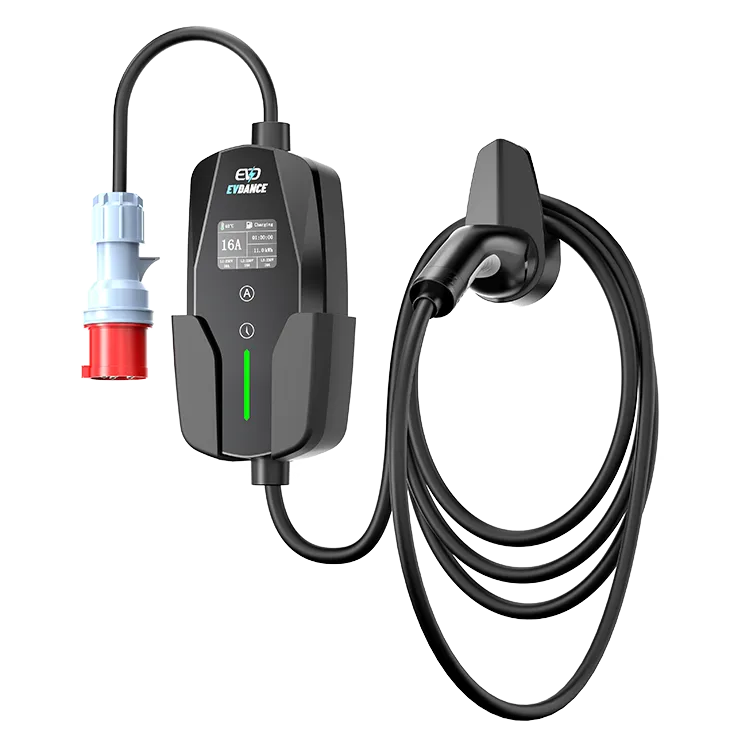
Identifying the Socket
| Check | What you are looking for |
|---|---|
| Pin count | Five pins/sockets — the three-phase CEE form this plug is built for |
| Marked current rating | 16 A printed on the socket itself — read it, do not judge by size or colour |
| Supply behind it | Three-phase, 230/400 V. A single-phase circuit cannot feed a three-phase charger |
| Form and colour | CEE industrial pattern; this class is commonly red. Colour is a convention — the printed rating is the identification |
The 16 A class is the smaller of the two three-phase CEE classes used for EV charging, and in many buildings it is already fitted for machinery — verify that on your own wall, socket by socket. The family as a whole is covered in our guide to CEE plugs, 16 A vs 32 A.
The Look-Alike Trap
The trap with this plug is that the wrong socket can look almost exactly right. A 32 A five-pin CEE socket is the same pattern in a larger size: same pin layout, commonly the same red, close enough at a glance to invite a push. The two classes do not interchange — the 16 A plug does not mate with the 32 A socket — and adapting connectors is not an option for a continuous load. Read the rating printed on the socket. A blue commando socket fails a different check: it is single-phase, whatever its rating. A household socket fails all three — see our article on charging from a normal socket for what those are for.
The Circuit Behind the Socket
A charger is a continuous load: it draws its full 16 A per phase for as long as the session runs, which can be hours. That is what separates the circuit conversation from “there is a socket on the wall”. The points to settle with a licensed electrician before the first session:
- Dedicated or shared? A circuit that also feeds machinery may have no room for a continuous 16 A per phase alongside it. Whether this charger gets its own circuit is the electrician’s judgement on your installation.
- Protection. The circuit’s protective devices are specified by the electrician under the rules they work to; the portable’s listing makes no claim that replaces that.
- Capacity. Three-phase supply at the building, and headroom alongside existing loads, confirmed at the board — not guessed from the socket.
- Position. Socket position decides how much of the unit’s 7.6 m cable is usable reach. Agree it with the car parked where it will actually charge.
None of this needs figures from an article — it needs one visit, after which the ACS1605PE plugs in and offers up to 11 kW, the car setting the actual rate.

Frequently Asked Questions
My red five-pin socket is marked 32 A. Will the 16 A plug fit?
No. The 16 A and 32 A CEE classes are different sizes and do not mate, and adapters between classes are not an answer for continuous loads. A 32 A socket matches a 22 kW charger; this one needs its own 16 A class. Ask an electrician about fitting one if the supply allows.
The socket looks right but its rating marking is worn away. What now?
Do not guess from colour or size. Have an electrician identify the socket and its circuit before the first session.
Can charging share a circuit with workshop machinery?
That is exactly the question for the electrician. Charging draws its full current continuously for hours, unlike most machinery loads, so the answer depends on the circuit’s capacity and what else runs on it. Many owners end up with a dedicated circuit; the decision belongs to the person who can measure yours.
Related Reading
- CEE Plugs Explained: Choosing 16A or 32A for a Three-Phase Portable EV Charger
- Portable EV Charger Types Explained: 10A, 16A, 32A and Three-Phase Models
- Single-Phase vs Three-Phase EV Charging: 7kW, 11kW and 22kW Explained
- Can I Charge an Electric Car From a Normal Socket?

