
The joint to inspect is the CEE connection itself: the ACS1605PE‘s five-pin plug, and the fixed socket it mates with. The inspection is visual and by feel — eyes on the pins, the plug housing and the socket face, then attention to how the two fit. Nothing is opened, cleaned out or adjusted. Anything bent, cracked, discoloured, loose or hot takes the charger out of service until assessed: by an electrician for the socket, by EVDANCE for the plug.
Key Takeaways
- Inspect the joint as a pair: the charger’s plug and the building’s socket, visually and by feel — nothing opened, nothing adjusted.
- The stop signs are bent or blackened pins, cracks, discoloration, a loose or sagging fit, growing heat or smell.
- A failed item means out of service until assessed — the socket by an electrician, the plug by EVDANCE.
- IP66 seals the charger; it says nothing about the socket’s condition.
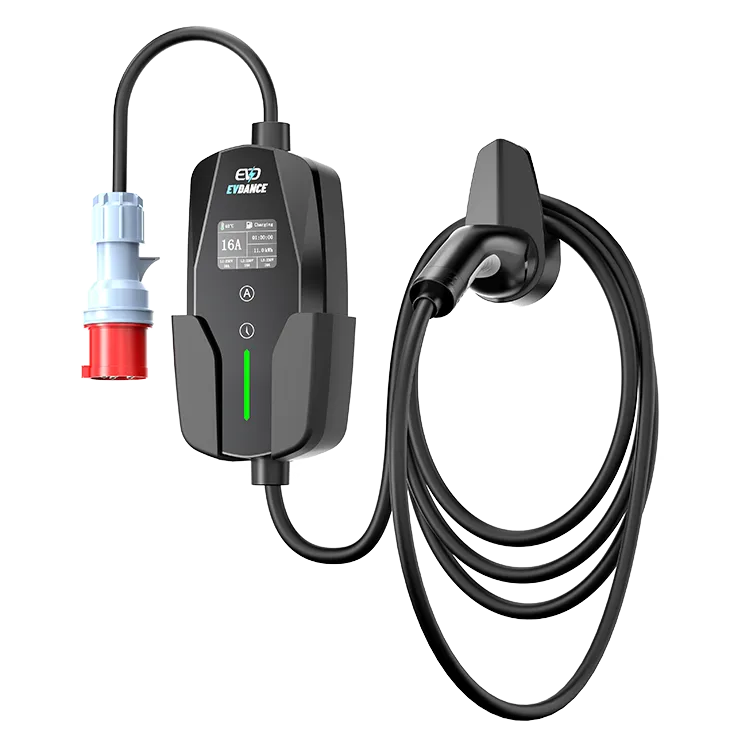
Why This Joint Earns Its Own Inspection
Most of a portable charger sits undisturbed during a session. The CEE joint is the part handled every time — pushed in, pulled out, knocked in a workshop, left in a socket other equipment also uses. And it carries the full 16 A for hours. EV charging is a continuous load, so a wearing joint gets none of the rest periods shorter loads allow. This piece is the routine that catches the wear first. Our guide to CEE plugs covers the plug classes themselves.
The Inspection, Item by Item
| Stop on the check | Healthy looks like | A stop sign looks like |
|---|---|---|
| Plug pins | Straight, clean, even in colour, all the same length | Bent, pitted, blackened or blued pins |
| Plug housing and cable entry | Housing whole; the cable sits firm and does not pull or twist loose | Cracks, a cable grip that gives, a cable that rotates |
| Socket face | Clean, undamaged, rating marking legible | Discoloration, a cracked or distorted face, a marking worn away |
| Socket openings, as visible | Clean, empty, the face flat around them | Debris lodged inside, damage around the openings |
| The fit, as you plug in | Firm, even resistance; the plug sits square and does not sag | Loose or wobbly, sagging, or needing force |
| After a session | At most slight, even warmth on sound equipment | A face clearly hot, heat that is growing, or any burning smell |
None of these is a “keep an eye on it” item. A joint does not heal between sessions. If you are deciding whether what you feel counts as a stop sign, stop — a professional check is cheap; guessing is not.

Two Halves, Two Owners
The plug is part of the charger. Damage there — bent pins, a cracked housing, a loose cable entry — is a support question for EVDANCE via our contact page; the unit carries a 3-year standard warranty. The socket is part of the building’s fixed wiring. Its contacts are not user-serviceable: this routine never includes cleaning, tightening or repairing them, and a worn socket is replaced by an electrician, not revived. One honest limit: the charger’s IP66 rating seals the charger against dust and water. It says nothing about the socket’s condition.
How Often, and What Happens on a Fail
- Every plug-in: the quick look — pins, housing, socket face, and the feel of the fit. It takes seconds.
- On a rhythm — monthly suits a unit in regular use: the slower look, in good light, including the cable entry and the after-session warmth check.
- After anything unusual: a dropped plug, a driven-over cable, a session that stopped early — inspect before the next use.
- On a fail: stop using the joint and keep the charger out of service until assessed. If the unit is shared, mark it or tell whoever is responsible the same day.
The same discipline applies at household scale, as our guide to charging from a normal socket sets out.
Frequently Asked Questions
Can I clean the plug pins or the socket contacts myself?
No. The socket’s contacts are inside fixed wiring and are not user-serviceable, and working on plug pins risks damaging the surfaces the joint depends on. Visible dirt or damage is a finding to report — to an electrician for the socket, to EVDANCE for the plug — not a job to take on.
The plug feels warm after a long session. Is that a fail?
Slight, even warmth on sound equipment under a long load can occur. The stop signs are different: growing heat, a face hot rather than warm, discoloration, smell, or a loose fit. If you cannot decide, stop and have the joint checked.
The socket is shared with workshop machinery. Does that change the routine?
It makes the routine matter more. Every extra plug cycle costs the contacts a little, and shared sockets accumulate them fastest.
Related Reading
- CEE Plugs Explained: Choosing 16A or 32A for a Three-Phase Portable EV Charger
- Can I Charge an Electric Car From a Normal Socket?
- Portable EV Charger Types Explained: 10A, 16A, 32A and Three-Phase Models

