
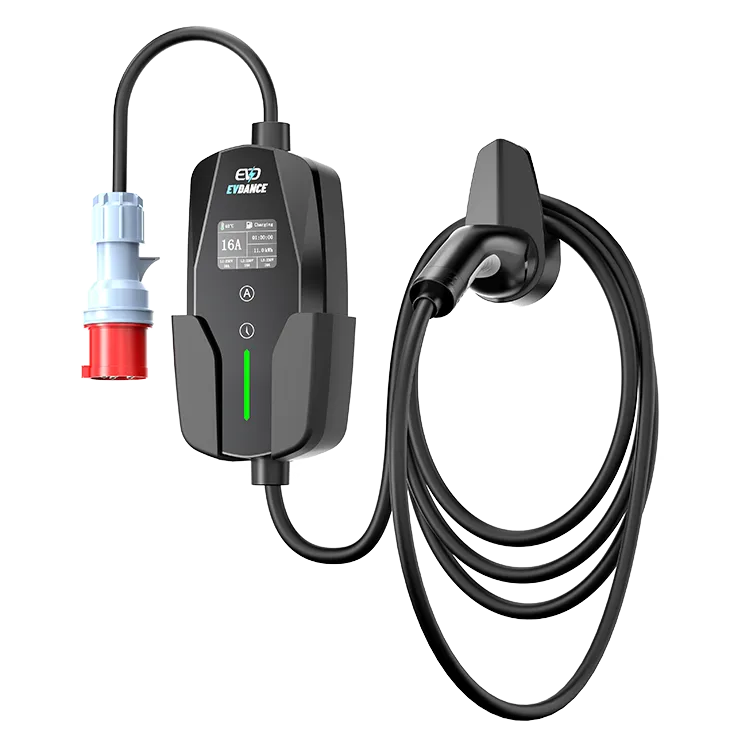
A driving school or small fleet that brings every car back to one base can run on one portable charger — if the base has a three-phase 16 A CEE socket and the cars take turns. The ACS1605PE delivers up to 11 kW, roughly 10 kWh into a battery per hour once losses are allowed for, which matches the school day: cars out on lessons, a short midday gap, and a long overnight window. What it does not provide is fleet software — the listing states no app, accounts or session logging for this model, so the rota is a written plan the operator keeps.
Key Takeaways
- One portable can serve a small fleet if every car returns to one base with a 16 A CEE socket.
- Plan by windows: a midday hour is worth about 10 kWh; the overnight window does the heavy lifting.
- The rota, the handover level and the log are the operator’s documents — this model lists no fleet platform.
- If the nightly energy sum exceeds the windows, add sockets or fixed points; one unit cannot stretch.
The School Day Is Two Windows
Fleet charging is usually planned as one overnight block. A driving school’s day has a second window: the midday pause between lessons. Neither needs speed; both need predictability. An example day:
| Window | Car on the charger | Energy added (example) |
|---|---|---|
| Midday gap, about 1 hour | The car with afternoon lessons | About 10 kWh |
| Early evening, about 2 hours | The second school car | About 20 kWh |
| Overnight, about 8 hours | The third car, or a pool car | Up to about 80 kWh — a near-full refill |
Read it conditionally: a car whose onboard charger accepts less than 11 kW takes energy at its own rate and needs longer. Plan each car’s window by the car, not the charger’s rating — the discipline our fleet depot charging guide applies to fixed chargers.
One Charger, Several Cars: The Rota Is the System
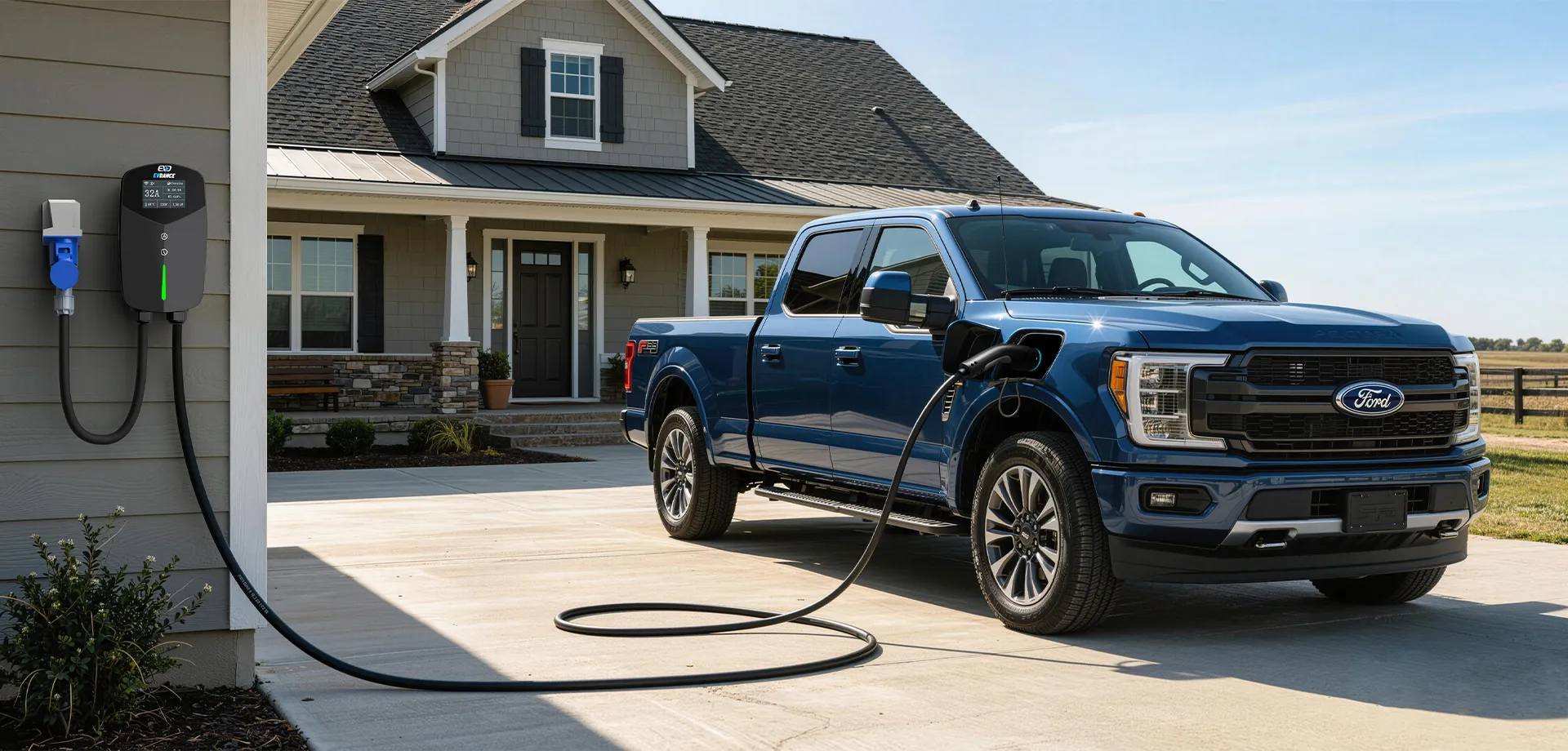
With one socket, only one car charges at a time, so the order matters more than the hardware. Operators who make this work write four things down:
- Tomorrow’s bookings first. The car with the earliest, longest day charges first overnight; the rota follows the diary, not habit.
- A named handover. Who moves the cars and plugs in at midday and at close of play — an unnamed job is an undone job.
- A handover level. How full each car should be at the start of its day is the operator’s policy. No product sets it for you.
- A simple log. Car, date, hours on charge — the operator’s notebook, because this model lists no logging of its own.
Access is equally plain: the listing names no card or account system, so whoever holds the cable can charge. At a locked yard that is fine; at an open base, user control means stepping up to fixed equipment — the EV-ACT3204E wallbox (RFID, app) or the dual-connector EV-AC03201T station (OCPP 1.6J).
When One Portable Stops Being Enough
Do the nightly sum: the day’s total energy ÷ about 10 kWh per hour is the charging time one unit must find inside your windows. If it exceeds the windows, no rota fixes it — the base needs a second socket and unit, or fixed points sized from nightly energy and dwell. And a car that must turn around in minutes is a DC fast-charging question, not an AC one.
The ACS1605PE at a Small Base
The ACS1605PE is an 11 kW three-phase portable: 16 A, 230/400 V, Type 2, CEE five-pin plug, a 1.77-inch display, IP66 sealing and a 7.6 m cable — long enough to reach across a small yard from the building’s socket. It moves between bases as the school grows, and leaves with you at the end of a lease — nothing was installed. EVDANCE, a Shenzhen manufacturer founded in 2011, supplies businesses directly (see the commercial charging page); the unit carries its 3-year standard warranty.
Frequently Asked Questions
How many cars can one ACS1605PE keep charged?
It depends on each car’s daily energy and your windows. The example rota covers three cars with moderate daily use. Do your own sum: total daily energy ÷ about 10 kWh per hour gives the charger-hours you must find each day.
Can instructors just plug in whenever a car is back?
They can — but unplanned plugging spends the midday window on whichever car arrived first, not the one with the next lessons. A one-line rota beats good intentions.
Does the charger record which car used how much, for our accounts?
No — this model’s listing states no session logging or user accounts. Keep your own log alongside the bookings diary, or choose RFID or OCPP equipment if per-car records are a requirement.
Related Reading
- Fleet Depot Charging: How to Size AC Chargers for Vans and Light Commercial Vehicles
- CEE Plugs Explained: Choosing 16A or 32A for a Three-Phase Portable EV Charger
- How Many kWh Does It Take to Charge an EV?
- Are Portable EV Chargers Worth It? Pros, Cons and Who Should Buy One

