
Yes — for a prep top-up, not a full charge. A compact 22 kW DC charger like the EV-RHDC30K-L adds roughly 20 kWh in an hour at a sustained rate, before tapering — enough to turn a low arrival into a deliverable car inside one prep window. DC charging bypasses the car’s onboard AC charger, so the prep speed does not depend on the car’s AC rating.
Key Takeaways
- Under an hour buys a top-up of roughly 20 kWh at 22 kW DC — a prep window, not a full charge.
- DC bypasses the car’s onboard AC charger, so prep speed ignores the car’s AC rating; its DC acceptance and taper set the real pace.
- A single connector means one car at a time: the prep rota, agreed once, is what keeps the lane moving.
- Pair the DC connector with AC points for display and overnight cars — each class does the job it suits.

Why DC Changes the Prep Calculation
On AC charging, the car’s onboard charger sets the pace: a demonstrator whose onboard charger accepts 11 kW preps at 11 kW, however powerful the wallbox is — our guide to how DC fast chargers work explains the conversion step that moves into the charger. A DC unit does that conversion itself and feeds the battery directly, so a car with a modest AC rating can still take a fast top-up, up to its own DC acceptance. The one condition is that acceptance: the charger’s rating is a ceiling, not a promise. The rate also tapers as the battery fills, which is why prep targets a top-up window — roughly the middle of the battery — rather than a charge to full.
The Prep Jobs, Window by Window
The figures are labelled arithmetic at a sustained 22 kW with about 10% allowed for losses, before taper. Read them as energy budgets for a job, not as charge-to-full times.
| Prep job | Typical window | Energy the window can add | What it achieves |
|---|---|---|---|
| Test-drive turnaround | About 30 minutes between customers | About 10 kWh | Replaces a test drive’s consumption and more |
| Delivery prep | About 45–60 minutes in the prep bay | About 15–20 kWh | A low arrival leaves at a presentable charge |
| Service handover top-up | About 30 minutes before collection | About 10 kWh | The car goes back with visibly more than it arrived with |
Our published dealership charging guide covers the wider install decision; this article is narrower — the one job where an hour is the whole budget.
One Connector Means a Queue, and the Queue Is Yours
The EV-RHDC30K-L is a single-connector unit: one car at a time. That is the honest limit behind the headline. Two cars needing prep inside the same hour cannot share it, so the dealership’s prep rota decides who gets the connector first — delivery cars with a booked handover ahead of demonstrators with an open afternoon. The rota is a document the sales and service desks agree once, not a negotiation at the cabinet each morning. Display cars are not this unit’s job — an AC point holds them ready for less, as our comparison of Level 1, Level 2 and DC fast charging sets out. The DC connector is for the car that arrived low and leaves soon.
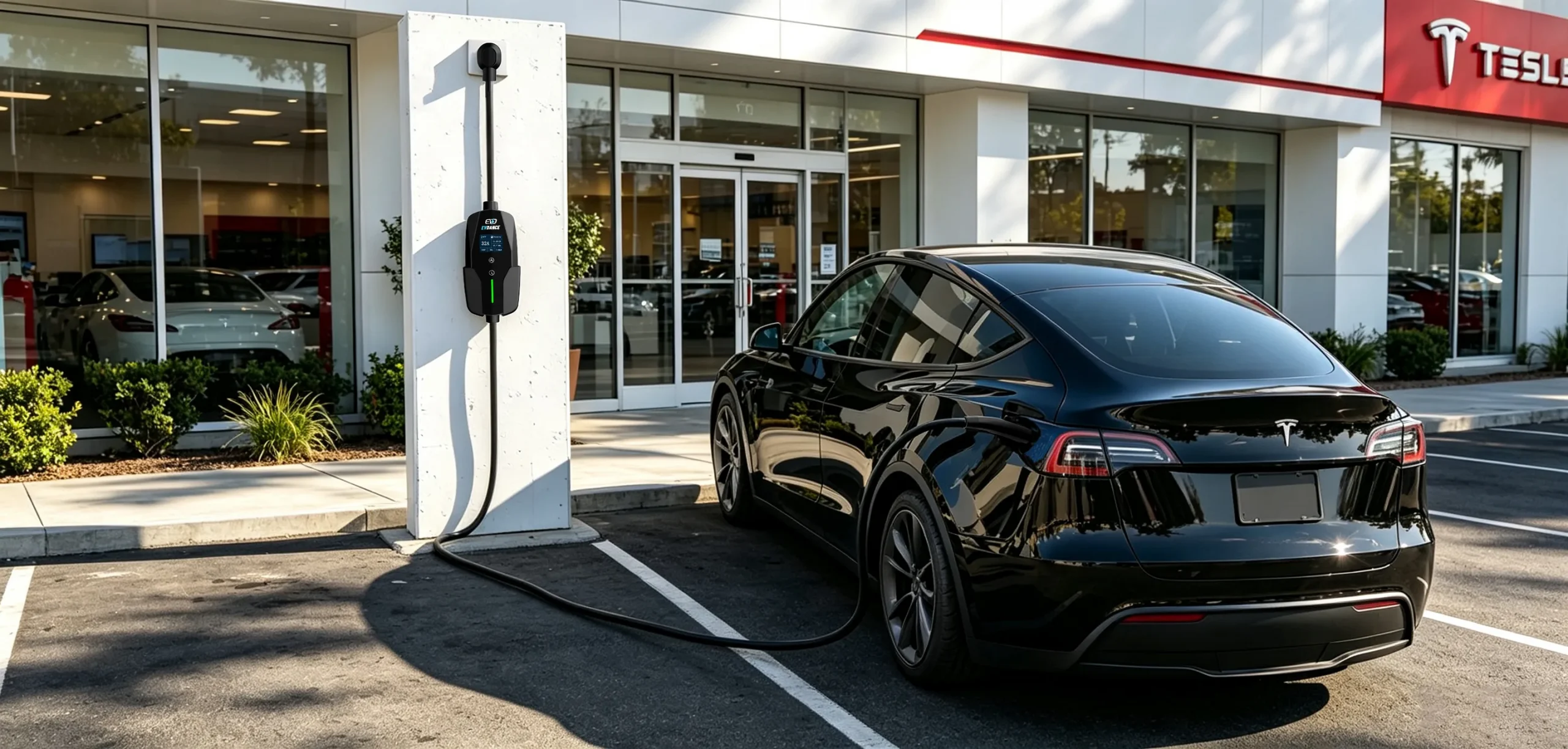
The Unit Behind the Prep Lane
The EV-RHDC30K-L is a floor-standing compact DC charger. Its product page states 22 kW, a single connector, an LCD display, OCPP 1.6J for connection to the operator’s platform, and an IP54 enclosure for outdoor siting. The connector variant for your market is a point to confirm in writing before ordering — the listing summary does not name it. Pair it with AC hardware from the commercial charging range for the display row and overnight service cars.
Frequently Asked Questions
Can it fully charge a car in under an hour?
No — and prep does not need it to. At 22 kW, an hour adds roughly 20 kWh before taper, which covers a test-drive turnaround or a delivery top-up. A near-empty large battery still needs hours on any 22 kW charger.
Does the car’s AC rating limit the prep speed?
No. DC charging bypasses the onboard AC charger, so a car rated at 7 or 11 kW on AC can still prep at up to 22 kW here. The limit that applies is the car’s own DC acceptance, plus tapering as the battery fills.
One connector or two — is a single-connector unit enough for a dealership?
For the prep lane, usually yes: prep jobs are short and sequential. A site whose deliveries and test drives regularly collide at the same hour needs either a second unit or AC points absorbing the queue — the session records will show which.
Related Reading
- EV Charging for Car Dealerships: What to Install and Why
- How Do DC Fast Chargers Work?
- Level 1 vs Level 2 vs DC Fast Charging
- How Fast Is a DC Fast Charger?

