
You do not replace a JT02 adapter because it reaches a certain age — no service-life figure in years or plug-in cycles is published for it. You replace it when a short inspection fails. The routine below takes about two minutes, needs no tools, and ends in a clear answer: keep using it, or retire it today.
Key Takeaways
- No age or cycle count retires a JT02 — a failed inspection does.
- Take baseline photos when it is new; every check after that is a comparison.
- Five steps, two minutes: both faces, the silver-plated terminals, the seal, the fit, the next session.
- Any fail means replace, never repair — and a spare keeps a failed check from stranding the car.
Start With a Baseline, Not a Calendar
Wear on an adapter is a change, and a change is only visible against a starting point. When the adapter is new, take three phone photos: both connector faces, and the housing seam. Every later check is a comparison against those photos — bright, even terminals versus dull ones, a clean seam versus a cracked one. Run it monthly for a daily adapter, before a long trip, and after any drop onto hard ground. The listing publishes no interval, so the rhythm is yours; acting on a fail is not optional.
The Routine, in Order
Work from one end to the other, unplugged, in good light. Each step has a pass state and a retire state — no “watch and wait” grade.
| Step | What you check | Pass | Fail — retire it |
|---|---|---|---|
| 1. NACS-side face | The face that meets the charger: housing around the opening, the contact area inside | Faces flat and clean, housing sound | Cracks, deformation, or any scorch or melt mark |
| 2. The terminals | The silver-plated copper terminals — the plating is the working surface of the connection | Bright and even, matching your baseline photos | Dull, pitted or darkened patches; green tinge; visible wear through the plating |
| 3. The IP65 seal | The sealing ring that keeps dust and water jets out of the joint | Seal sits evenly, flexible, no grit trapped under it | Seal cracked, flattened or split; moisture visible inside the face |
| 4. J1772-side face and fit | The car side: face condition, then seat the adapter on the car’s inlet and on a charger plug | Seats fully at both ends with a firm, positive engagement and no play | Needs force to seat, sits loose, or rocks in the inlet |
| 5. The next session | Watch the first minutes of the next charge, and note how the session runs | Starts and runs as it always has | Sessions drop out or fail with this adapter — and succeed without it |
Step 5 is the isolation test. A charger fault follows the charger and a car fault follows the car; a fault that follows the adapter belongs to the adapter — one clean session elsewhere settles which part to blame.

What a Fail Means
Any single fail retires the adapter. There are no user-serviceable parts inside it: do not open it, file the terminals, bend anything back, or tape a cracked housing. A damaged adapter is replaced, not repaired — the same rule our guide to whether EV charging adapters are safe applies to any adapter. If it is still under warranty, contact the seller before buying its replacement. And if this adapter is your car’s only route to a charger, keep a spare, so a failed check never strands you.
The JT02 in This Routine
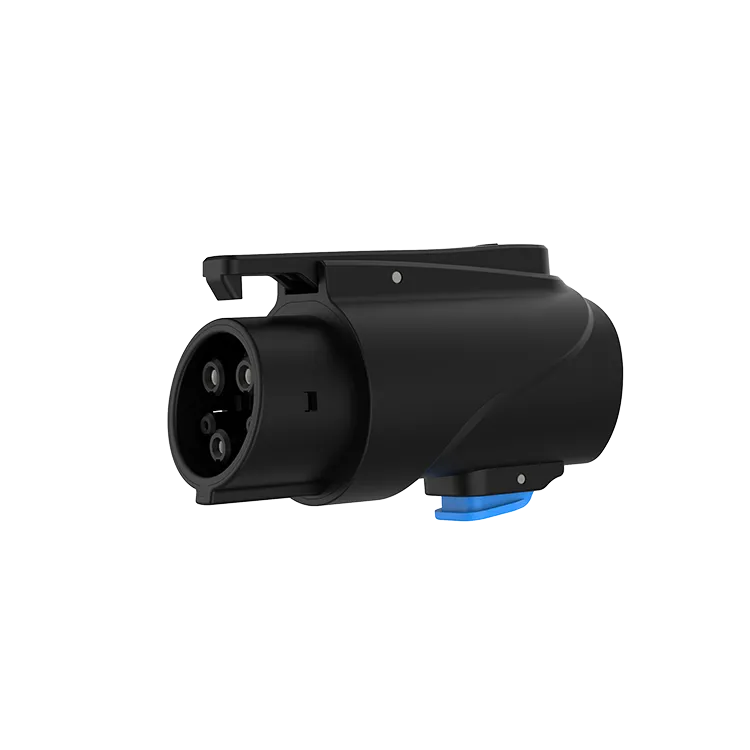
The EVDANCE JT02 is a NACS-to-J1772 adapter for AC charging, rated up to 80 A at AC 250 V and sealed to IP65. Its listing states silver-plated copper terminals, which is why step 2 compares their surface against your baseline: the plating is the contact face every session runs through. It is an AC part only — home wallboxes and destination chargers, never a Supercharger. Between checks: keep the faces covered, store it dry, and do not let the charger’s cable hang its weight off the adapter.
Frequently Asked Questions
How often should I run this inspection?
On your own rhythm — monthly suits a daily adapter; any drop onto concrete earns an immediate check, as does the week before a road trip. The point is catching a change before it carries current.
The housing has a small crack, but it still charges. Can I keep using it?
No. The housing holds the terminals in alignment and carries the IP65 seal. A crack is a fail at step 1 or step 3 however well the car charged yesterday — retire it and replace it.
Does rain change the routine?
Only the order: dry both faces first, so water drops are not mistaken for moisture inside the seal. Grit trapped under the seal after wet use is the fail to look for.
Related Reading
- Are EV Charging Adapters Safe?
- Can I Use a Tesla Charger for Other Cars?
- What Is J1772? The North American EV Plug Explained

