
For an 800 V car, the adapter question is a voltage question. A DC station delivers power at your battery pack’s voltage, so anything in the path must be rated to carry it. The JT08’s listing states a ceiling of up to 1000 V — above the 800 V class. But no full “200–1000 V” window is published for either model: what exists is a ceiling on one model, and silence on the other. That gap is a confirm-in-writing item, and voltage is only one of three gates anyway.
Key Takeaways
- A DC session runs at your pack’s voltage, so an adapter’s voltage rating is a coverage question: the window must cover the car.
- The JT08’s listing states up to 1000 V — above the 800 V class. The JT09’s listing states no voltage figure.
- No full 200–1000 V window is published for either model; where a listing is silent, the figure is a written-confirmation item.
- Voltage is one gate of three: maker approval for your exact car and a station open to it decide actual use.
Why Voltage Is a Window, Not a Power Figure
On AC home charging, voltage is fixed by the supply and nobody thinks about it. DC fast charging is different: the station’s output follows the car. A pack in the common class runs at roughly 400 V; the high-voltage class at roughly 800 V, about double. The station supplies within the car’s voltage, the car draws current against it, and the two together make the power, as how DC fast chargers work explains. An adapter in that path is exposed to the pack’s full voltage all session. Its voltage rating is therefore a coverage question — does the window it is built for cover your car’s pack? — not a speed figure. A current rating alone cannot answer it: 500 A says how much flow the part carries, nothing about the pressure behind it.
What the Two Listings Actually State
| Line | JT08 | JT09 |
|---|---|---|
| Current ceiling | Up to 500 A | Up to 500 A |
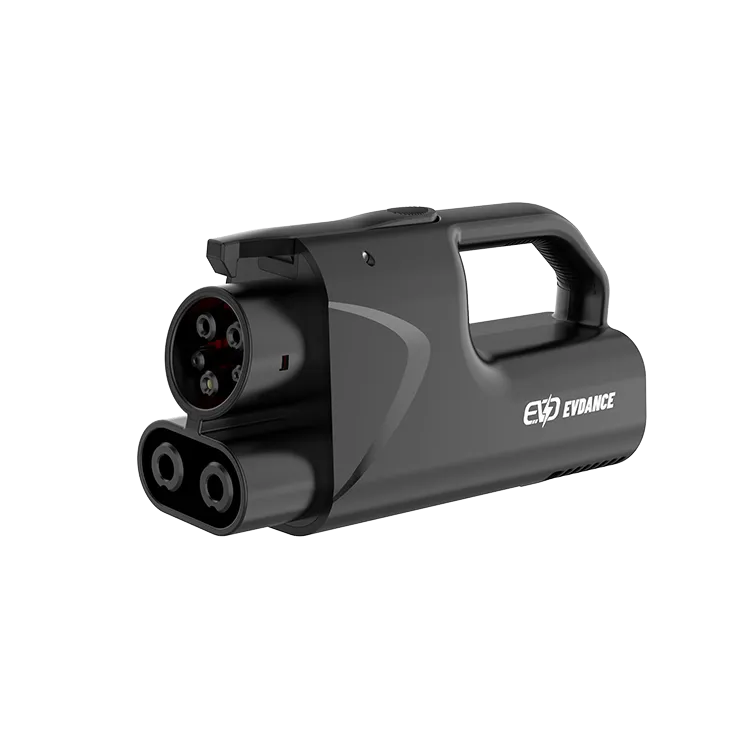
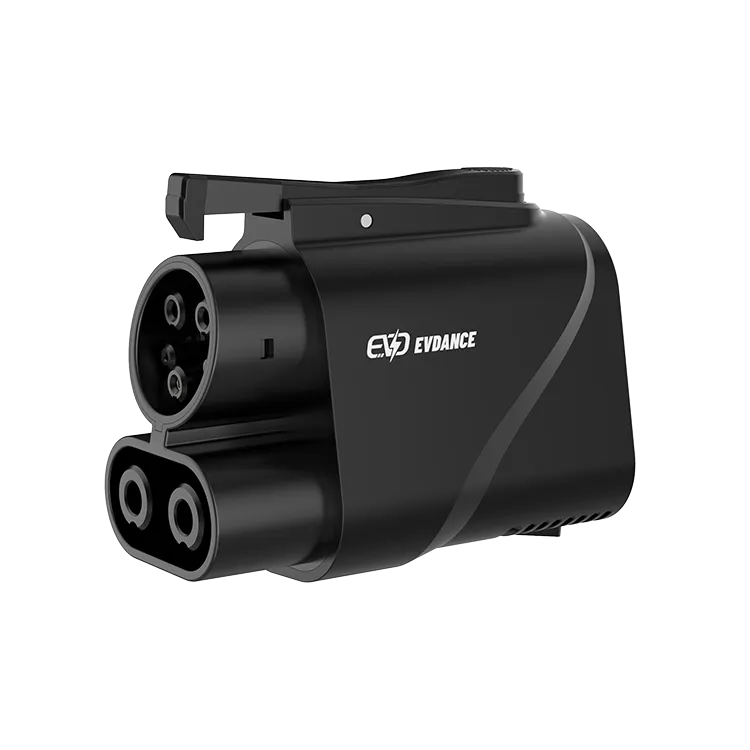
| Voltage | Up to 1000 V, as stated for this model | Not stated in this model’s listing |
| Sealing | IP66 | IP66 |
| Form | Handleless | With handle |
Two honest conclusions follow. First, for an 800 V-class car the operative figure is the top of the window, and the JT08’s stated 1000 V ceiling sits above that class. Second, the bottom of this title’s range — and the JT09’s voltage altogether — appear in neither listing as a published window. If your decision depends on a model’s full stated range, get it from EVDANCE in writing rather than assuming the two models mirror each other. A range that is not in the listing is not a specification.
The Other Two Gates for an 800 V Car
Voltage coverage permits the session electrically. It does not permit it in the two senses that decide actual use:
- Maker approval. Your vehicle maker must approve third-party DC adapter use for your exact car, in the maker’s current documents. An 800 V car is not exempt, and approval for one model says nothing about another.
- An open station. The station or network must be open to your car under its current terms — at Tesla Superchargers, openness is set by Tesla’s programme, site by site and brand by brand, as whether other cars can use a Tesla charger sets out.
The EVDANCE JT08 and EVDANCE JT09 are NACS-to-CCS1 DC adapters for CCS1-inlet cars at NACS DC stations. For an 800 V car the sequence is: confirm the voltage coverage for the model you choose, confirm your maker’s approval for your car, then confirm the stations on your routes are open to it — in writing where the listing is silent.
Frequently Asked Questions
My car is in the 800 V class. Is the JT08 within its voltage?
On the stated figures, yes: its listing gives a ceiling of up to 1000 V, and a session runs at your pack’s voltage, below that ceiling. The ceiling is not the permission, though — your maker’s approval for your exact car still decides whether you may use a third-party DC adapter at all.
Does the JT09 carry the same 1000 V rating?
Its listing does not state a voltage figure, so the honest answer is: not as published. Do not assume symmetry between the two models. If the JT09 is your choice and voltage coverage decides it, ask EVDANCE for the figure in writing first.
Does a higher voltage rating make an 800 V car charge faster?
No. The rating permits the session; it does not drive it. Speed is set by the station’s delivery and your car’s acceptance, which is at its highest early in the session and tapers as the battery fills.
Related Reading
- How Do DC Fast Chargers Work?
- Is the Tesla Charger NACS? NACS, J3400 and Adapters Explained
- Does J1772 Work With CCS? CCS Connectors Explained
- How Fast Is a DC Fast Charger?

