
A JT08 or JT09 widens a road trip; it does not simplify the planning away. Every Supercharger stop on your route must pass the same two checks — your car maker approves third-party DC adapters for your car, and Tesla has opened that site to your car — both checked per route, before you leave. Plan around confirmed stops, and keep native CCS1 stations in the plan — the stops that need no adapter and no permission check.
Key Takeaways
- Check per route: maker approval for your exact car, then each Supercharger site’s openness to it, in Tesla’s current information.
- Plan legs on the slow half of the charging curve, with a buffer.
- Build on both networks: CCS1 as the backbone, open Supercharger sites as the wideners.
- A leg that depends on one adapter stop with no fallback in range is the leg to replan.
Before You Leave: Three Checks
- Your maker’s document. Confirm your car maker approves third-party DC adapter use for your exact model and year. That approval lives in the maker’s current guidance, not on the adapter’s packaging — check it once, properly, before the first trip.
- Tesla’s station information, for this route. A Supercharger on the map is not the same as a site open to your car. Openness is set per site and per brand under Tesla’s programme and changes over time — check each planned stop in Tesla’s current station information, not from memory.
- The adapter itself. Contact faces clean, fit firm, no damage. Pack it where you will find it at the first stop — not under the luggage.
Plan Legs on the Slow Half of the Curve
A DC session does not hold its peak: acceptance is highest when the battery is low and falls as it fills — the taper. Labelled arithmetic makes the point: at a sustained 100 kW, fifteen minutes adds about 25 kWh, and a real stop holds that rate only part of the time. So plan legs on the conservative half of what a stop can add, keep a buffer, and never build a leg that only works if everything charges at its best. How fast a DC fast charger is sets out why the rate moves.
| The stop on your route | Adapter needed? | What decides whether it works |
|---|---|---|
| A Supercharger site open to your car | Yes — the JT08 or JT09 | Maker approval for your car, plus the site open to it — both checked before the trip |
| A Supercharger post with Tesla’s built-in adapter | No carried adapter | The site open to your car, on Tesla’s terms — Tesla’s hardware, unchanged permission |
| A CCS1 DC fast station | No | Your car’s native inlet — the fallback that always fits |
| A Supercharger site not open to your car | It is not a stop | An adapter grants no access — plan as if it were not there |
The Mixed Route Is the Robust Route
Use both networks. CCS1 stations are the backbone: they fit your car directly and ask nothing about adapters.
Open Supercharger sites are the wideners: extra stops in the gaps, shorter legs, a second option where the CCS1 station is busy. The planning rule follows: if a leg depends on a single adapter stop with no CCS1 fallback in range, replan it — it rests on two permissions and one piece of carried hardware. Whether a Tesla charger can be used for other cars is the access question behind each stop.
The Adapters on the Trip
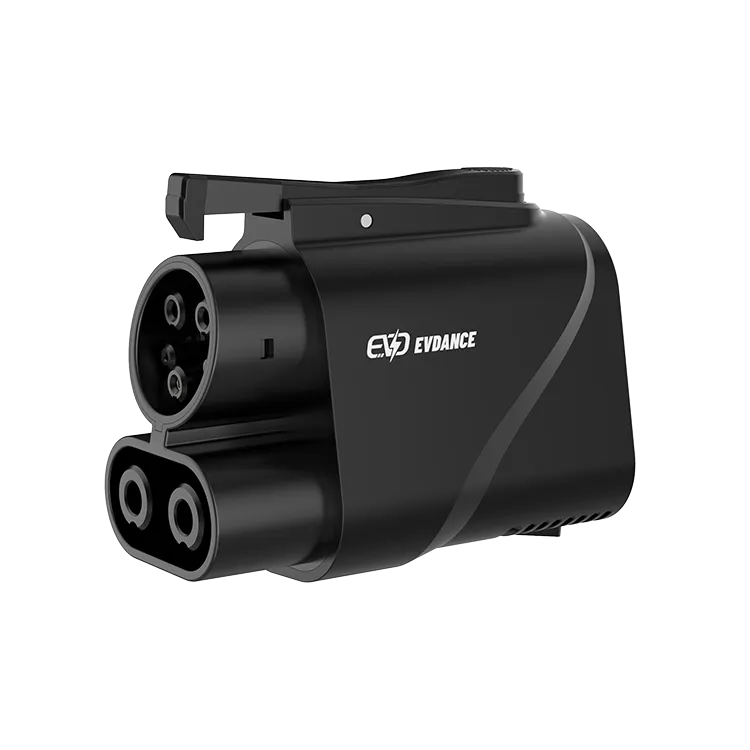
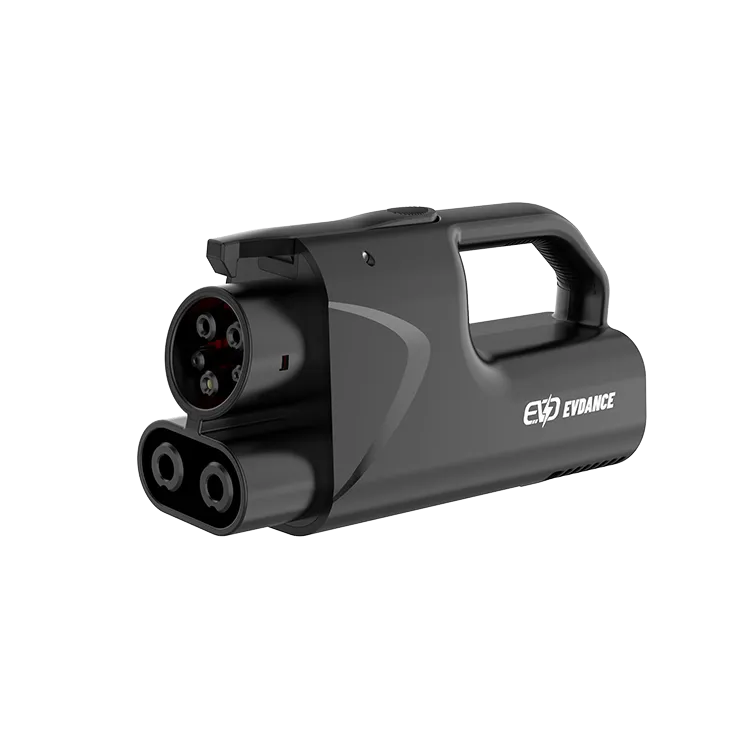
The EVDANCE JT08 (handleless) and the EVDANCE JT09 (with handle) are NACS-to-CCS1 DC adapters rated up to 500 A in the 250 kW class, IP66 — ceilings above the session, so the car’s curve sets your stop. The conditions govern every stop above: use either only where your vehicle maker approves third-party DC adapter use for your car, and only at stations the network has opened to it. On a trip the handled JT09 earns its place when stops are frequent or weather is bad; the JT08 packs smaller.
Frequently Asked Questions
Can I plan a long trip on Superchargers alone?
Only if every stop you depend on is open to your car on Tesla’s current information, checked for this route. A plan built on one network’s permissions should keep a CCS1 stop in range as fallback.
Does using the adapter make each stop slower?
The adapter adds no limit below its ceilings — your car’s curve and your target charge set the stop’s length either way. What it adds is a connection to make and a stop to qualify: planning work, not charging time.
My maker has not approved adapters for my car. Can I still road-trip?
Yes — on CCS1 stations, which your car uses natively and which need no adapter approval. The Supercharger route opens only when your maker’s document says an approved adapter may be used.
Related Reading
- How Fast Is a DC Fast Charger?
- Can I Use a Tesla Charger for Other Cars?
- Is the Tesla Charger NACS? NACS, J3400 and Adapters Explained
- Are EV Charging Adapters Safe?

