
A charging cable assembly — cable and connector built and tested as one part — stands or falls on three factory steps: the crimp joining each conductor to its contact, the overmoulding that seals and supports that joint, and the pull test that proves it holds. Choosing a cable manufacturer means auditing those steps and their records.
Key Takeaways
- Reliability is set by three steps: crimping, overmoulding, pull test.
- The crimp cannot be inspected after moulding — records and cross-sections are the evidence.
- Pull-test values come from the connector’s own specification — ask for value, source, batch records.
- Write the assembly evidence into the build specification before production.

What a Cable Assembly Is
Bulk cable is an input; the assembly is the finished component — cable cut to length, conductors terminated onto the contacts, the joint sealed in a moulded housing, strain relief fitted so pulling and bending loads land on the moulding, not the joint. That differs from a plain cable with a connector picked separately, the difference our guide to whether all EV charging cables are the same sets out from the user’s side.
It matters because charging is a long, continuous load, and a high-resistance joint runs warm for hours nightly — the build-time quality behind how long EV charging cables last.
Crimping: The Joint You Cannot Inspect Later
A crimp is a cold compression joint: the contact is pressed around the conductor strands with a matched die until metal meets metal along the barrel. Done right, it gives low, stable contact resistance. Too loose, and under-compressed strands leave resistance high and the joint heating; too tight, and strands nicked at the barrel edge weaken the conductor where it flexes.
The finished crimp disappears inside the moulding, so control happens at setup: die matched to the pair, crimp height measured on samples, and cross-sections cut and photographed to prove even compression. Ask for the crimp-height records, the cross-sections and the calibration log. A maker who measures crimps can show numbers; one who cannot asks you to trust a joint neither of you can inspect later.
Overmoulding: Seal and Strain Relief in One Shot
Overmoulding injects polymer over the crimp zone and cable entry, bonding to the jacket and becoming part of the housing. It seals — no capillary path for water to reach the contacts — and it relieves strain, spreading bending over a longer cable length so the flex point sits in the cable, not the crimp. Voids, poor adhesion or an abrupt relief end re-open that path.
Judge it by its controls: the moulding specification, the void and adhesion checks, and the finished connector’s ingress test report from a recognised laboratory (OSHA’s NRTL programme lists those recognised in the US). The report is the evidence; the plastic’s smooth look is not.
Pull Tests: Proof, Not Paperwork
The pull test applies an axial load to the finished joint and checks that neither conductor nor termination moves — proof that crimp and moulding together survive being pulled, dragged and coiled. The value comes from the drawing and specification for that connector class and the maker’s validated process — not from an article. Pin down the value, its source document, the sampling frequency and whether batch records are shared.
| Step | What it decides | Evidence to ask for |
|---|---|---|
| Crimping | Whether the joint runs cool for the product’s life | Crimp-height records, cross-sections, calibration log |
| Overmoulding | Whether water and bending reach the joint | Moulding spec, void and adhesion checks, ingress report |
| Pull test | Whether the joint survives handling loads | Test value and source document, sampling rate, batch records |
Cable Assemblies in a Finished Charger
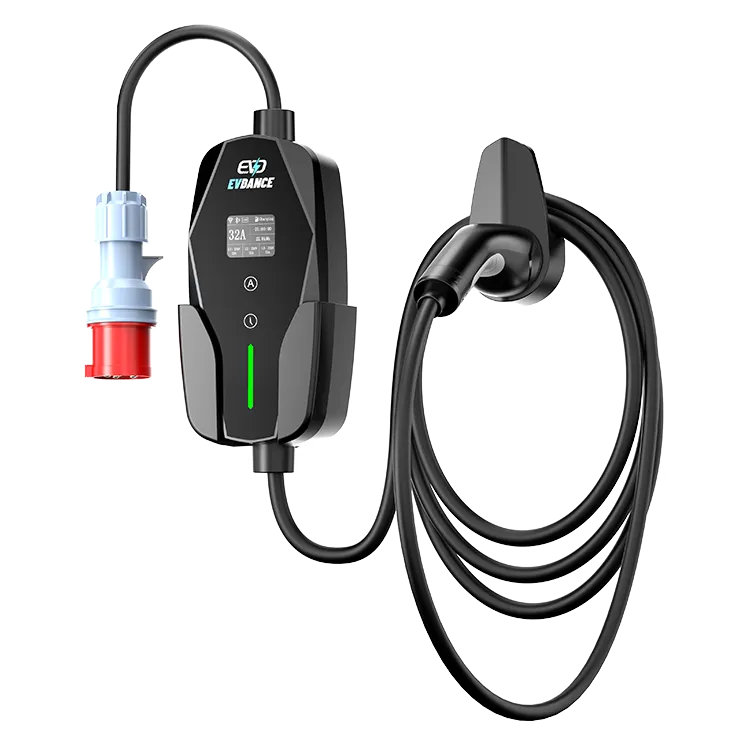
EVDANCE chargers ship with their assemblies fitted and tested as part of the product — the EV-ACT3204PE 22 kW wallbox is listed with a tethered Type 2 cable, and the portables carry theirs the same way. For a private-label build, write the assembly into the build specification: connector standard, crimp and pull-test evidence, ingress report — terms agreed through the OEM and private-label programme. Assembly questions go via the contact page.
Frequently Asked Questions
Can a bad crimp be repaired later?
No — sealed inside the moulding, the joint cannot be re-crimped; a defective assembly is replaced as a part. The evidence has to exist at build time; afterwards nothing is left to inspect.
Who decides the pull-test value?
The drawing and specification for the connector class, via the maker’s validated process. Treat “pull tested” with no value or source document as unanswered, and put both in the purchase specification.
Does overmoulding make a connector waterproof?
The moulding seals the cable entry; the connector’s protection is whatever its test report states for the exact part — not how solid the moulding looks.
Related Reading
- Are All EV Charging Cables the Same?
- How Long Do EV Charging Cables Last, and Can They Be Repaired?
- EV Charger Cable Length Guide: 5 m, 7.5 m or Longer?
- Chinese EV Charger Manufacturers: Factory, Trading Company or Marketplace Seller?

