
Connector heat is born at the contact interface — the small area where pin meets socket — so a temperature sensor only earns its place if it reads that interface’s temperature, not the housing’s. Placement decides whether sensing catches a wearing contact early, reads it late, or misses it. And in a passive adapter with no electronics to act on a signal, placement becomes a sourcing question: fitted or not, placed where, acting how?
Key Takeaways
- Connector heat concentrates at the contact interface, inside the mated joint — sensor placement decides whether that heat is seen early, late or not at all.
- A housing-mounted sensor reads a proxy; its value depends on test-proven thresholds, not on its presence.
- In a passive adapter, a sensor with no path for the station or car to act on it is not a protection — ratings and condition carry the case.
- Buyers should ask, in writing: fitted or not, placed where, acting how, proven by which test.
Where the Heat Is, and Why It Hides
Current crossing a real contact meets resistance, and resistance makes heat exactly at the joint; a clean, tight joint keeps it modest. Wear, dirt or a loosening fit raises the resistance, and the same current makes more heat at the same small spot. The problem for sensing is geometry: the hot spot sits inside the mated connector, enclosed by the housing, and the outside surface warms later and less. A session can run hot at the pins while the shell feels only warm — “it felt fine” is not a measurement, as our adapter safety guide notes.
Placement Options: What Each One Reads
Small temperature sensors — thermistors are the common choice at this scale — are cheap; putting one where it tells the truth is the engineering. The three placements below read three different things.
| Sensor position | What it actually measures | Trade-off |
|---|---|---|
| Embedded at the contact carrier, at the pin root | The closest proxy for the contact interface’s temperature | Hardest to package; sensor and leads must survive mating forces alongside the contacts |
| On the connector body, near the contacts | Joint heat after conduction through the housing parts | Lag and offset: thresholds must be set for the proxy and proven by test |
| In the cable or further back from the joint | Cable and ambient temperature | Too remote to catch a failing contact early; useful for other limits only |
The middle row is where many designs land — honest engineering, provided the sensor-to-joint offset is measured in testing and the threshold set from it. A sensor placed for packaging convenience, with a threshold copied from elsewhere, is decoration.
A Sensor Needs Somewhere to Send Its Signal
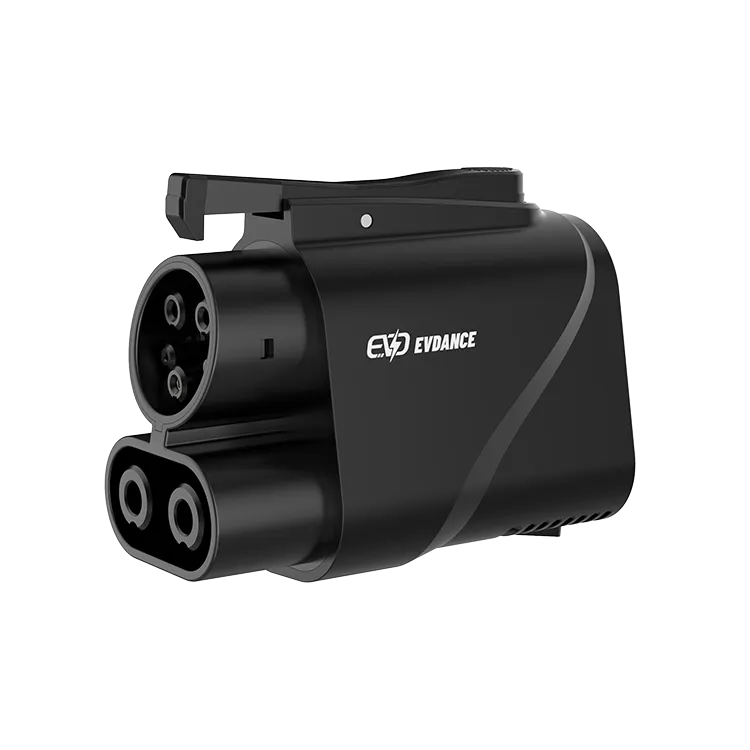
Sensing is only half a protection. In a charger plug the signal has a reader — the equipment can reduce current or end the session — so a well-placed sensor becomes a designed response. A passive adapter has no controller of its own. Unless the design gives the station or car a path to act on the reading, a sensor inside an adapter changes nothing by itself — which is why adapter protection rests on ratings, condition and inspection: a listing that states no temperature sensing is telling you the protection story is the stated one (see our IP ratings comparison). EVDANCE’s listings make the point: the JT08 and JT09 state ceilings and IP66 sealing, and no temperature sensing.
The Sourcing Questions Placement Creates
For a brand or fleet buyer, placement turns into four written questions:
- Is a temperature sensor fitted at all? If the listing is silent, treat the answer as no until confirmed in writing.
- Where does it sit relative to the contact interface?
- What acts on its signal — a current reduction, a session stop, or nothing?
- What test evidence shows the response at rated current, including the sensor-to-joint offset?
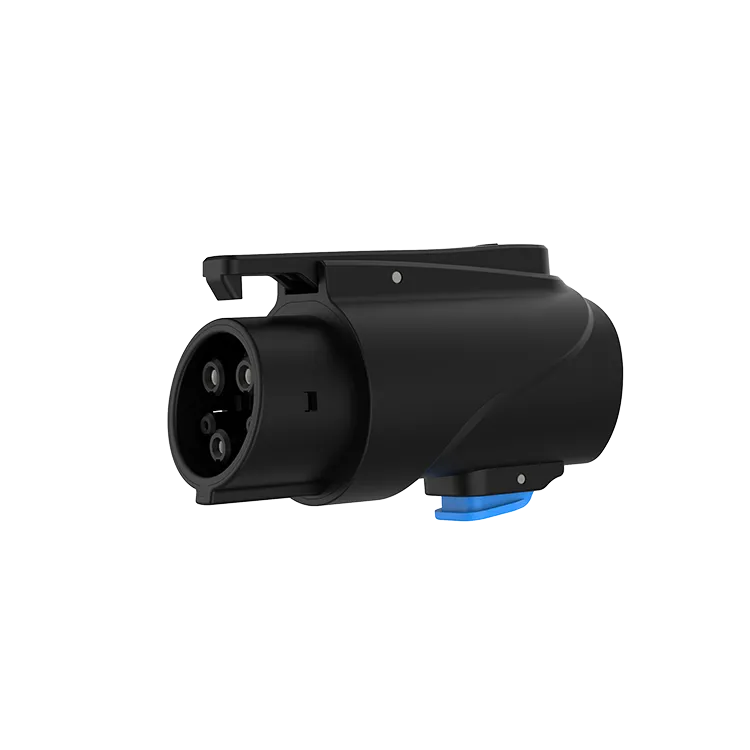
EVDANCE’s adapters are specified on their pages: the JT02 NACS-to-J1772 adapter for AC charging at up to 80 A and IP65, and the JT08 and JT09 NACS-to-CCS1 DC adapters at up to 500 A and IP66 — used only where the car maker approves a third-party DC adapter for that car and the station is open to it. Written answers on sensor fitment are available through the contact page.
Frequently Asked Questions
Can a sensor mounted in the housing protect the pins?
It reads a delayed, lower proxy of the joint’s temperature. It can still protect — if the offset was measured in testing and the threshold set from it. Ask for the evidence, not the sensor’s presence.
Do all DC adapters contain temperature sensors?
No. It is a design choice, and many listings state none — EVDANCE’s JT08 and JT09 among them. Establish the answer from the written specification, not from category assumptions.
If a plug has a temperature sensor, do heat-damage signs stop mattering?
No. A sensor watches temperature, not wear: discoloration, pitting or a loosening fit still mean the part should be retired.
Related Reading
- Are EV Charging Adapters Safe?
- Is the Tesla Charger NACS? NACS, J3400 and Adapters Explained
- IP Ratings for EV Chargers: IP54, IP65 and IP66 Compared

