
Comparable quotes are made by the RFQ, not by the suppliers. When every factory prices the same frozen specification, the same scope and the same trade terms, the replies line up and the remaining differences are real. Leave scope open, and each supplier prices a different product — the cheapest reply is usually the one that assumed the least.
Key Takeaways
- Comparable quotes are an RFQ output: freeze the specification before asking for any price.
- Add a scope table — inclusions in the unit price, exclusions named and priced separately.
- Hold the commercial basis constant: one Incoterm, one currency, one validity, the same quantity breaks.
- Clarification answers go to all bidders, in writing.
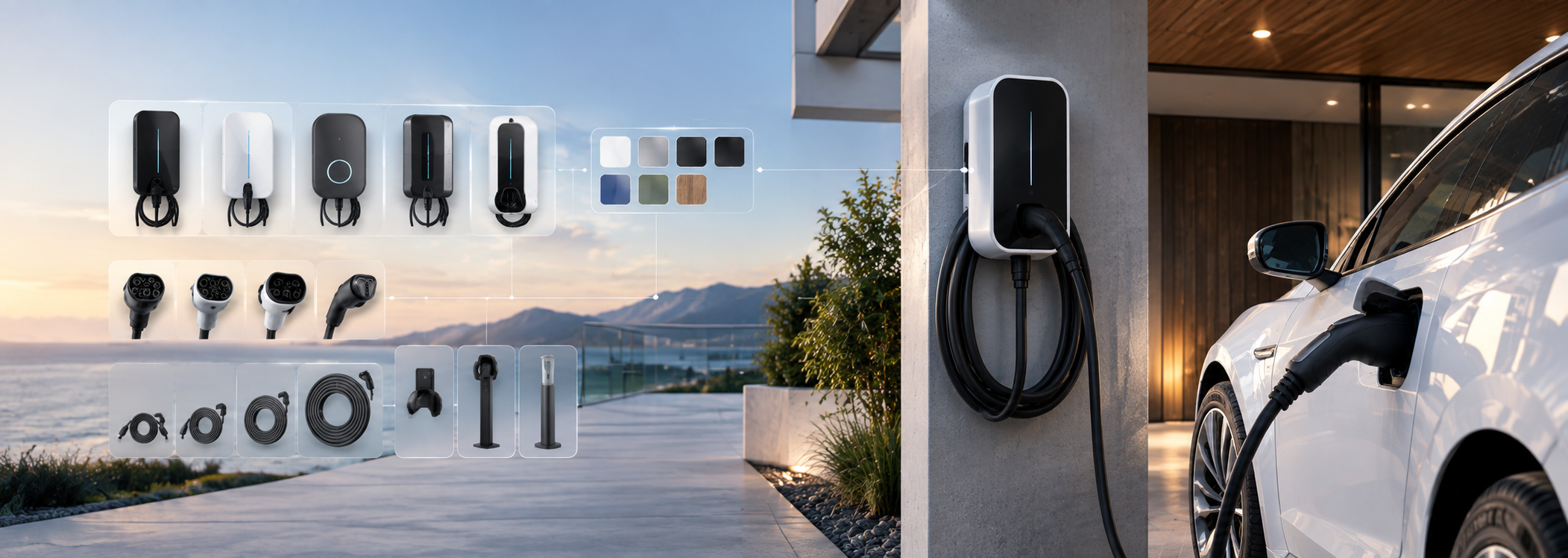
First, Keep Two Documents Apart
This article covers the product RFQ an importer or brand sends to charger factories. It is not an installation quote — the price an installer gives to fit chargers at a site, where labour, permits and groundworks dominate. A site quote is judged line by line on site scope; a product RFQ is judged on whether every bidder priced the same product.
Freeze the Specification
The specification sheet is the RFQ’s foundation. Send the identical, versioned sheet to every bidder:
| Spec block | State explicitly | Why it cannot float |
|---|---|---|
| Electrical | Charger type, rated current and power, voltage and phases, connector and plug standard | Any gap lets two factories quote two different products |
| Physical | Cable length, format (portable or wall-mounted), enclosure and IP target | Cable and housing are major cost drivers |
| Features | Display, app or RFID functions, OCPP version where required | “With app” is a slogan, not a specification |
| Compliance | The certification your market requires, and in whose name the file is held | Certification scope changes both price and responsibility |
| Branding | Logo, colours, packaging, manual language and content | Private-label work is quoted against artwork and packaging scope |
If the specification changes mid-round, reissue the new version to everyone. A quote against version one cannot be compared with a quote against version two. The U.S. DOE’s AFDC procurement guidance works the same way: fixed requirements first.
Fix the Scope: What the Price Must Include
The RFQ’s second table is scope. Require every bidder to price the same inclusions — and to list exclusions explicitly:
- In the unit price: the charger with its cable and connector, standard packaging and the user manual — or state otherwise.
- Priced separately: samples, tooling or moulds, certification testing, spare parts, freight.
- Stated in the quote: the warranty term the price carries, and what it covers.
- Also stated: how the price changes if the quantity changes.
A named exclusion is manageable; an unnamed one surfaces after the order as a tooling charge, a testing fee, a manual translation.
Put Every Bid on the Same Commercial Basis
- One Incoterm and named place for all bids. EXW, FOB and DDP prices are not interchangeable — our FOB vs DDP guide shows why.
- One currency, and a stated validity period for each quote.
- The same quantity breaks for everyone: your realistic volumes, not a single headline quantity.
- The same payment-terms question asked of every bidder, answered in writing.

Run the Round With Discipline
- Send to a small set of qualified suppliers, with one deadline.
- Log every clarification question, and send the answer to all bidders — a private answer changes only one quote.
- Keep follow-ups in writing, filed with the quote they belong to.
- Score the replies against the frozen tables first. Negotiate afterwards, on complete scope.
Sending Your RFQ to EVDANCE
EVDANCE is a Shenzhen manufacturer founded in 2011, exporting to more than 30 countries, with private label from 50 units and a three-year standard warranty. Send a complete RFQ — frozen spec, scope table and trade terms — through the contact page, and it will be answered on the same basis as your other bids. The OEM program page explains how private-label projects run; the product range shows the models most RFQs start from.
Frequently Asked Questions
How detailed should an EV charger RFQ be?
Detailed enough that two factories cannot honestly quote different products from it: electrical and physical spec, features, compliance target, branding scope, quantities and trade terms. Any line that can be read two ways will be — usually in the reader’s favour.
Should I put a target price in the RFQ?
It rarely helps. A target anchors replies toward the number while scope stays vague; a frozen spec and scope table discipline replies far better. If you do share a budget, share it with every bidder, in writing, with the full scope it must cover.
Should the RFQ just ask for the lowest price?
Ask for a complete price on a fixed scope. The lowest incomplete quote becomes the most expensive once its exclusions surface; completeness is what makes a low price meaningful.
Related Reading
- FOB vs DDP: How to Import EV Chargers From China Without Surprises
- Payment Terms for OEM EV Charger Orders: T/T, L/C and Deposits
- EV Charger MOQ Explained: What Sets Minimum Order Quantities
- What Drives the Unit Cost of an OEM EV Charger

