
The chargers that suit Poland are decided in winter, not in the catalogue. A model earns its place when the supplier states its operating-temperature range in writing, your sample passes cold handling tests, and its enclosure rating and siting answer meltwater and slush.
Key Takeaways
- Winter suitability is written evidence: a stated temperature range and below-range behaviour for the exact model.
- Sample-test what paper cannot tell you — cable flex after a cold soak, the latch worked with gloves on.
- IP ratings answer meltwater, not cold; both checks belong on the shortlist.
- Voltage, phases and connectors close per site, in writing, as of October 2026.
Grid voltage, phases and connectors then close the choice per site, in writing, before you order. As of October 2026, no Polish supply figure is stated here — a guessed figure becomes unusable stock.
The Temperature Rating Is a Document, Not an Assumption
Cold is the specification buyers assume most and check least. Close it on paper:
- Ask for the stated operating-temperature range for the exact model — not the family — and file the answer with the order.
- Ask what the unit does below that range — derate, refuse, shut down — as the supplier’s written statement.
- Compare against your own site records. The coldest conditions your buildings reach come from your installers’ records; no figure for Poland is quoted here. If the datasheet is silent, treat exposed mounting as unproven until the rating arrives.
What cold does to chargers and cables physically is covered in our guide to cold-weather EV charging; this article is the buying side.
Test the Sample the Way Winter Will
A sample unit lets you check in autumn what customers would report in winter — unpowered handling checks for your receiving routine:
- Cable flex after a cold soak. Leave the sample cable in your coldest storage overnight, then coil and uncoil it. A cable that fights back is a warranty queue forming.
- Connector latch with work gloves on. Drivers charge wearing gloves; a release that needs bare fingertips generates complaints.
- Holster and cable parking. Check the connector parks off the ground, out of standing slush — and that any display stays readable in low winter light.
| Winter check | How you close it | Evidence that counts |
|---|---|---|
| Operating-temperature range | Ask the supplier for the exact model’s stated range | The range in the datasheet or test file |
| Behaviour below the range | Ask what the unit does — derate, refuse, shut down | A written statement from the supplier |
| Cable in the cold | Cold-soak your sample, then coil and handle it | Your sample notes in the receiving checklist |
| Connector with gloves | Work the latch on the sample wearing work gloves | A pass/fail line in your sample report |
| Meltwater and slush | Read the IP code, then decide siting per bay | Stated IP rating; covered mounting at exposed bays |
A high IP grade answers meltwater, not temperature — see our IP ratings comparison for both digits.
Then the Supply and Connector Confirmations
Winter decides which models survive; supply and connectors decide the variant. Your installer confirms each site’s voltage and phases in writing; order only models whose rated input window covers them. Single-phase and three-phase builds are different purchases — our explainer on single-phase vs three-phase charging sets out what each delivers. For connectors, survey the inlets of the vehicles your sites serve before fixing the family (see choosing plug and connector by market).
EVDANCE Models Against the Winter Checks
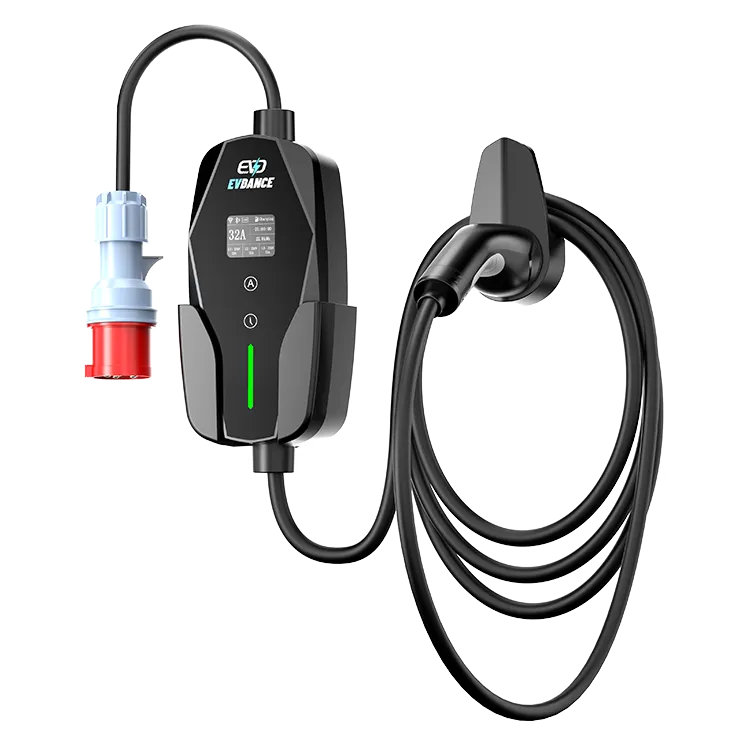
Apply the checks to the Type 2 range on our products page. The EV-ACS3205PE is a 22 kW three-phase portable with a CEE 32A plug, Type 2 and IP66; the ACS1605PE is its 11 kW counterpart. The EV-ACT3204PE is a 22 kW three-phase wallbox, tethered Type 2 cable, RFID and app, IP66, CE. For single-phase sites, the EV-ACS3210E portable is about 7 kW, Type 2, IP66. The gap this article exists to close: the listings state IP ratings, and CE where listed, but publish no operating-temperature ranges — ask for each candidate’s stated range in writing via contact us. EVDANCE is a Shenzhen manufacturer founded in 2011, exports to more than 30 countries, 3-year standard warranty.

Frequently Asked Questions
What temperature rating should a charger for Poland have?
No figure is stated here: compare the model’s stated operating range, given by the supplier in writing, against the coldest conditions your sites record. If it does not cover them, the model is out.
Does an IP66 rating mean a charger is winter-proof?
No — the IP code grades dust and water, meltwater included, not temperature. Winter-proofing is two checks: IP for ingress, stated range for cold. Both in writing.
Single-phase or three-phase for Polish sites?
The site decides, not the market: your installer confirms each building’s supply in writing, three-phase sites take the three-phase builds, single-phase sites the single-phase models.
Related Reading
- Cold-Weather EV Charging: What Happens to Chargers and Cables Below Freezing
- IP Ratings for EV Chargers: IP54, IP65 and IP66 Compared
- Single-Phase vs Three-Phase EV Charging: 7kW, 11kW and 22kW Explained

