
Installers price a charger job in three passes: measure the job at the survey, turn what was measured into labour and materials lines, then add the margin the business needs to survive. The charger model is rarely the biggest variable — run length, panel capacity and access move the total further. This article sets out the method, using your own rates.
Key Takeaways
- Price in three passes: measure at the survey, build labour and materials lines, add margin last.
- Panel capacity, run length and access move a job’s price further than the charger model does.
- Margin is a share of the final price, not a markup on cost — the two arithmetics give different quotes.
- Run the method with your own recorded times and costs; borrowed numbers import someone else’s business.
Start at the Survey: The Inputs That Set the Price
The survey must capture what will actually be billed:
- Panel position and spare capacity. Charging is a continuous load, so the breaker is sized at 125% of the charger’s current: 32 A on a 40 A breaker, 40 A on a 50 A, 48 A on a 60 A.
- The cable route, measured. Length, surface, drilling, and whether containment or groundworks are involved.
- Mounting and access. Wall type, working height, van parking, distance from van to work point.
- Permit and inspection arrangements. Who files and who pays varies by locality; confirm what applies where you work and carry it as its own line.
- The charger itself. Yours or the customer’s — and if the customer’s, fitting time for a model you may not know.
The same factors are broken down from the customer’s side in our guide to what affects EV charger installation cost.

Turn the Measurements Into Labour and Materials Lines
| Price line | How you estimate it | What changes it |
|---|---|---|
| Labour | Crew size against the time your own records show for this job type | Unfamiliar hardware, difficult access, a second pair of hands |
| Cable and containment | The measured run, priced by length and fixing method | Surface changes, drilling, trenching or making good |
| Breaker and panel work | A breaker in a spare slot, or panel work as a separate, larger line | Spare capacity found at the survey — or not found |
| Charger hardware | Your supply price, when you supply; left out when the customer does | Model, current setting and cable length chosen |
| Fees and finishing | Permit and inspection as confirmed locally, plus testing and paperwork | Local requirements and who files them |
Keep the lines separate even when the customer only sees a total: they are how you learn, months later, which jobs actually made money, and what a fair change of scope gets priced against.
Add Margin Last — and Know What It Has to Cover
Margin is not a tip added for luck. It has to cover the costs no single job sees: vehicle and tools, insurance, office time, callbacks, warranty visits, and a real profit. Two confusions cost installers money. First, margin and markup are different arithmetic: margin is the share of the final price you keep; markup is what you add to cost. Second, a margin copied from another firm imports their overheads, not yours.
A worked example, with invented index numbers to show the arithmetic: suppose a job’s measured labour and materials total 100 units. If your business needs to keep 25 of every 100 units of price — a 25% margin — the price is 100 ÷ 0.75, about 133 units. Adding 25% to cost instead gives 125, which quietly keeps only 20% of the price. Run the method with your own figures.
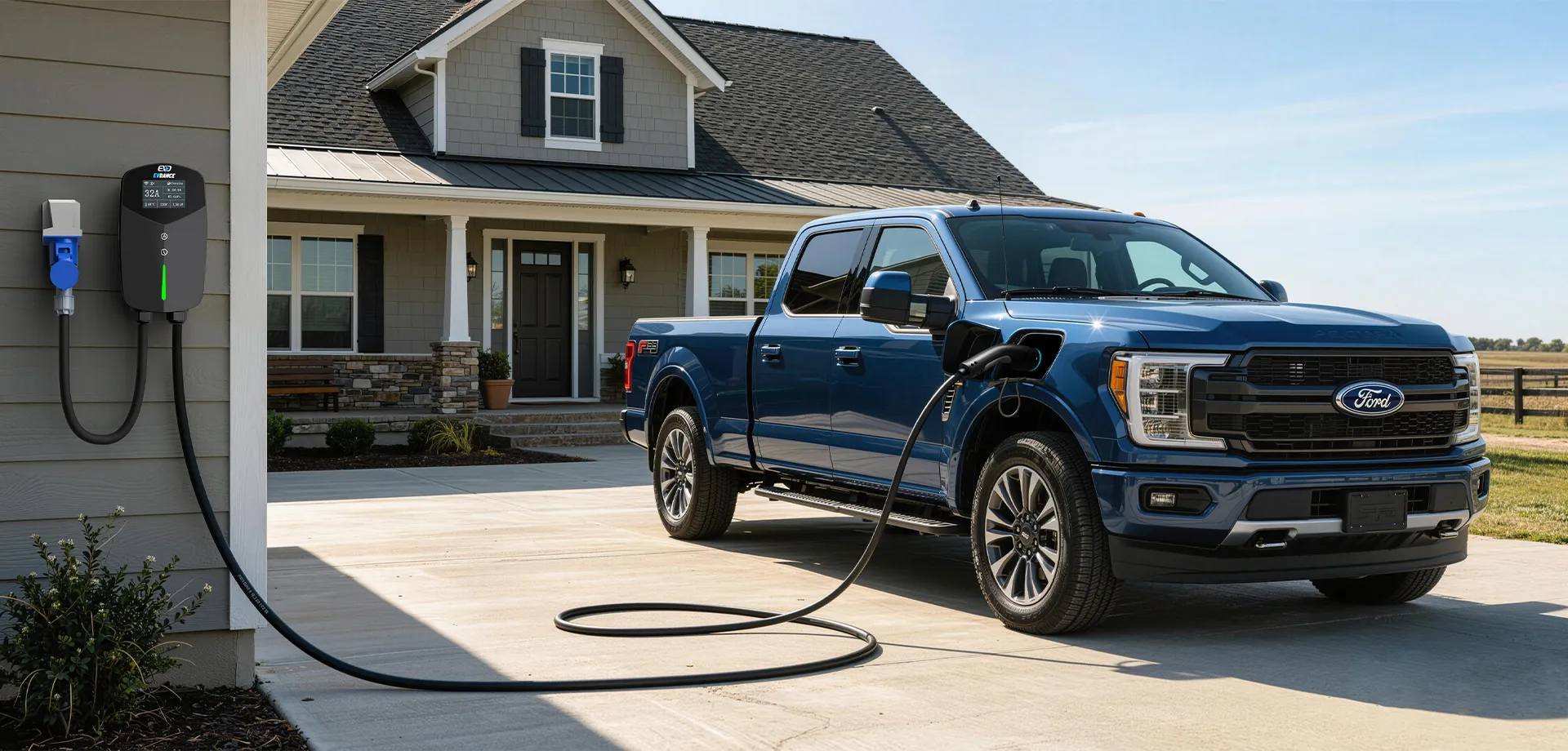
A charger whose current can be set to a panel’s spare capacity can remove the panel-work line entirely: the EV-ACS4005T adjusts between 16 and 40 A, and the EV-ACS3210T sets its 10–32 A range in six steps. Supply terms are on the distributor program page.
Frequently Asked Questions
Should labour be priced by the hour or by the job?
Either works, if the estimate behind it comes from your own recorded times. Job pricing is easier for customers to accept; hourly pricing is easier when scope is genuinely uncertain. Many installers price the surveyed scope as a job, keeping an hourly basis only for named extras.
How do I price panel work the survey could not settle?
Do not bury it in the total and hope. Price the confirmed scope, then name the uncertainty and how it would be charged if found — a separate line, agreed before extra work is done.
Should the survey itself be charged for?
Your policy choice, and either answer is defensible: some charge and deduct it from an accepted job; others treat it as a cost of winning work. What matters is stating it before the visit.
Related Reading
- What Affects EV Charger Installation Cost? 8 Factors to Check
- How Much Does It Cost to Install a Commercial EV Charging Station?
- What Is a Standard EV Charger Installation?
- Wallbox Home Charger Installation Guide 2026

