
There is no list price for certifying a new EV charger model, and no honest source publishes one. The cost is built line by line in a laboratory’s or certification body’s written quotation for your exact model, variants and target markets. A small set of drivers sets that figure — and once you know them, you can compare quotations line by line instead of comparing headline numbers that cover different work.
Key Takeaways
- Certification cost is a quotation for your exact model, variants and markets — no published price exists.
- Seven drivers build the figure: programme scope, variants, markets, samples, retests, follow-up inspections and administration.
- Compare quotations only after rebuilding them onto identical scope, line by line.
- Start from what the listing states; a model with no stated marks is a certification project, not a paperwork exercise.

Why the Figure Lives in a Quotation, Not a Guide
A certificate covers one exact construction: these ratings, this connector, this enclosure. Two chargers that look alike can need different test programmes because a rating, a variant or a target market differs — which is why laboratories quote per file, and why a figure another brand paid tells you little about yours. Treat any round number from a forum or a pitch as unpriced until a laboratory has quoted your file in writing. Our explainer on EV charger certifications sets out what the main marks attest; the quotation decides their cost for your model.
The Drivers That Build the Quote
| Driver | Why it moves the quote | The question that pins it down |
|---|---|---|
| Test programme scope | The standards and test areas the scheme requires for this charger type set the bulk of the laboratory work | Which standards, in which editions, does this quote test against? |
| Variants in scope | Cable and socket versions, ratings and connector variants each add evaluation or testing | Which exact variants does this price cover — and what does adding one cost? |
| Markets and schemes | Each market’s scheme is a separate deliverable; some accept shared test reports, others run their own programme | Which certificates or marks does this quote deliver, market by market? |
| Samples and logistics | Testing consumes or damages units, shipped in the certified configuration | How many samples, in what configuration, and who ships them? |
| Retests and design changes | A failed item or a design change reopens part of the programme at additional cost | What triggers a retest fee, and how is partial retesting priced? |
| Follow-up inspections | Listing schemes can carry ongoing factory inspection duties after issue — a recurring line, not a one-off | What follow-up charges recur, and how are they billed? |
| Documentation and administration | Report handling, certificate issue, file amendments and, for some markets, translations | Which administration lines are included, and which are billed separately? |
Reading Two Quotes Side by Side
Rebuild both quotations onto the same scope before comparing them: same model, variants, standards, markets and deliverables. The cheaper headline usually turns out to be the narrower scope — samples excluded, retests unpriced, follow-up inspections missing. A quotation without line items cannot be compared at all, so ask for it itemised and in writing. Keep the accepted quotation with the model’s compliance file: it explains later invoices when a retest or amendment appears.
Where a Model Starts From: The EVDANCE Position
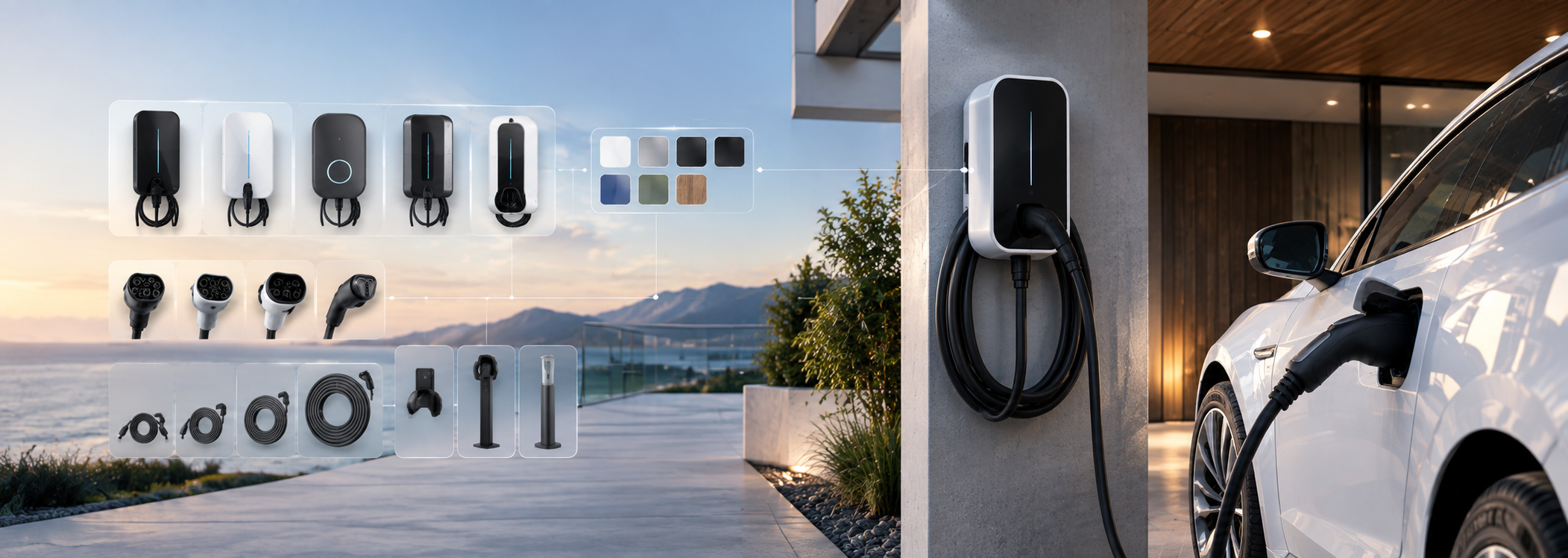
The cost also depends on what already exists for the model. The EV-ACT5006T wall charger’s listing states ETL, FCC and CE, so a brand sourcing it starts from an existing file. The EV-ACS3210T portable charger’s listing states no certification marks at all; a brand that needs marks for that model faces a certification project, priced by a laboratory’s quotation — not by this page. EVDANCE is a Shenzhen manufacturer founded in 2011, with its own factory, exports to more than 30 countries, private label from 100 units and a 3-year standard warranty. Per-model document questions go through the OEM and private-label program or our contact page.
Frequently Asked Questions
Can I budget a round number per model before getting quotes?
Not from any published source — no laboratory tariff for “an EV charger certificate” exists to copy. Budget from written quotations on identical scope, holding retest and follow-up lines separate: they arrive later and surprise.
Does one test programme cover several markets?
Sometimes the same reports support several schemes; sometimes each market runs its own programme. Ask which deliverables, market by market, each quotation produces — never assume a report accepted in one market is accepted in another.
Who pays for certification — the brand or the factory?
Whoever commissions the programme, as the supply agreement states — and the name on the certificate follows that arrangement. Settle it in writing before testing starts; our guide to certificate ownership in private-label chargers explains what rides on it.
Related Reading
- EV Charger Certifications Explained: CE, UKCA, UL, ETL, CB and What Buyers Should Ask For
- UL and ETL Listing for EV Chargers: How NRTL Certification Works
- Who Owns the Certificate in a Private-Label EV Charger?
- UKCA vs CE for EV Chargers Sold in Great Britain

