
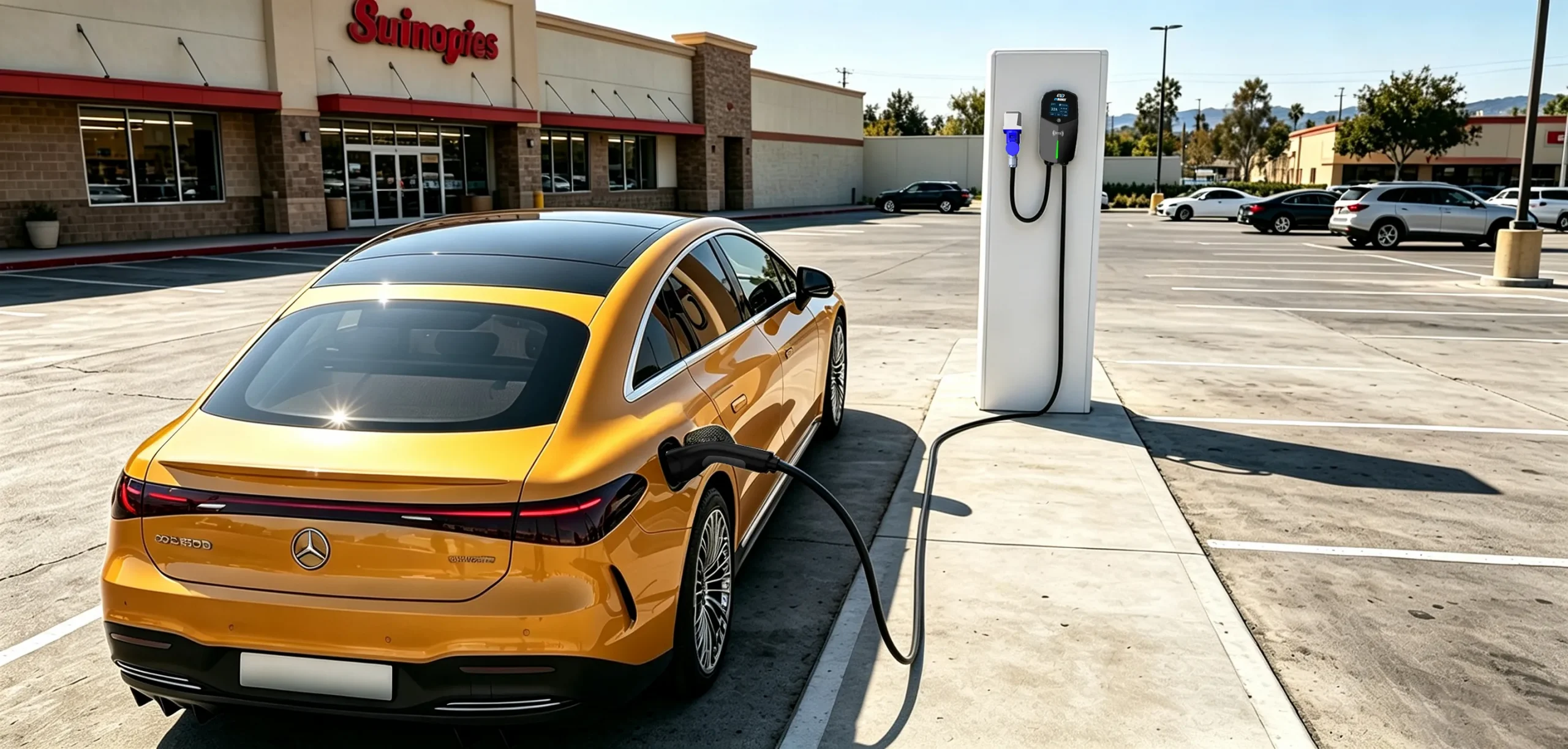
Lighting and CCTV appear in charging projects as scope decisions, not charger features — no charger supplies them, and EVDANCE makes chargers only. They are included for two plain reasons: drivers must be able to find and read the bays after dark, and the operator wants evidence when something goes wrong. Both are specified in the project’s own documents — drawing set, electrical scope, data arrangements — with values set by its code review and jurisdiction confirmations, never by a catalogue.
Key Takeaways
- Lighting and CCTV are project scope, not charger features — EVDANCE supplies chargers only.
- Specify by decision and document: positions on the drawing set, circuits on the M&E set, data duties in the operating documents.
- State the cameras’ purpose before their positions; evidence is the defensible value, deterrence is not a number anyone can source.
- Light levels and camera-data duties come from the project’s code review and jurisdiction confirmations — never from a guide.
The Scope, Element by Element
| Element | The project decision | The document it lands in |
|---|---|---|
| Bay and approach lighting | Which bays, routes and help points are lit, and on what control schedule — dusk, part-night, or site hours | The architect’s set for positions; the electrical scope for circuits and controls. Light levels are the code review’s output, not a figure a guide can set |
| Light at the charger face | Whether the driver can read the screen, follow instructions and handle the connector at night at each unit’s position | The layout drawing, coordinated with charger positions — a unit behind a column or beyond the lit field is found here, not after opening |
| Camera coverage | What the cameras are for, stated before any position is drawn: incident evidence, a record behind fault and damage reports, settling bay-occupancy disputes | The security scope: positions, fields of view, the recording point |
| Recording, retention and access | Who holds the footage, how long it is kept, and who may view it — settled against the project’s jurisdiction confirmations | The site’s operating documents. Camera and data duties are confirmed for the site’s own market; never copied from another country’s project |
| Power and data runs | Lights and networked cameras need circuits; cameras need a data path — physical scope with routes | The M&E set, alongside the charger circuits. Added late, this scope reopens drawings that were already frozen |
| Upkeep | Who cleans lenses, replaces failed lamps and checks recordings are being made — and on what rhythm | The operations and maintenance scope — a camera that stopped recording in March is a maintenance finding, not a post-incident discovery |
The Decisions Behind the Scope
Purpose before product. A camera specified for incident evidence is positioned and retained differently from one specified to watch bay occupancy. Projects that skip the purpose sentence buy coverage of the wrong thing, and no camera model repairs that. The scope is written in decisions, not equipment lists.
The night-time driver is the real client. A driver mid-failure at an unattended site judges the site by whether they can see what they are doing. Lighting at the charger face is part of the same promise as the support route printed on the unit — how commercial sites work as a system is set out in our explainer on how commercial EV charging stations work.
Duties travel with the footage. The moment a site records drivers, it holds personal data, and the handling duties are the project’s to confirm for its own jurisdiction and write into its operating documents. A specification can require that confirmation to exist; it cannot state what the duty is.
Where the Chargers Themselves Fit
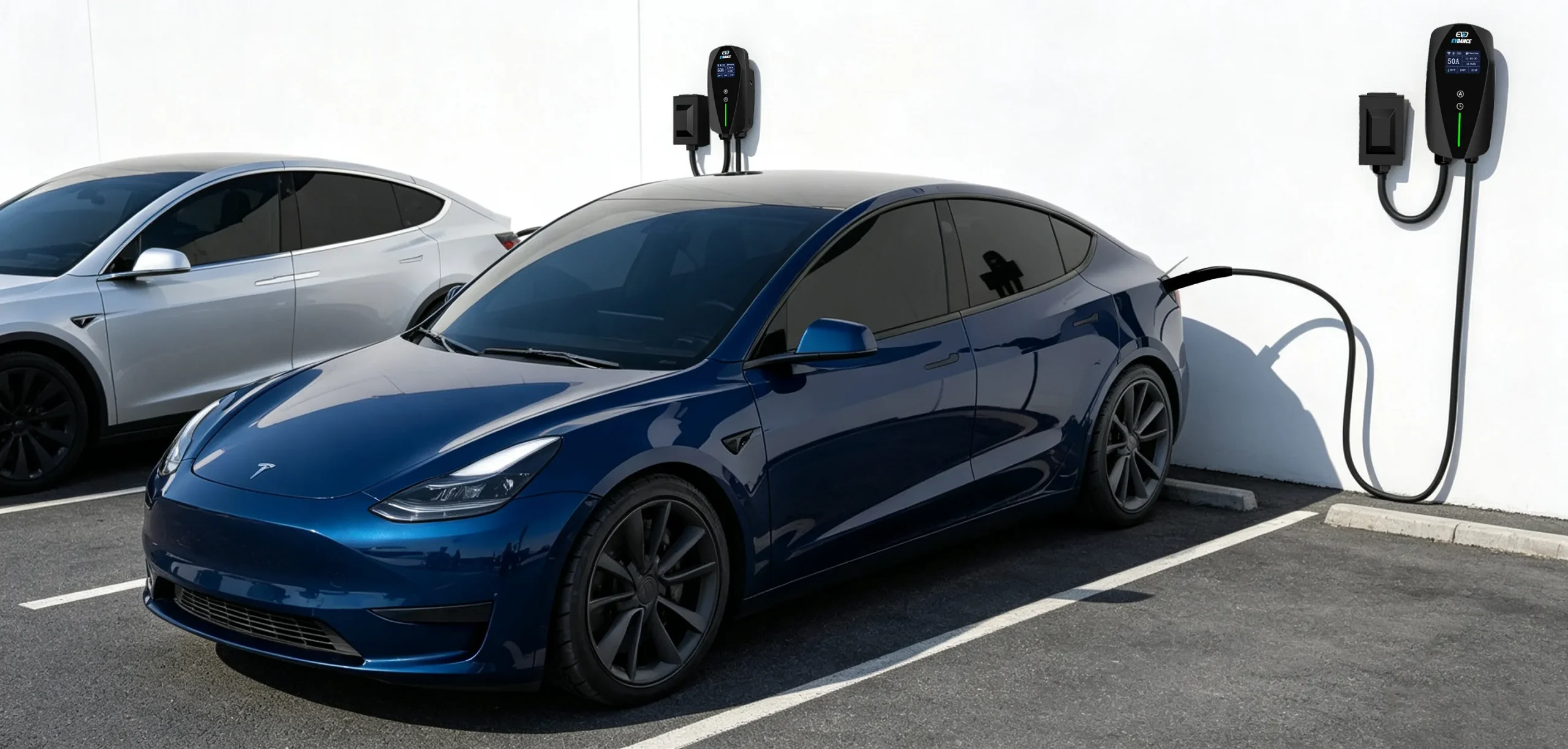
The charger’s own contribution is limited to what its listing states: a display the driver reads at the unit — the touchscreen on the EV-AC03201T dual-connector station, the LCD on the EV-RHDC30K-L compact DC charger — and access by RFID or app where stated, as the EV-ACT3204E wallbox does. A readable screen is not site lighting; no EVDANCE listing offers a charger camera. Lighting and CCTV stay in the project’s scope, priced with the other site trades, and can be raised alongside the hardware through our commercial charging team or contact page.
Frequently Asked Questions
Do EV chargers come with built-in cameras or lights?
Not in the EVDANCE range. The listings state displays, access methods and enclosure ratings; lighting and CCTV are separate project scope, supplied by the site’s own trades and designed with the bays.
What light level should a charging bay have?
The level your project’s code review sets — lighting values are regulated locally and differ by setting, so they are produced inside the design, never copied from a guide.
Does CCTV stop charger vandalism?
No honest deterrent figure exists in the sources, and this article claims none. What cameras reliably provide is evidence: a time-stamped record behind incident reports, damage claims and fault timelines. Specify them for that.
Related Reading
- How Do Commercial EV Charging Stations Work?
- How to Plan a Workplace EV Charging Program
- How Much Does It Cost to Install a Commercial EV Charging Station?

