
“Tesla adapter” covers two opposite jobs, so using one starts with direction. EVDANCE’s adapters serve one: a car with a J1772 or CCS1 inlet charging at a NACS plug — Tesla’s connector. Match that direction, then match the class: an AC adapter for destination chargers and home wallboxes, a DC adapter for fast charging. For DC, two conditions must both hold: your car maker approves third-party adapters for your car, and the station is open to your car.
Key Takeaways
- Start with direction: EVDANCE adapters let J1772 and CCS1 cars use NACS chargers; the Tesla-at-J1772 journey is the opposite product.
- Match the class — AC adapters never go near DC fast charging — and respect the lowest rating in the chain.
- Seat every joint fully, then follow the station’s and car maker’s own sequence; their documents govern.
- DC adapters add two conditions: car maker approval for your model, and a station open to your car.
Step Zero: Which Direction Do You Need?
| Your car | The charger you want to use | The adapter direction |
|---|---|---|
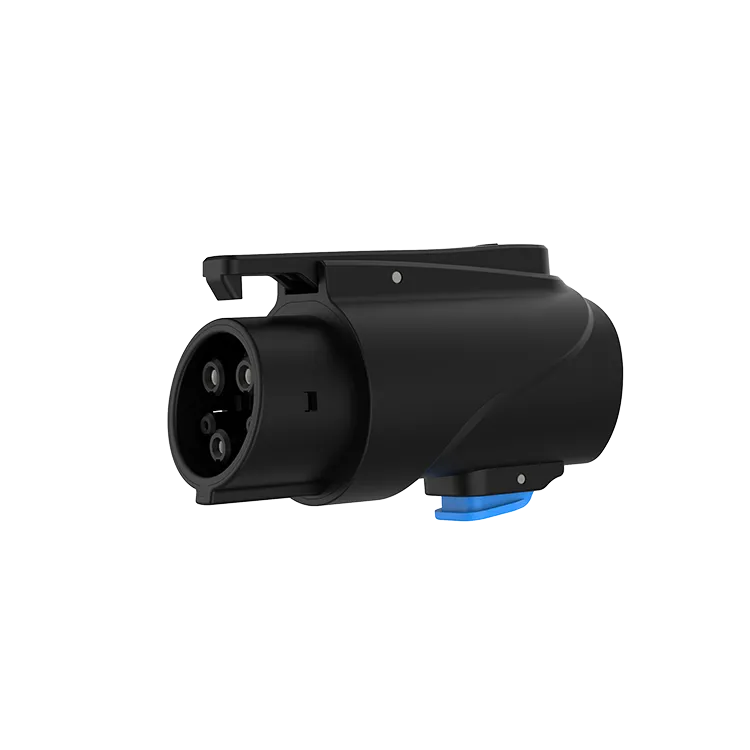
| J1772 inlet (AC) | NACS plug — destination charger, home wallbox | NACS-to-J1772 AC adapter, such as the JT02 |
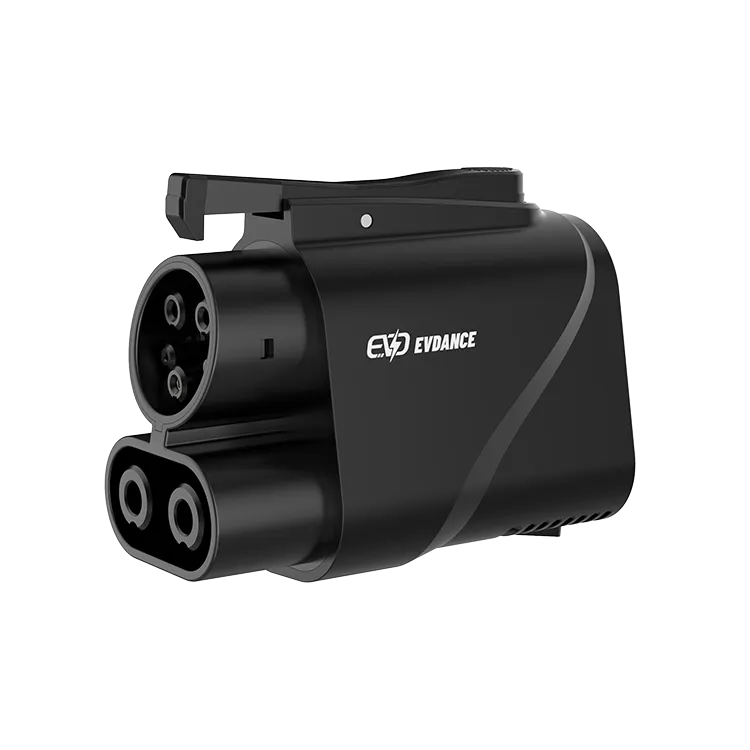
| CCS1 inlet (AC + DC) | NACS DC fast charger, including open Superchargers | NACS-to-CCS1 DC adapter, such as the JT08 or JT09 — with both conditions below |
| NACS inlet (a Tesla, or a newer NACS car) | J1772 plug | The opposite direction — a J1772-to-NACS adapter, a different product |
The adapter changes connector shape only: no added power, no AC-to-DC conversion, no fast charging for an AC-only inlet. If your row does not match the adapter in your hand, stop there. What NACS is, is covered in our NACS explainer; the reverse journey in can a Tesla use J1772 chargers.
The Fit Check, in Order
- 1. Class first. AC adapters are for AC charging only. The JT02 is never used at a Supercharger or any DC fast charger — that job belongs to a DC adapter and a CCS1 inlet.
- 2. Ratings ceiling. The session cannot exceed the lowest of three numbers: charger output, your car’s onboard acceptance, the adapter’s rating. The adapter is a ceiling, not a boost.
- 3. Inspect both faces. Clean, dry, undamaged contacts on adapter, plug and inlet. Damage is a stop, not a wipe-and-hope.
- 4. Seat it fully. Join adapter to charger plug, then the pair to the car, each joint pushed fully home until it latches as its maker describes. A half-seated adapter is the usual cause of a session that never starts.
- 5. Follow the station and the car. Start, pay and end the session exactly as the station’s and car maker’s instructions say. Their documents govern; no adapter changes the sequence.
- 6. Finish cleanly. End the session before unplugging, separate the joints, store the adapter dry. Our adapter safety guide covers the reasoning behind these steps.
The Two Extra Checks for DC Adapters
Two conditions that AC use does not — confirm both for your exact car before relying on the combination:
- Car maker approval. Your car’s maker must approve third-party DC adapters for your model, in its current owner documentation. If yours is silent, treat the answer as not yet, and ask.
- Station access. The station or network must be open to your car. A NACS DC site serving only its own brand’s cars will not start one for yours, adapter or not — check the operator’s listing for that location.
The EVDANCE Adapters
The JT02 is the AC adapter: NACS-to-J1772, rated up to 80 A, IP65 — for destination chargers and home wallboxes, never for Superchargers. The JT08 and JT09 are the DC adapters: NACS-to-CCS1, up to 500 A and IP66, the JT08 also stating 1000 V and the JT09 adding a handle. Both carry the same two conditions, restated because they are part of using them: your car maker must approve third-party DC adapters for your car, and the station must be open to your car. Confirm both in the makers’ and operator’s documents before the trip, not at the plug.
Frequently Asked Questions
Can I use an AC Tesla adapter at a Supercharger?
No. Superchargers are DC fast chargers; an AC adapter such as the JT02 is built for AC charging only. DC charging needs a CCS1 inlet, a DC adapter, maker approval and a station open to your car.
The session will not start. What do I check first?
The fit, in order: class matches the charger, every joint fully seated and latched, contacts clean and dry — then the two DC conditions at a fast charger. If all that checks out, the fault sits with the station or the car; follow their support routes rather than forcing a connection.
Does one adapter cover both AC and DC?
No. They are separate devices for separate classes, and the car’s inlet decides which it can use: a J1772-only car has no DC path, whatever adapter is offered.
Related Reading
- Are EV Charging Adapters Safe?
- Is the Tesla Charger NACS? NACS, J3400 and Adapters Explained
- Can a Tesla Use J1772 Chargers?

