
NACS stands for North American Charging Standard. It is the name for the compact charging connector that began as Tesla’s plug and is now standardised as SAE J3400, so any carmaker or charger maker can build to it. The same single plug carries both AC charging and DC fast charging.
Key Takeaways
- NACS means North American Charging Standard, standardised as SAE J3400.
- The name covers the plug, the car’s inlet and the standard behind both.
- One NACS plug carries AC and DC charging — the shape says nothing about speed.
- NACS is not a brand and not a network: fit is mechanical, access is permission.
What the Name Actually Covers
People use “NACS” for three connected things: the plug in your hand, the inlet on the car, and the standard behind both. Keeping them apart clears up most of the confusion around the name:
| What “NACS” refers to | What it means | What it does not mean |
|---|---|---|
| The connector | The small, slim plug shape itself | Not a brand, and not a charging speed |
| The standard | SAE J3400 — the published specification makers design and test against | Not one company’s private design any more |
| The charge port | The matching inlet on the car | Not access to any particular charging network |
The standard is the part that changed everything. While the design belonged to one company it was simply “the Tesla plug”; as a published SAE standard it became shared property that other manufacturers could adopt. Our explainer on whether the Tesla charger is NACS covers that history and the standardisation in full.
One Plug for AC and DC
Most connector families split the job in two. J1772 handles AC charging only, and CCS1 adds two large DC pins underneath it for fast charging — which is why a CCS1 handle is so much bigger. NACS uses one set of contacts for both jobs, so the home plug and the fast-charging plug have exactly the same shape.
That is also why the connector tells you nothing about speed. The same NACS shape serves Level 2 charging at 7–19 kW and DC fast charging at 50–350 kW, per U.S. DOT figures; the charger and the car decide which one you get. Our connector comparison sets NACS alongside J1772, CCS1 and Type 2 if you want the whole field.
What NACS Does Not Mean
- Not a brand. Chargers and cars from many makers carry the connector. The badge on the product, not the plug shape, tells you who made it.
- Not a network. A plug that fits only proves the shapes match. Whether a given network lets your car charge is decided by the network operator and your car maker.
- Not a speed. AC and DC share the plug, so speed comes from the equipment behind it, never from the name.
NACS Hardware From EVDANCE
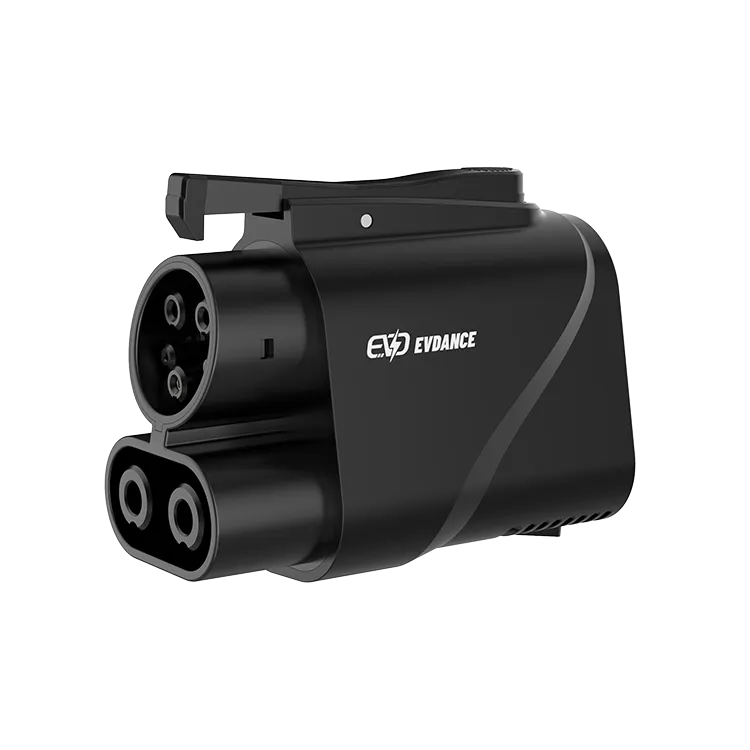
EVDANCE builds to the standard like any other maker. The EV-ACS3210T is a 32 A NACS portable charger at about 7.7 kW with IP66 sealing, and the EV-ACT5006T is a NACS wall charger running up to 48 A with a 25 ft cable. For cars on the other connector, the JT02 adapter lets a J1772 car charge from a NACS AC charger — AC only, up to 80 A, and never for Superchargers.

Frequently Asked Questions
Is NACS just Tesla’s name for its plug?
It started that way. Since standardisation as SAE J3400, the name belongs to the standard, and non-Tesla cars and chargers are built to it.
Does a NACS port mean my car can use every NACS charger?
The plug will fit any NACS charger. Whether a network lets your car charge there is a separate question, set by the operator and your car maker — fit and access are not the same thing.
Can a NACS car charge on a J1772 charger?
Only through an adapter built for that direction. Adapters are one-way parts: the JT02, for example, goes the other way, letting a J1772 car use a NACS AC charger. Check the direction before you buy.
Related Reading
- Is the Tesla Charger NACS? NACS, J3400 and Adapters Explained
- Type 2 vs J1772 vs NACS: Which EV Charger Connector Does Your Market Need?
- Are EV Charging Adapters Safe?

