
A charging station has no till to open, so a failed session is never settled in cash at the unit. It is settled from the session record the operator’s platform holds, which shows what was delivered and charged. Under the operator’s published terms, a session that delivered nothing is voided or refunded in full; a session that delivered part of a charge is billed on the metered amount, and only the difference comes back.
Key Takeaways
- Failed sessions are settled from the operator’s session record, not at the station.
- Nothing delivered means a void or full refund; part-delivered means billing on the meter, refunding the difference.
- A void, a refund and a card-hold release are three different money movements, on three different tracks.
- The network operator holds the record and the refund route; the site host usually cannot refund a network session.
The Record Decides
A networked charger reports each session to the operator’s platform: the station’s identity, start and stop times, the meter readings, and the amount charged. That log is why charging refunds are mechanical: the operator is not judging a story, it is reading its own meter record — created as our explainer on how EV charging stations work describes. What “delivered” means in money terms depends on the pricing model — energy on a per-kWh tariff, minutes on a time-based one, as the pricing models set out.
What “Failed” Means in the System
| Session state in the record | What the record shows | How it is normally handled |
|---|---|---|
| Never started, or stopped within moments | A session opened, with zero energy delivered | Voided or refunded in full under the operator’s terms — nothing to bill |
| Failed part-way through | Energy delivered up to the stop, then an error or interruption | Billed for what the meter recorded; anything beyond that is refunded |
| Session would not stop | A session still open after the driver tried to end it | The operator closes it at the timestamped record of the driver’s contact |
| Amount looks larger than the session cost | A temporary card hold above the final amount | Usually not a refund case: the hold settles down to the real amount by itself |
Void or Refund: Two Different Money Routes
Which route the money takes depends on when the failure is dealt with. Corrected before the payment settles, the charge can be voided — it never lands on the driver’s statement. After settlement, the same correction becomes a refund, sent back through the original payment route by the operator’s payment provider. A pre-authorisation hold is a third thing again: not a payment, and its release runs on the card scheme’s own track. Two drivers with identical failures can therefore see money return at different speeds: the operator’s decision is one step, the bank’s processing another.
Who Can Actually Press the Button
- The network operator holds the session record, the terms and the refund route. Refund decisions — automatic for a zero-energy session on some platforms, reviewed by support on others — are made here.
- The site host — the hotel, shop or car park in front of the charger — usually cannot refund a network session, because it never took the payment. Its role is to report the fault so the unit gets repaired.
- The payment provider moves the money once instructed — the part of the timeline no station controls.

Hardware That Produces a Clean Record
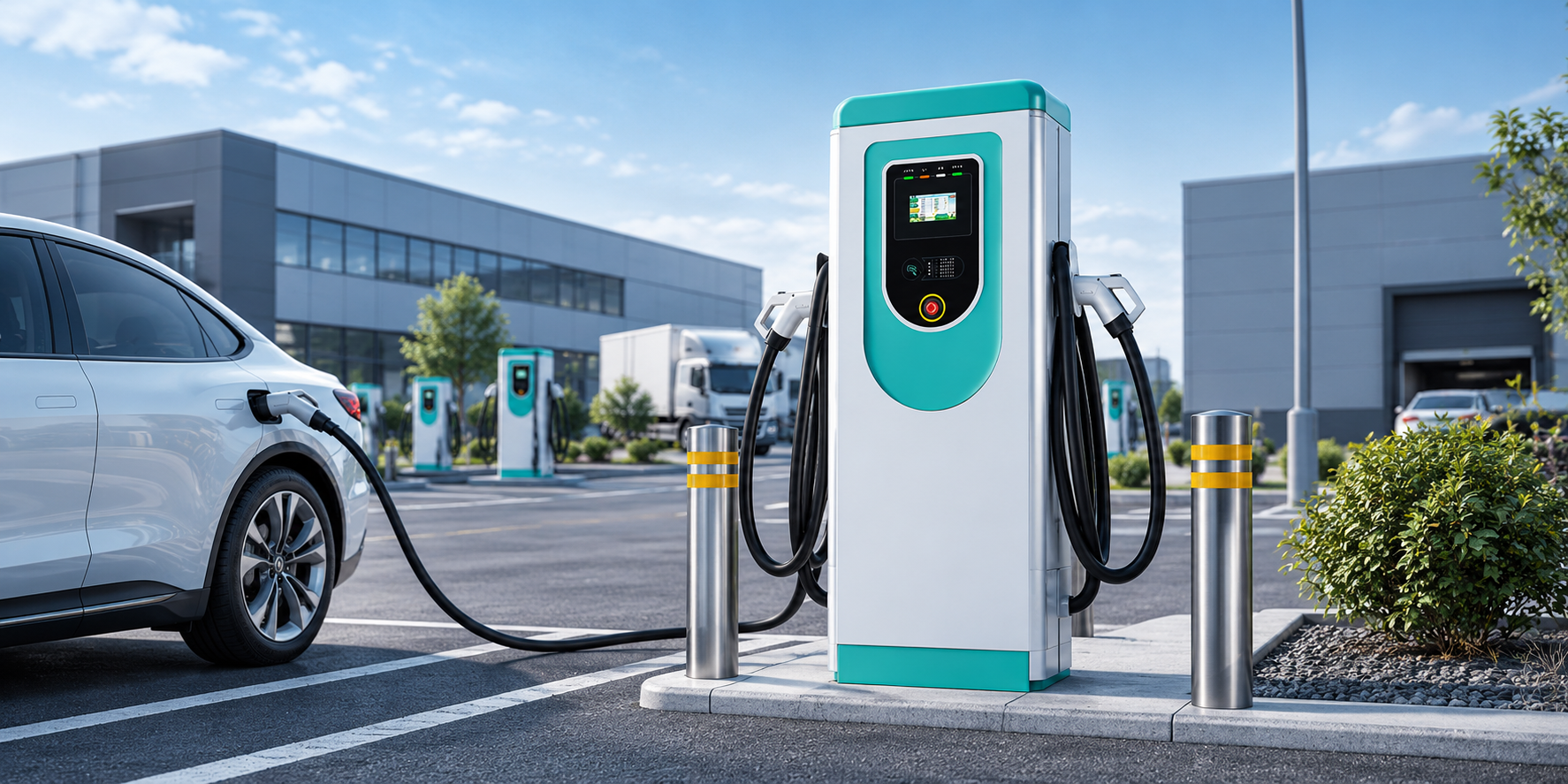
Stations on an open platform generate the per-session log automatically: the EV-AC03201T dual-connector AC station (two Type 2 connectors, up to 43 kW shared, OCPP 1.6J, RFID, IP54) reports its sessions to the operator’s platform of choice, and the EV-ACT3204PE wallbox (22 kW, Type 2, RFID and app, IP66, CE) does the same for smaller sites. The AC03201T’s touchscreen is the driver’s display, not a payment terminal — no refund is issued at the screen. Stations on an open platform generate the per-session log automatically: the EV-AC03201T dual-connector AC station (two Type 2 connectors, up to 43 kW shared, OCPP 1.6J, RFID, IP54) reports its sessions to the operator’s platform of choice, and the EV-ACT3204PE wallbox (22 kW, Type 2, RFID and app, IP66, CE) does the same for smaller sites. The AC03201T’s touchscreen is the driver’s display, not a payment terminal — no refund is issued at the screen. Operators can start from our commercial charging range.
Frequently Asked Questions
Are refunds for failed sessions automatic?
It depends on the operator’s terms and platform settings. Some operators void zero-energy sessions automatically; others settle them when the driver claims. Either way, the published terms of the network that took the payment decide.
How long does a station refund take?
There is no standard timetable, and no honest article can give you one. The operator’s processing and the bank’s settlement are separate steps; what a driver can ask for is a case reference, so the claim can be followed up.
Can the site host refund my session instead?
Usually not for a network session: the host did not take the payment and does not hold the record. The claim belongs with the operator named on the station; if it will not resolve the claim, a card dispute with the session evidence is the slower last resort.
Related Reading
- How Do EV Charging Stations Work?
- How Much Do EV Charging Stations Charge? Pricing Models Explained
- How to Use a Public EV Charger (and How to Stop It)

