
An apartment building adds more chargers the second time by repeating three checks, not the whole first project: prove the new demand from its waiting list and session records, re-check the electrical capacity left, and extend the shared cabling and access system wave one put in.
Key Takeaways
- Wave two starts from the building’s own evidence: a waiting list and session records, not a forecast.
- The load check runs again; spare ways on a shared backbone are what make expansion cheap.
- Agree how early and late joiners split costs before the second wave starts.
- Dual-connector stations and per-user RFID records let new bays join the existing system instead of starting a new one.
What Tells the Building It Is Time
Wave two should start from evidence the building collects itself, not from a guess about EV adoption:
- A waiting list. Residents who asked for charging and could not get a bay are the clearest demand signal a building can hold.
- Session records. If existing chargers are occupied most nights, the platform’s reports show it — spare capacity on paper and at 7 p.m. differ.
- New requests at move-in. Buyers and tenants ask about charging before signing; managers hear it first.
The first-wave rollout — survey, capacity assessment, shared cabling, billing model — is set out in our guide to apartment and condo EV charging in shared parking. Wave two assumes that groundwork exists.
The Capacity Question, Asked Again
Every added charger is a continuous load, so the load check runs again against the capacity left. The answers depend on decisions made in wave one:
| Wave-one decision | What it means in wave two |
|---|---|
| Shared backbone or busbar installed with spare ways | New bays connect to the backbone; no new run back to the panel for each bay |
| Point-to-point wiring, one run per charger | Each new bay needs its own run, and panel space becomes the limit sooner |
| Chargers that share the available capacity between them | More bays can be added at a lower average rate per car, which overnight parking usually tolerates |
| Billing model already agreed and running | New users join the existing model instead of reopening the fairness debate |
Where the supply is the limit, the choices match wave one — lower rates, staggered schedules, or a supply upgrade — now priced against known demand, not a forecast.
Keeping It Fair Between Early and Late Joiners
The second wave raises a fairness question the first did not: early chargers were paid for under one arrangement, and joiners arrive later. Buildings handle the split in a few standard ways:
- Joiners pay the marginal cost. Each new bay’s hardware and connection are charged to the resident who triggers them, on top of the shared backbone.
- A building fund. The association or landlord funds expansion as a building improvement; all users then pay the same running model.
- An operator model. A third-party operator funds and runs the expansion and recovers its cost from charging revenue, under the site agreement.
Whichever structure is chosen, write it down before wave two starts — including what happens when a resident moves out. Per-user records make any split auditable, which is why access control matters: our guide to RFID and user management for shared chargers explains how sessions are tied to a person.
Hardware That Expands Bay by Bay
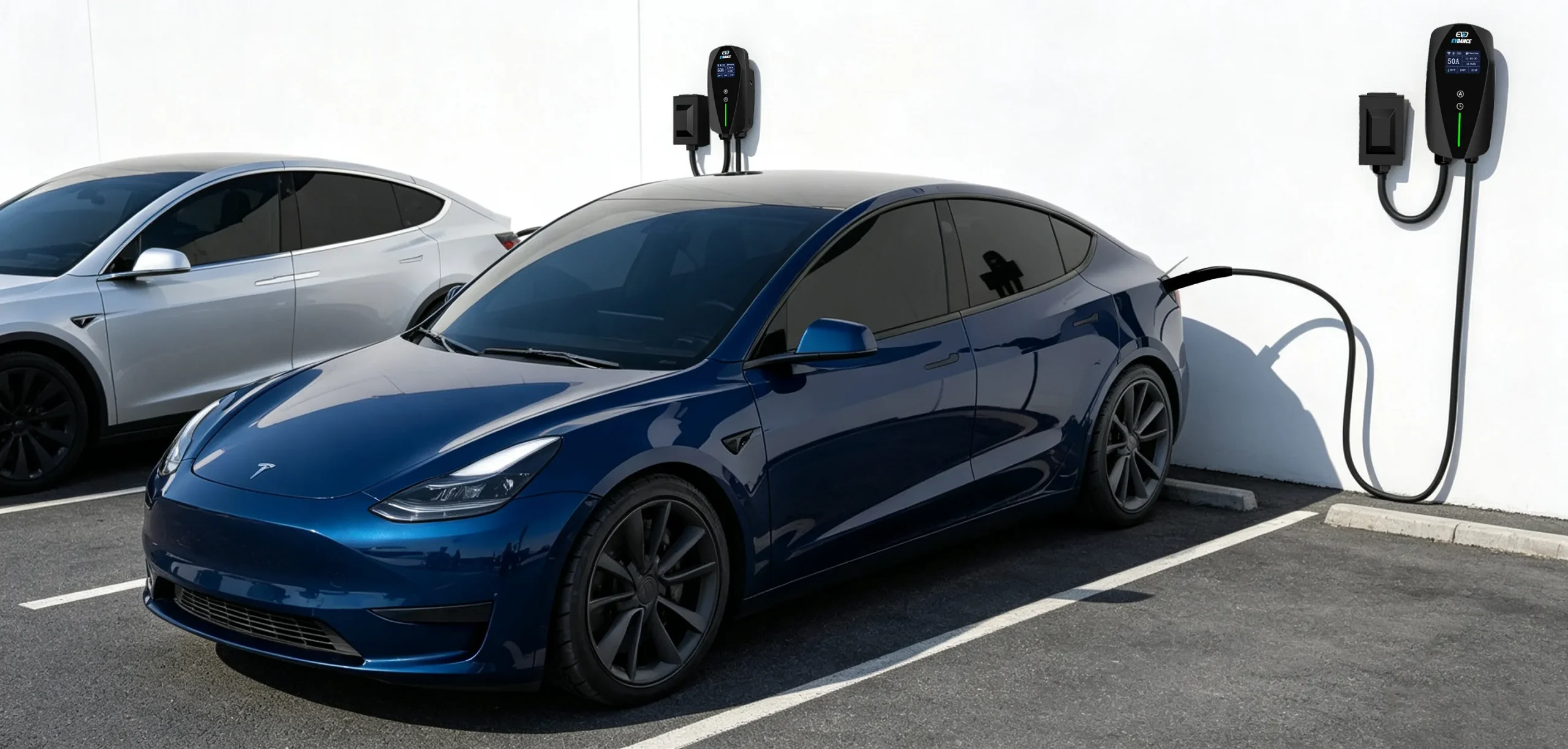
For shared bays, the EV-AC03201T dual-connector AC station serves two bays from one unit — up to 43 kW shared, 22 kW per connector — with RFID access and OCPP 1.6J, so one added unit brings two more bays onto the existing platform and billing model. Its 7-inch touchscreen is the driver display, not a payment terminal; payment runs through the operator’s platform. For assigned spaces, the EV-ACT3204PE 22 kW Type 2 wallbox adds RFID and app control per unit, so a new resident is enrolled with a card. Both record sessions per user, which is what the wave-two fairness split runs on.
Frequently Asked Questions
How many chargers should the second wave add?
As many as the waiting list plus a small margin supports, and no more than the load check allows. Small waves keep the building from paying for idle hardware, and each wave re-tests the demand evidence.
Who pays when only some residents benefit from the expansion?
That is the building’s written decision, not a technical one: joiners paying the marginal cost, a building fund, or an operator model — agreed before wave two, not argued bay by bay.
Our building never installed shared cabling. Can we still expand?
Yes, but the first step is the assessment the first wave skipped: an electrician checks the panel, the spare capacity and the cable routes, and the building chooses between point-to-point runs and installing the shared backbone now, sized for later waves.
Related Reading
- Apartment and Condo EV Charging: Solutions for Shared Parking
- RFID and User Management for Shared EV Chargers
- How to Charge an EV When You Live in an Apartment
- OCPP Explained: What Charge Point Operators Need From EV Charger Hardware

