
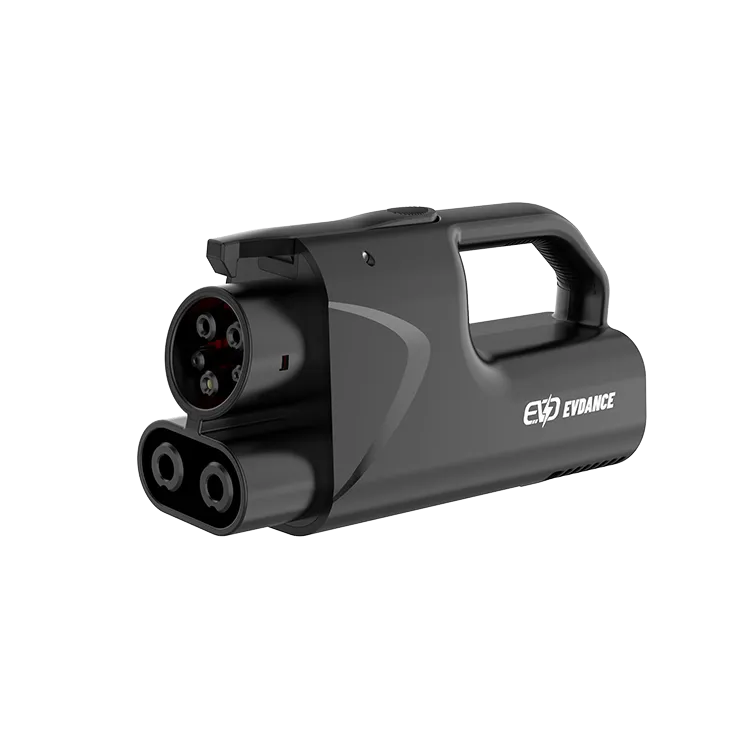
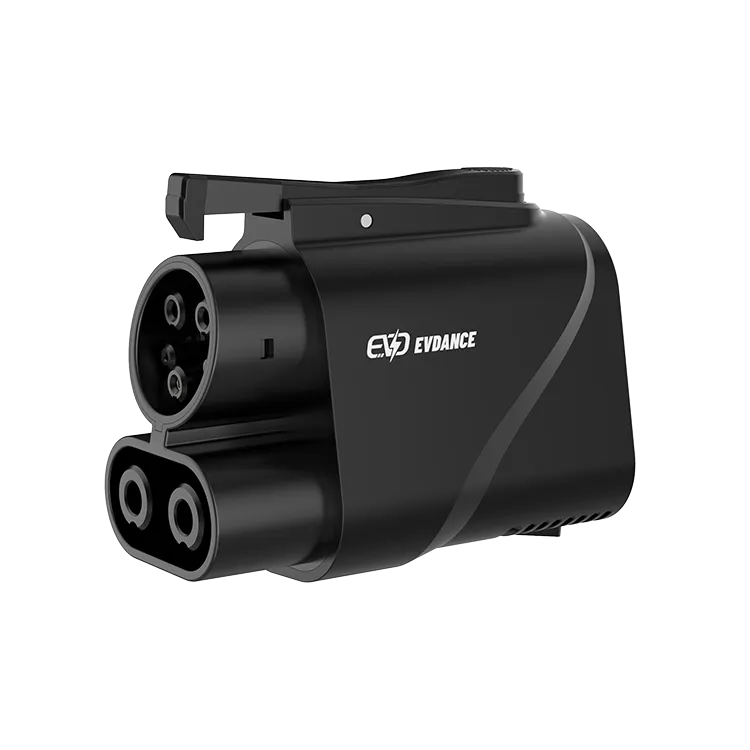
NACS and CCS1 are North America’s two DC fast-charging connector systems, and the difference starts with shape. NACS is one small plug that carries AC and DC charging on the same contacts. CCS1 is a tall plug built in two halves: a J1772 section on top for AC, and two large DC pins added below it for fast charging. What decides your daily experience is not the shape, though — it is which network each plug belongs to.
Key Takeaways
- NACS is one compact plug for AC and DC; CCS1 is a J1772 section with two DC pins added below.
- Neither connector is a speed — the charger and the car set the rate.
- At home, your charger simply matches your car’s inlet; the systems diverge on the road.
- Adapters run one way at a time, and the CCS1-to-NACS DC direction needs both maker approval and an open station.
The Two Systems, Side by Side
| NACS | CCS1 | |
|---|---|---|
| Connector shape | One compact plug; the same contacts serve AC and DC | A tall housing: J1772 section above, two DC pins below |
| AC charging | Through the NACS inlet on the car | Through the J1772 section of the same inlet — a plain J1772 plug fits it |
| DC fast charging | Through the same NACS inlet | Through the two added DC pins |
| Standard behind it | Published as SAE J3400, so any maker can build to it | Built on the J1772 standard, with the DC extension |
| Where funding rules name it | Networks built around it, including Tesla Superchargers | Required on DC ports at NEVI-funded corridor stations in the U.S. |
Neither plug is a speed. U.S. DOT figures put Level 2 AC charging at 7–19 kW and DC fast charging at 50–350 kW, and either system can sit behind either kind of charger — the equipment and the car set the rate, as our explainer on how DC fast chargers work sets out.
At Home, the Difference Mostly Disappears
Home charging is AC charging, and there the two systems ask different things of your wall. A CCS1 car’s inlet accepts a plain J1772 plug for AC — our explainer on whether J1772 works with CCS walks through that fit. A NACS car takes a NACS AC charger, such as the EVDANCE EV-ACT5006T wall charger (up to 48 A, 25 ft cable, IP65/IP66). In both cases the rule is the same: the home charger matches the inlet on your car, not the fast-charging debate.
On the Road, Adapters Bridge One Direction at a Time
Adapters are one-way parts, and the directions are not symmetric:
| Your car | The station | The bridge |
|---|---|---|
| J1772 (AC charging) | NACS AC charger | An AC adapter such as the JT02 — AC only, up to 80 A, and never for Superchargers |
| CCS1 | NACS DC station, including a Supercharger open to your car | A DC adapter such as the JT08 or JT09 — under the two conditions below |
| NACS | CCS1 DC station | No EVDANCE adapter covers this direction; a NACS car uses NACS stations |
For the CCS1-to-NACS DC direction, two conditions are mandatory, and both must hold. First, your car maker must approve third-party DC adapters for your exact car — read that in the maker’s current document for your model, because approval is never automatic. Second, the station or network must be open to your car: a plug that fits is not permission to charge. If either answer is no, the adapter does not get used.
Frequently Asked Questions
Is NACS faster than CCS1?
No. The connector is not the speed limit; the charger’s rating and the car’s acceptance set the rate. Both systems are found on chargers across the U.S. DOT’s 50–350 kW DC fast-charging band.
Can a CCS1 car charge at a Tesla Supercharger?
Only where the station is open to that car, and only with an adapter its maker approves for that exact car. Some Superchargers are open to other brands and some are not — that is the network’s decision, checked per station and per car, never assumed from the plug.
Which system should I choose on a new car?
Choose against where you will actually charge. Your home charger will match the car’s inlet either way. On the road, CCS1 remains required at NEVI-funded corridor stations, and NACS networks continue to open station by station — and adapters bridge the CCS1-to-NACS direction under the conditions above. Our history of whether the Tesla charger is NACS explains how the two systems came to coexist.
Related Reading
- Does J1772 Work With CCS? CCS Connectors Explained
- What Is J1772? The North American EV Plug Explained
- Is the Tesla Charger NACS? NACS, J3400 and Adapters Explained
- How Do DC Fast Chargers Work?
Sources & Standards
For buyers: EVDANCE is a DC fast charger manufacturer in Shenzhen — our 22 kW commercial DC charger, with samples before bulk orders.

