
SAE J3400 is the standard published by SAE International that defines the NACS charging connector. It takes the connector one company designed and turns it into a public document that any carmaker, charger maker or adapter maker can build to — and that buyers, installers and regulators can check products against.
Key Takeaways
- SAE J3400 is the published SAE International standard defining the NACS connector.
- Standardisation opened the design: any maker can build to it, and SAE maintains the document publicly.
- The standard settles fit, electrical classes and signalling — not safety listing, charging speed or network access.
- On a product, “J3400” names the interface; check ratings and listing separately.

From One Company’s Plug to a Public Standard
The connector began as Tesla’s own design for its cars and chargers. Tesla opened the design and named it the North American Charging Standard; SAE International then standardised it as J3400. Our explainer on whether the Tesla charger is NACS covers that history and the adapter picture. Standardisation changed three practical things:
- Anyone can build to it. A manufacturer no longer needs one company’s permission or a reverse-engineered copy; the interface is published, and products can be designed against the document.
- The document is maintained in the open. SAE keeps and revises the standard through its committee process, so changes are published rather than quietly altered.
- Buyers get a reference point. When a car, charger or adapter claims the NACS interface, J3400 is the text that claim can be measured against.
What a Connector Standard Actually Specifies
A standard like J3400 is an engineering document, not a product. At concept level, it covers the things two separately made products need in order to work together:
| Area | What the standard settles |
|---|---|
| The interface | The connector’s geometry — plug and inlet shapes that must mate, whoever made them |
| The electrical framework | The voltage and current classes the interface is designed to carry, for both AC and DC charging on the same connector |
| The signalling | How charger and car identify each other and control the session, so a session runs the same way across brands |
| Testing | The test methods a product’s compliance with the document is checked against |
That is why one compact connector can serve a home wallbox and a DC fast charger: the standard defines one interface for both, and the charger and car — not the plug — set the actual charging speed, within the U.S. DOT bands of 7–19 kW for Level 2 and 50–350 kW for DC fast charging.
What J3400 Does Not Do
- It is not a safety certification. A standard defines the interface; a product’s safety listing is a separate route, through a nationally recognised testing laboratory — the system OSHA’s NRTL programme oversees. “Built to J3400” and “listed” are different claims, and our adapter safety guide works through the listing side.
- It is not a speed rating. The designation says which connector a product uses, not how fast it charges. Read the product’s own stated kilowatts and amps.
- It is not network access. A J3400 plug fitting a car says nothing about whether a given network will serve that car; access remains the operator’s decision.
Hardware Built to the Standard
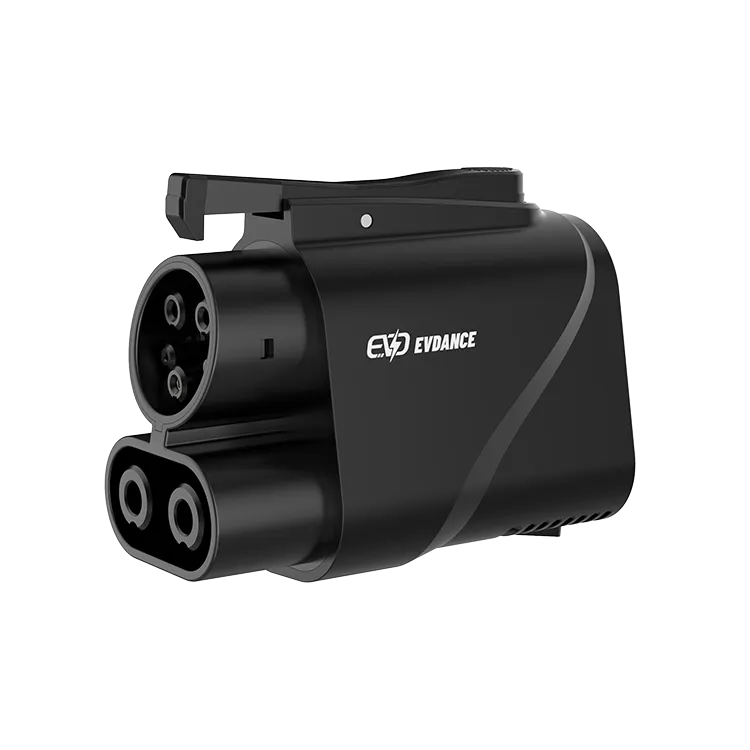
The clearest effect of J3400 is the hardware shelf. EVDANCE — a Shenzhen manufacturer founded in 2011 — builds NACS chargers such as the EV-ACS4005T, a 40A NACS portable charger at 9.6 kW with 16/24/32/40 A settings and IP66 sealing. The same standardisation covers adapters: the JT08 is a NACS-to-CCS1 DC adapter rated up to 500 A / 1000 V with IP66 sealing — usable only where your car maker approves third-party DC adapters for your exact car and the station is open to it, the two conditions that govern every DC adapter journey.
Frequently Asked Questions
Is SAE J3400 a type of charger?
No. It is a document — the standard itself. Chargers, cars and adapters are products designed to comply with it. When a product page says J3400, it is naming the connector interface the product uses.
Who writes and maintains J3400?
SAE International, the standards body for the automotive industry, through its committee process. That is the difference standardisation made: the connector’s definition sits with a public standards organisation rather than with the company that first designed it.
Does “J3400” on a label mean a product is certified safe?
No. J3400 compliance describes the interface. Safety certification is a separate claim, evidenced by a testing laboratory’s listing for the exact product. Check for both, and treat a product that states neither its ratings nor its listing as unproven.
Related Reading
- Is the Tesla Charger NACS? NACS, J3400 and Adapters Explained
- Type 2 vs J1772 vs NACS: Which EV Charger Connector Does Your Market Need?
- Are EV Charging Adapters Safe?

