
The headline difference is the rated current — 16 A against 32 A — but that number alone does not tell you the power. Each class is sold in single-phase and three-phase versions, and power comes from amps and phases together: a 16 A three-phase cable carries the 11 kW class, more than a 32 A single-phase cable’s roughly 7 kW. The two classes also differ in build, weight, plug coding and what drives their price.
Key Takeaways
- 16 A vs 32 A is the current class — but power needs the phase build too: 16 A three-phase (11 kW) beats 32 A single-phase (about 7 kW).
- The 32 A class is heavier and stiffer; three-phase builds add cores at either class.
- Each class declares itself through the plug’s coding, and the lowest ceiling in a session governs.
Four Cables Hide Behind Two Labels
| Cable class | Phases | Power class | Where you meet it |
|---|---|---|---|
| 16 A | Single-phase | About 3.7 kW | Light-duty home and public leads |
| 16 A | Three-phase | 11 kW | Three-phase posts, 11 kW cars |
| 32 A | Single-phase | About 7 kW | The standard European home and public lead |
| 32 A | Three-phase | 22 kW | Full-speed three-phase charging |
So “16 A or 32 A?” is only half the label. Read both numbers — current class and phase build — before the power class is known. Our selector for which EV charging cable you need walks through that match against your car and the posts you use.
Build, Weight and Coding
The higher class is built with more copper in each core, so a 32 A cable is heavier and stiffer to coil than a 16 A one. The phase build adds its own bulk: a three-phase version carries more power cores than a single-phase version at the same amps, so a 16 A three-phase lead can outweigh a slim 32 A single-phase one. Thickness alone is a poor way to judge a cable — read the printing on the jacket and plug, which states the class and build the assembly was made to.
Each plug carries coding matched to its class, so the equipment reads the cable’s ceiling at plug-in. The two classes are not the same product with a different sticker — they are different builds that announce themselves differently.
What the Difference Does in a Session
In a session, the cable is one ceiling among three — charger, car and cable — and the lowest governs. A 16 A cable on a setup that could deliver more caps the session at the cable’s class; a 32 A cable cannot push a session past what the charger offers or the car accepts. Neither cable is “faster” on its own: each is a limit that either binds or does not. The right purchase is the cable whose class and phases cover the fastest setup you actually use, a future car included.
What Drives the Price Difference
The drivers behind the price gap are consistent categories: copper content rises with the current class and again with a three-phase build; length multiplies the material; certification and testing sit behind any honestly rated product. A suspiciously cheap high-class cable is where those drivers were skipped — the trap our guide to whether all EV charging cables are the same examines. Industrial-socket charging follows the same class logic, as the CEE plug guide’s 16 A or 32 A choice shows.
The Two Classes, as EVDANCE Builds Them
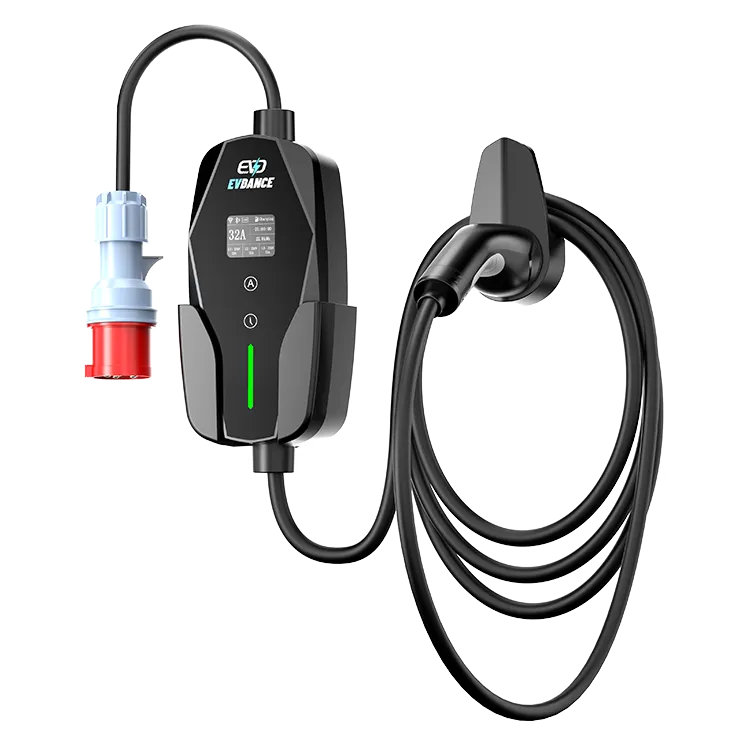
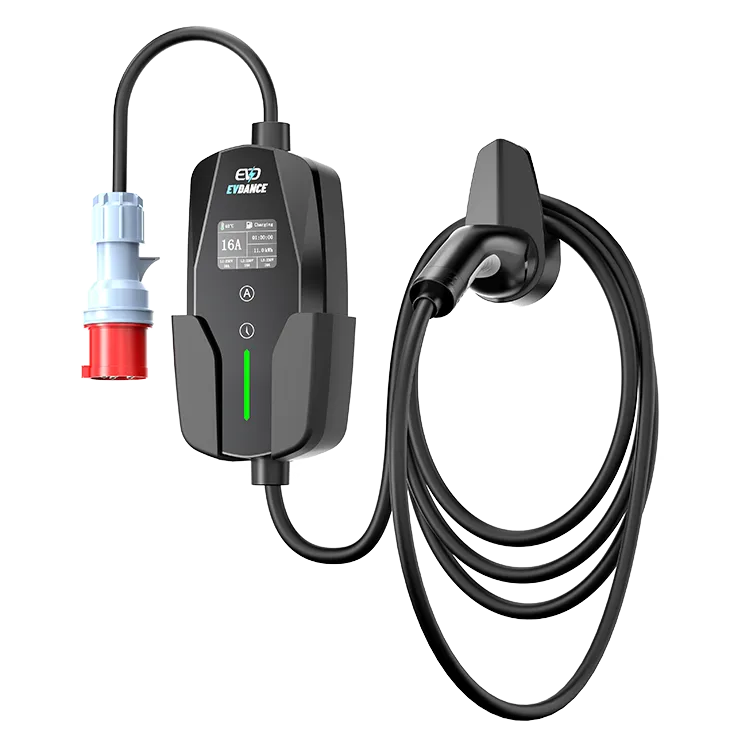
EVDANCE’s three-phase portables show both classes as complete units: the ACS1605PE is a 16 A three-phase portable charger in the 11 kW class, and the EV-ACS3205PE its 32 A three-phase counterpart in the 22 kW class. For single-phase Type 2 charging, the EV-ACS3210E is a 32 A unit delivering about 7 kW. In each case the lead is part of the unit, rated to match it — the loose-cable classes above are what you match when carrying your own lead to a socketed post, the landscape our explainer on portable EV charger types also maps.
Frequently Asked Questions
Is a 32 A cable always three-phase?
No. Both classes come in single-phase and three-phase builds. A 32 A single-phase cable is a roughly 7 kW lead; only the three-phase build reaches the 22 kW class.
How can I tell which class my cable is?
Read the printing on the jacket and plug: rated current and phase build are stated there. Weight and stiffness hint at the class, but the printing — and the coding the equipment reads — is the declaration that counts.
Will a 16 A cable hold back a car that can take 22 kW?
On a post that can offer it, yes: the session caps at the cable’s class even though charger and car could do more. Nothing is broken — the cable is doing the limiting it was built and coded to do.
Related Reading
- Which EV Charging Cable Do I Need?
- Portable EV Charger Types Explained: 10A, 16A, 32A and Three-Phase Models
- CEE Plugs Explained: Choosing 16A or 32A for a Three-Phase Portable EV Charger
- Are All EV Charging Cables the Same?

