
A charger does not read your tariff. The pairing works the other way round: you take the cheap window from your tariff document once, and store it as a schedule — in the car, or in the charger where its maker states scheduling as a feature. From then on, plugging in does not start the charge; the schedule does, holding the session until the window opens and shaping what happens at its edges. Here is the mechanism, part by part.
Key Takeaways
- The tariff sets the window; a schedule you store once is what holds charging inside it.
- The schedule can live in the car — the route that works with every charger — or in a charger whose maker states scheduling.
- Window-edge behaviour (waiting, spilling past the end, stopping) is a setting to choose deliberately from the maker’s manual.
- Check the schedule when the tariff or the clocks change, and confirm overrides have released.

The Three Parts of the Mechanism
| Part | What it does | Where it lives |
|---|---|---|
| The window | Defines the hours that cost less per kWh | Your tariff document — set by the utility, not the charger |
| The schedule | Stores the start (and sometimes stop or departure) times you chose | In the car, or in the charger/app where the maker states it |
| The session | Waits plugged-in, then charges when the schedule fires | The charger delivers power; the car’s onboard charger still sets the rate |
Because the schedule is a stored instruction, it survives ordinary days untouched: you plug in at 7 p.m., nothing happens, and the charge runs inside the window while you sleep. The overview in smart charging and time-of-use tariffs covers what this saves; this article is about how the holding and releasing behaves.
Two Places the Schedule Can Live
In the car. Most EVs offer a charge schedule or a departure time in their own settings. This route works with any charger, including the simplest portable: the car itself refuses power until its set time. A departure-time setting works backwards — the car estimates the energy needed and picks a start time to finish by departure, which usually lands it inside the window without you calculating anything.
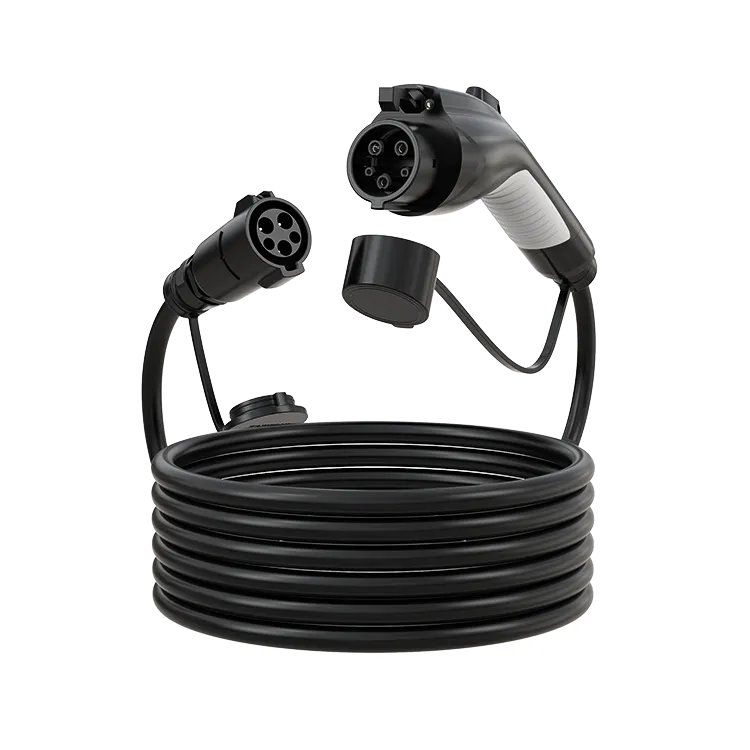
In the charger. Some chargers hold the schedule themselves, set through the maker’s app or controls. This route serves every car that plugs in — but it exists only where the maker states scheduling for that exact model. App control alone is not the same claim: an app can offer monitoring without timed sessions. EVDANCE states app and energy monitoring for its EV-ACS3210E and does not state app scheduling for any model; the EV-AC04001U has no timer at all and relies on the car’s schedule.
What Happens at the Edges of the Window
- You plug in before the window opens. With a schedule set, the session waits. Without one, charging starts immediately at the peak price — the most common way the pairing silently fails.
- The charge needs longer than the window. Behaviour is a setting, and settings differ by maker: some systems stop at the window’s end and finish the next night; others keep going at the higher rate so the car is ready. Decide which you want and set it deliberately; the maker’s manual is where the behaviour is documented.
- The window moves. Fixed tariffs change windows seasonally in some plans, and clocks shift twice a year. Recheck the stored schedule when your tariff document changes — an out-of-date schedule is worse than none, because it fails quietly.
The Override Habit
Every scheduling system offers an immediate-charge override for the unexpected trip. Use it as an exception, then check it has released: an override left active is a common reason a car charges at peak prices for weeks. A monthly glance at one session’s start time confirms the pairing still works. For the load side, see dynamic load balancing and how smart EV chargers work.
Frequently Asked Questions
Does the charger know when my off-peak hours are?
No charger reads your tariff. You enter the window once, as a schedule, and the charger or the car follows it. If the tariff changes, the schedule must be updated by hand.
Is it better to schedule in the car or the charger?
For one car, the car’s schedule is enough and works with any charger. A charger-held schedule suits shared chargers and several cars. Do not run both at once unless you have checked how they interact — two schedules can hold a session past both windows.
What if my charge does not fit inside the window?
Choose the behaviour deliberately: finish at the higher rate, or stop at the window’s end and continue the next night. That choice is a setting documented by the car or charger maker, not a tariff rule.
Related Reading
- Smart Charging and Time-of-Use Tariffs: How Scheduling Cuts EV Charging Costs
- How Do Smart EV Chargers Work?
- What Is Dynamic Load Balancing, and Why Does Your Wallbox Need It?
- Solar Panels and EV Chargers: How to Charge Your Car With Sunshine

