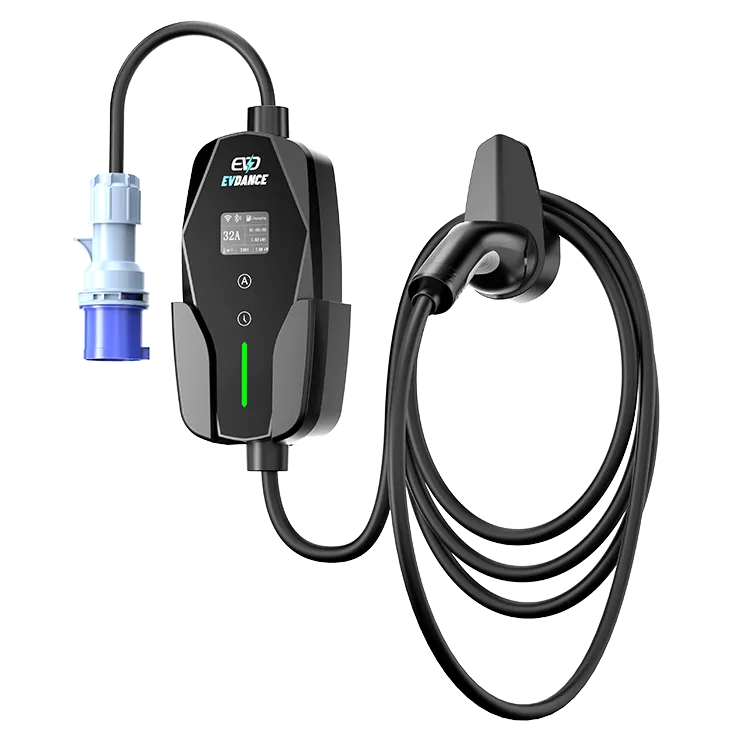
An EV charger is often the single largest load in a home. A 7.4 kW charger draws 32A continuously for hours, and an 11 kW charger draws 16A on each of three phases. Add an electric oven, a heat pump or an instant water heater, and many homes exceed the capacity of their main fuse or supply contract. Dynamic load balancing (DLB) is how a wallbox home charger avoids that problem without an expensive grid upgrade.
How Dynamic Load Balancing Works
A current sensor, usually a clamp on the incoming supply cable, measures how much power the whole building is using in real time. The charger compares that reading with the maximum the supply can safely deliver and adjusts its own charging current to stay under the limit. When the oven switches on, charging slows; when it switches off, charging speeds back up.
Why It Matters in Real Homes
- Small main fuses: many Swedish and Finnish homes have 16A to 25A main fuses, and many Dutch homes have 1x35A or 3x25A connections.
- Contracted power limits: in Italy many homes have a 3 kW contract; in Spain and France, households contract a fixed power level.
- Peak-based tariffs: in Flanders, part of the grid fee depends on the household’s monthly peak, so keeping charging peaks low saves money.
- Avoiding upgrades: a larger connection can cost far more than a smart charger, and in some regions takes months because of grid congestion.
Static vs Dynamic Load Management
Static load management simply fixes the charger at a lower current, for example 16A, so it can never overload the supply. It is safe but slow, because the charger stays at 16A even at 3 a.m. when nothing else is running. Dynamic load balancing uses the full available capacity whenever it is free, which usually means faster overnight charging on the same supply.
What to Check When Choosing a Charger
- Does the charger support a CT clamp or energy meter input for DLB?
- Can the maximum supply current be set during installation?
- Does it balance per phase on three-phase supplies?
- Can it combine DLB with scheduling for time-of-use tariffs?
- Is the app white-label ready if you sell under your own brand?
The EVDANCE EV-ACS3210E supports dynamic load balancing, Wi-Fi app control and OTA firmware updates, and is available for OEM and private label.
Related Reading
- Solar Panels and EV Chargers: How to Charge Your Car With Sunshine
- Smart Charging and Time-of-Use Tariffs: How Scheduling Cuts EV Charging Costs
- EV Charging News: South Korea Cuts Weekend Daytime Charging Rates by Up to 32%
Key Takeaways
- Dynamic load balancing adjusts charging current in real time to keep the whole building within its supply limit.
- It is essential where main fuses are small, contracted power is limited or tariffs are peak-based.
- Unlike static limits, DLB uses spare capacity whenever it is available, so overnight charging stays fast.
- Check for CT clamp support, adjustable supply limits, per-phase balancing and scheduling when choosing a charger.
Sources & Standards
- IEC 61851-1 — Electric vehicle conductive charging system, Part 1: General requirements
- Our guide: 7kW portable EV charger vs. wallbox home charger