
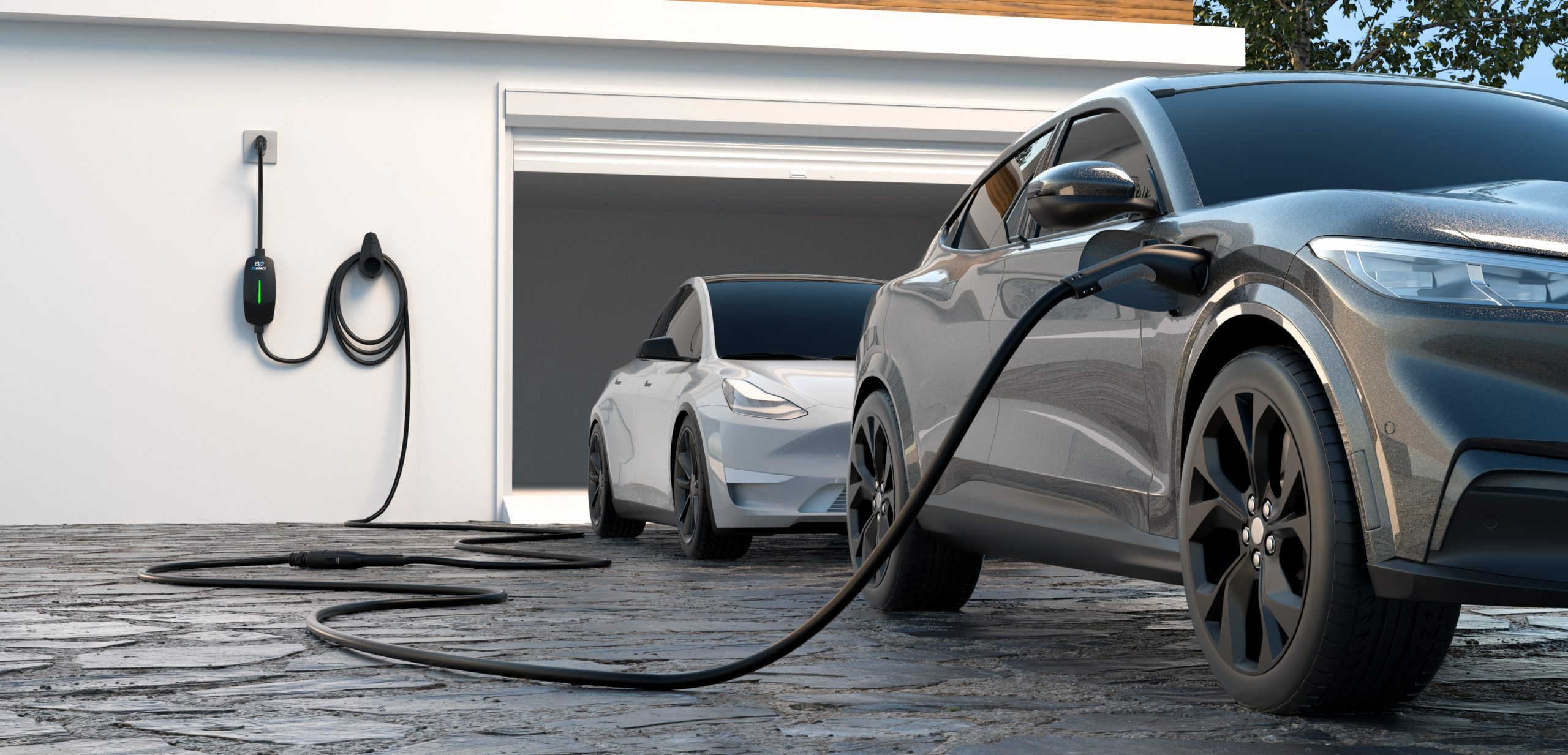
More families now own two electric vehicles instead of one — and that shift is quietly creating a new challenge at home. A single-car garage was built around a single charging point, but a “charging duo” needs a different kind of thinking: shared circuits, split power, and smarter scheduling. This guide breaks down what a two-EV household actually needs, how the main approaches compare, and how EVDANCE — an EV charger manufacturer based in Shenzhen — designs around this exact problem.
What Does “Charging Duo” Actually Mean?
A charging duo simply describes any setup where two electric vehicles share one home’s charging infrastructure. This is becoming common as EV adoption spreads beyond early adopters into multi-driver households, where one home might have a daily commuter EV and a second family or work vehicle.
The core challenge isn’t just “more cars” — it’s power. Most homes have a fixed electrical capacity, and running two high-power chargers simultaneously can trip breakers or require expensive panel upgrades. According to the U.S. Department of Energy’s Alternative Fuels Data Center, home Level 2 charging equipment runs on a 240V dedicated circuit and benefits from safety-certified, ENERGY STAR–labeled hardware — a baseline worth keeping in mind before adding a second charger to the same panel. Solving this well means balancing convenience, safety, and electrical cost.
Common Approaches to Dual EV Charging
1. Two Separate Chargers on Independent Circuits
The simplest option: install two individual chargers, each on its own dedicated circuit. This gives both vehicles full, uncompromised charging speed at all times, but it requires enough spare electrical capacity in the home and generally costs more upfront in wiring and permits.
2. One Charger, Shared Between Two Vehicles
Many households simply alternate a single portable charger between two EVs. It’s the lowest-cost route, but it depends on remembering to switch the cable — inconvenient for busy families juggling two schedules.
3. Smart, Adjustable-Current Chargers with Load Awareness
A more practical middle ground is using smart chargers that let you set or schedule the charging current per vehicle, so two units can coexist on a home’s existing circuit without overloading it. This is where product design matters — adjustable amperage, app-based scheduling, and reliable safety protection make dual-EV charging manageable without a full electrical overhaul.
How EVDANCE Fits Into a Two-EV Household
EVDANCE has been designing AC and DC charging equipment since 2011. Rather than a single one-size-fits-all product, EVDANCE builds a range of chargers that map onto the different ways a charging-duo household might solve its power problem.
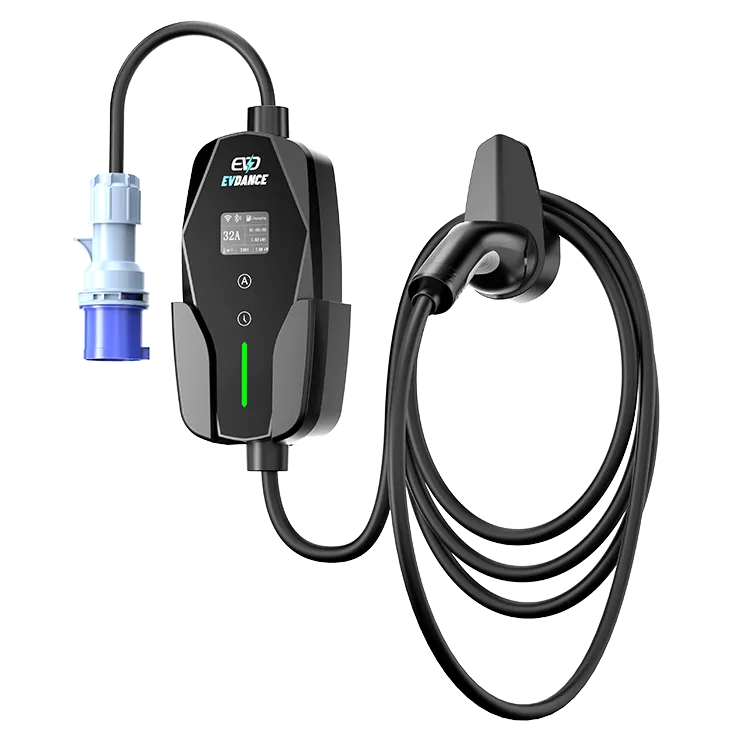
Smart Adjustable Portable Chargers
Models like the EV-ACS3210T and EV-ACS3210E offer adjustable output from 10A to 32A, which makes it realistic to run two chargers on a shared home circuit at reduced, safe current levels rather than forcing an all-or-nothing choice.
Higher-Power Options for Dedicated Circuits
For households that can dedicate separate circuits to each vehicle, EVDANCE’s higher-output units — such as the 40A EV-ACS4005T or the hardwired EV-ACT5006T — deliver faster charging without the compromises of current-sharing.
DC Fast-Charging for Heavier Use Cases
Families that need faster turnaround, or that are exploring small commercial or fleet-style setups, can look at EVDANCE’s floor-standing DC stations (EV-AC03201T, EV-RHDC30K-L) for higher throughput across multiple vehicles.
EVDANCE vs. Other Charger Brands: How the Options Compare
When comparing a charging-duo solution, most buyers end up weighing a manufacturer like EVDANCE — which controls its own R&D and factory line — against generic or reseller-branded chargers found through general marketplaces. Here’s a general comparison of what tends to differ:
| Factor | EVDANCE | Typical Generic / Reseller Brands |
|---|---|---|
| Manufacturing control | Owns its own factory and R&D team; full control over circuit design, firmware, and quality testing | Often relabels third-party OEM hardware with limited visibility into the original manufacturing process |
| Customization (OEM/ODM) | Supports custom branding, housing, firmware, and app UI for bulk / OEM orders | Rarely offers customization below very high minimum order quantities |
| Adjustable current for shared circuits | Multiple models with 10A–40A adjustable output, purpose-built for shared-circuit charging-duo setups | Often fixed-current only, limiting flexibility for dual-EV households |
| Certifications | CE, cETL, UKCA, SAA, CB Scheme, RoHS, and ENERGY STAR across the product line | Varies significantly; certification coverage often incomplete for target export markets |
| Lead time & scale | 3,000+ units/day automated production, 7–15 day rapid sampling, 99.2% on-time delivery | Dependent on the underlying OEM factory; lead times and consistency can vary batch to batch |
| After-sales support | Direct manufacturer warranty and technical support, <24h response | Support often routed through a distributor, adding delay for warranty claims |
| Price at scale | Competitive at bulk/wholesale volumes due to direct-factory pricing | Can be lower per-unit at small volumes, but margins shrink less predictably at scale |
Note: comparisons vary by specific model and supplier — always confirm certifications and specs for your target market before purchasing.
Customization & Bulk Purchase: OEM/ODM with EVDANCE
For distributors, auto brands, property developers, or fleet operators, a charging-duo rollout is rarely just “two chargers” — it’s often dozens or hundreds of units that need consistent branding and specifications. This is where EVDANCE’s OEM/ODM program is built to help.
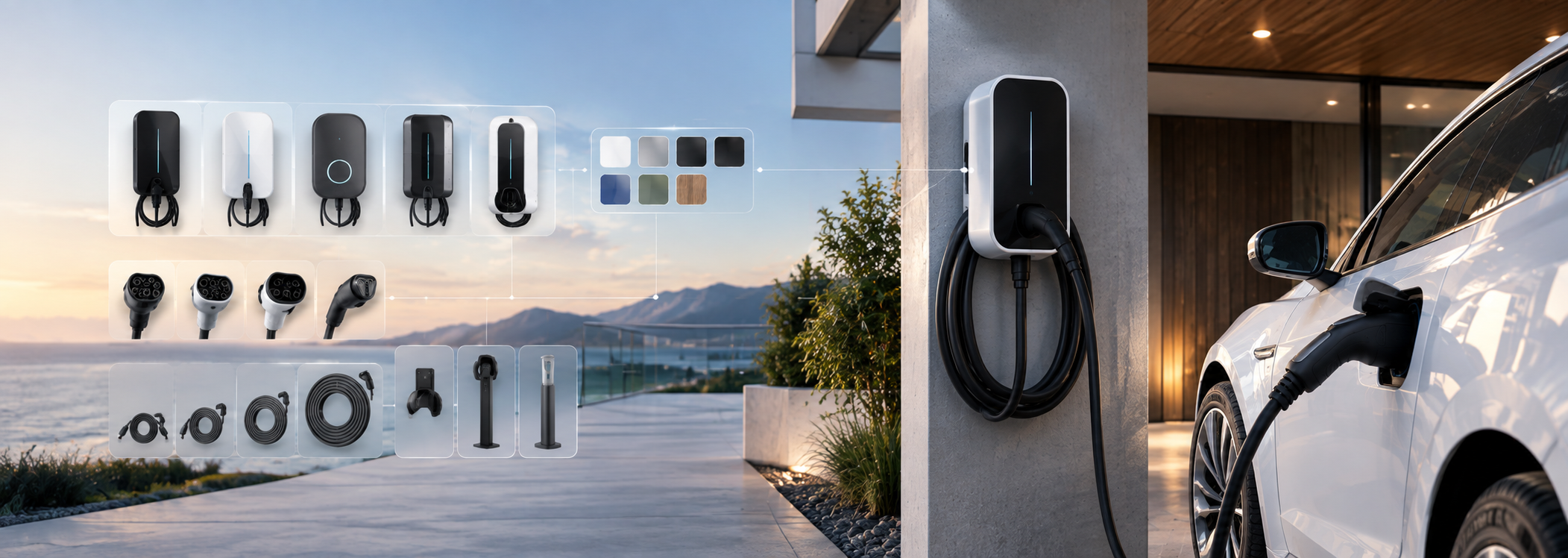
- Custom branding & housing: Custom mold fabrication, housing finishes, and branded mobile app UI for your own product line.
- Firmware & protocol integration: Support for OCPP 1.6J / 2.0.1 — the open communication standard maintained by the Open Charge Alliance — plus ISO 15118 Plug & Charge and dynamic load balancing tuned to your deployment.
- Scalable production: Over 100,000 units/month capacity across automated, dust-free production lines.
- Flexible order sizes: From smaller OEM pilot batches to full-scale wholesale and dealership volumes, with DDP/FOB terms available worldwide.
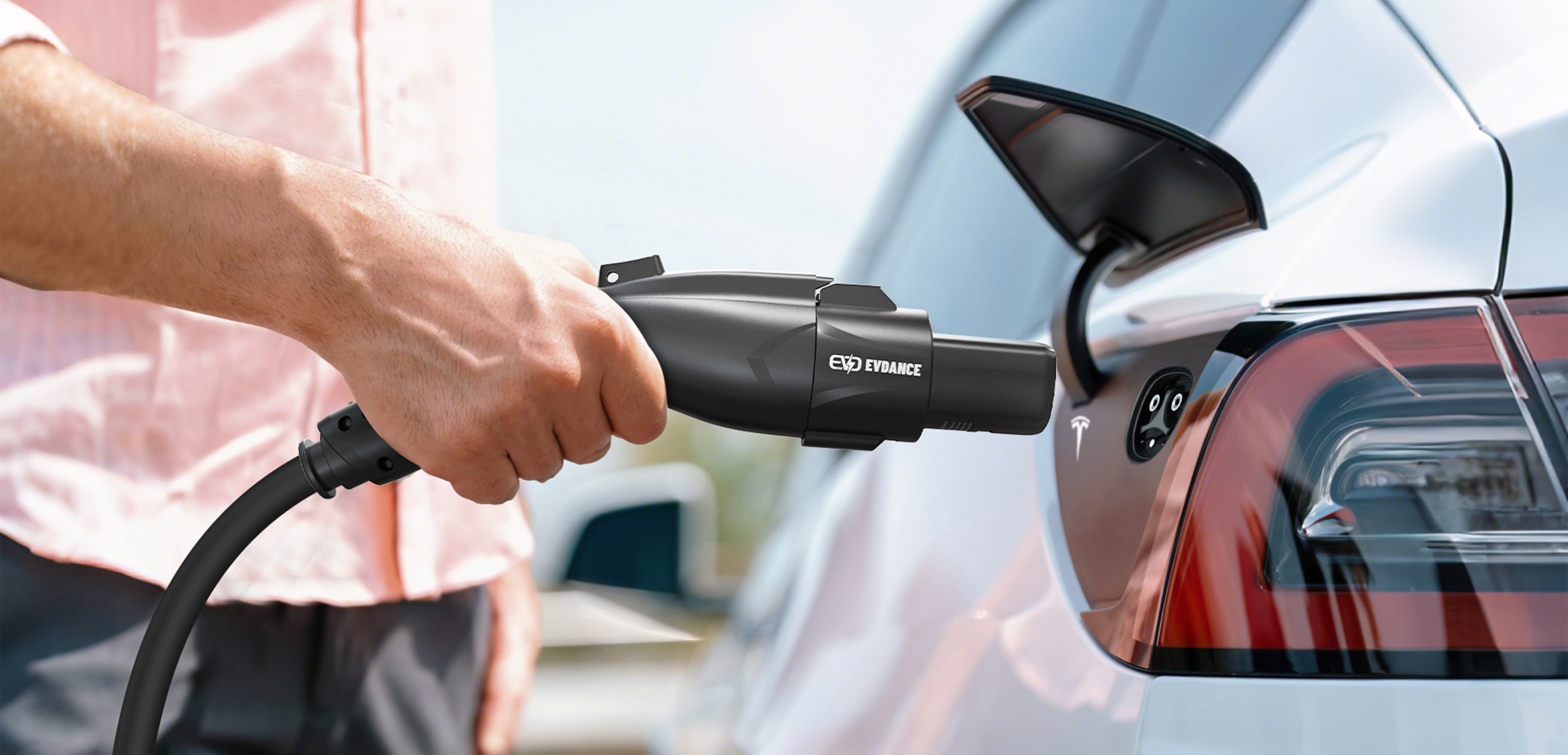
Every unit goes through full-load thermal burn-in testing before it leaves the facility, and the company’s MES-monitored production keeps on-time delivery at 99.2%. For businesses planning a charging-duo rollout across multiple sites, that consistency matters as much as the charger’s spec sheet.
Choosing the Right Setup for Your Home
- Check your panel capacity first. This determines whether two full-power chargers are realistic or whether current-sharing is the safer route — see the DOE’s home charging guidance for the basics.
- Match the charger to your daily routine. If both vehicles need to be ready every morning, prioritize dedicated circuits or smart scheduling over manual cable-swapping.
- Plan for the future. Even if you own one EV today, wiring and installation choices made now affect how easily you can add a second charger later.
- Buying in volume? If you’re a distributor, property manager, or fleet operator deploying many units, ask about OEM/ODM customization before committing to a single fixed spec.
Final Thoughts
A charging duo doesn’t have to mean double the hassle. With the right combination of adjustable-current chargers, dedicated circuits, or smart scheduling, two-EV households can charge reliably without expensive infrastructure overhauls. And for businesses scaling beyond a single household, direct-manufacturer customization and bulk pricing can make a real difference in cost and consistency. As a manufacturer covering AC wallboxes, portable chargers, DC fast-charging stations, and full OEM/ODM programs, EVDANCE is built to support exactly this kind of flexible, real-world charging need — for homes, fleets, and everything in between.
Sources & Standards
- U.S. Department of Energy — Alternative Fuels Data Center: Charging Electric Vehicles at Home
- ISO 15118-1:2019 — Road vehicles: Vehicle to grid communication interface (International Organization for Standardization)
- Open Charge Alliance — OCPP (Open Charge Point Protocol)
- ENERGY STAR — Certified Electric Vehicle Chargers