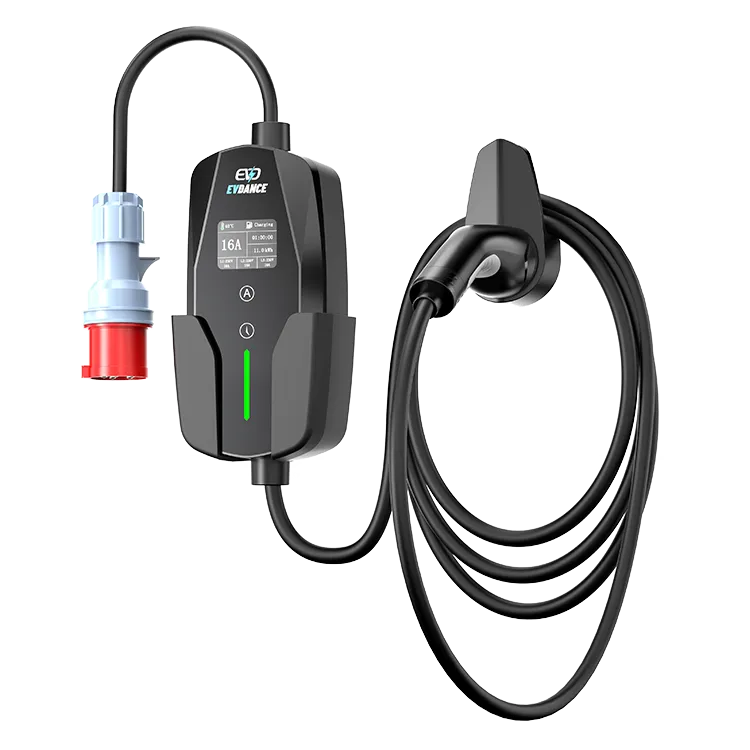
A portable EV charger is one of the simplest pieces of EV ownership — plug it in, plug into the car, charge. But that simplicity hides a few real safety rules that are easy to get wrong, especially around the one workaround almost every owner is tempted to try at some point: extending the cable’s reach with whatever cord is on hand. Here’s what’s actually allowed, what isn’t, and what to check before you buy or install one.
The Rule Most Owners Don’t Know: No Extension Cords
Under the National Electrical Code’s Article 625, which governs EV charging equipment, connecting a portable charger to a vehicle must use only a listed cord or cable — the manufacturer-supplied cable that has been tested and certified for the purpose. Per EC&M’s Article 625 guide, an improvised extension cord is explicitly not an approved way to bridge the gap between the charger and the car. This isn’t a minor technicality — a standard household extension cord is typically rated for around 15A, while EV charging equipment routinely draws 16–50A continuously for hours at a time, well beyond what those cords are built to handle safely.
Why This Actually Matters
EVDANCE’s own safety team echoed the same point in a formal advisory: undersized conductors in ordinary extension cords can overheat and suffer voltage drop under EV charging’s sustained current draw, and the risk is specifically tied to duration — a charger drawing 30A for six hours overnight is a very different load than a vacuum cleaner drawing similar current for ten minutes. The fix, when a charger’s cable doesn’t reach a parking spot, is proper equipment placement — mounting or positioning the charger closer to where the vehicle actually parks — or using an accessory that is itself listed and rated for EV charging current, such as a purpose-built extension cable with adequately sized copper conductors and a weatherproof rating, rather than a generic cord.

What Else to Check Before Buying a Portable Charger
| Check | Why it matters |
|---|---|
| Independent safety listing (UL, ETL, or equivalent) | Confirms the unit itself has been tested against a recognized safety standard, separate from how it’s wired into your home’s circuit |
| Amperage matches your outlet and circuit | An overrated charger on an undersized circuit can trip breakers; an underrated one just charges slower than it needs to |
| IP rating for outdoor storage or use | A charger or cable that lives outside or in an unheated garage needs real weatherproofing, not just a splash-resistant shell |
| Cable length matches your actual parking layout | Measure before buying — a cable that’s a few feet short leads straight back to the extension-cord temptation |
The Category Is Growing — Which Means More Buyers Need to Know This
This isn’t a niche concern. The portable EV charger market is projected to grow from $4.11 billion in 2024 to $12.35 billion by 2030, a 19.3% compound annual growth rate, according to NextMSC’s Portable EV Charger Market report. As more first-time EV owners buy a portable charger — often without an electrician walking them through the installation — basic rules like the no-extension-cord requirement become easy to miss simply because nobody explained them.
Key Takeaways
- NEC Article 625 requires a listed cord or cable for EV charging — improvised extension cords are not code-compliant.
- Standard household extension cords (typically ~15A) aren’t built for EV charging’s sustained 16–50A draw.
- If a charger’s cable doesn’t reach, reposition the equipment or use a listed, purpose-built extension cable — not a generic cord.
- Check independent safety certification, amperage match, IP rating, and cable length before buying.
- The portable EV charger market is projected to nearly triple by 2030, meaning more first-time buyers need this information.
Sources & Standards
- EC&M — Article 625: Electric Vehicle Charging Systems
- EVDANCE — Safety Advisory on EV Extension Cords
- NextMSC — Portable EV Charger Market Report