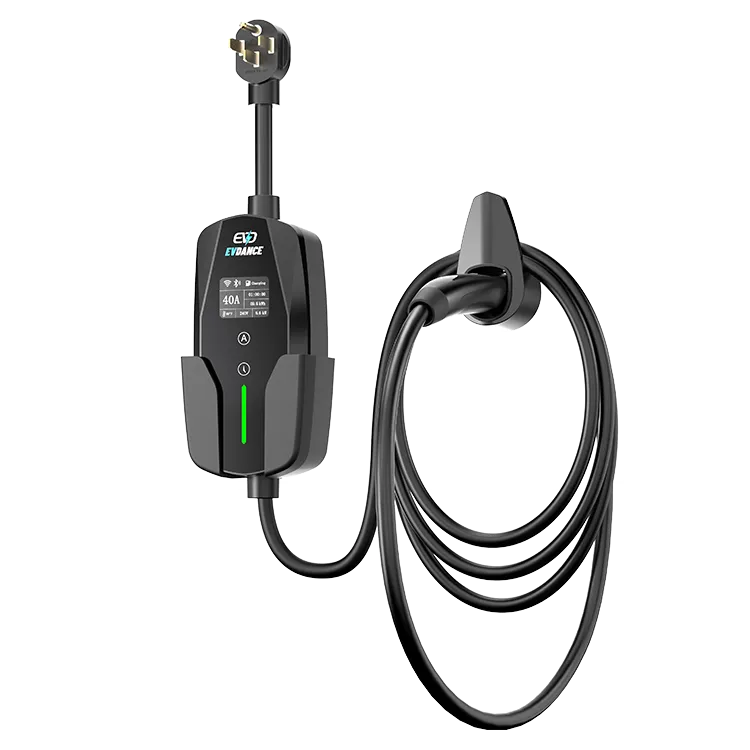
Choosing a portable EV charger supplier is not the same as buying a charger. A distributor, e-commerce brand or installer is committing to a product line that will carry its name, its warranty promises and its reputation for years. The cheapest quote on a sourcing platform rarely stays the cheapest once returns, missing certificates and delayed shipments are counted.
This checklist walks through what experienced importers verify before placing a first order, from confirming that the supplier is actually a manufacturer to checking the documents your market requires.
1. Confirm You Are Talking to a Manufacturer
Many listings for portable EV chargers come from trading companies that resell the same generic product from several factories. That is not always a problem, but it makes it harder to control quality, request design changes or trace a fault back to a production batch.
- Ask for a factory tour or video walkthrough. A real manufacturer can show assembly lines, testing stations and injection molding, not just a showroom.
- Check who holds the certificates. The applicant or manufacturer named on a test report should match the company you are buying from.
- Ask about in-house engineering. Firmware, display graphics and app changes are only realistic if the supplier has its own R&D team.

EVDANCE, for example, designs, assembles and tests its chargers in its own Shenzhen facility; buyers can see the process on our factory tour page before they request samples.
2. Match the Product to Your Market
A portable EV charger that sells well in Germany will not work in Texas. Before comparing prices, confirm that the supplier builds the right configuration for the country you sell into.
| Market | Vehicle connector | Typical grid plug |
|---|---|---|
| USA and Canada | SAE J1772 or NACS (SAE J3400) | NEMA 14-50P (240V) |
| Continental Europe | Type 2 (IEC 62196-2) | Schuko, or CEE 16A/32A red for three-phase |
| UK and Ireland | Type 2 | BS 1363 13A or a dedicated circuit |
| Australia and New Zealand | Type 2 | AS/NZS 3112 |
Our market-by-market guides summarize grid voltage, sockets, connectors and approval rules for more than 40 countries.
3. Ask for Certificates by Model, Not by Brand
A supplier logo wall is not a certificate. Certification is issued for a specific model and configuration, so ask for the test report and certificate that match the exact product you will import, including the plug and cable version.
- Check that the model number on the certificate matches the product label.
- Confirm the standard listed (for example IEC 61851-1 for charging equipment) and the testing lab.
- For North America, check whether your channel requires an NRTL listing such as UL or ETL.
- For the EU, confirm the CE declaration of conformity and, for Wi-Fi models, the radio equipment requirements.
Our guide to portable EV charger safety explains why listing and correct installation matter as much as the hardware.
4. Test Samples Like a Customer Would
Order samples before you order a container. Plug them into the vehicles your customers actually drive, charge overnight, check the temperature of the plug and control box, and test every current setting. Check cable flexibility on a cold morning and how the control box survives a drop onto concrete. Samples reveal issues that no specification sheet will show.
5. Compare the Whole Offer, Not the Unit Price
- Warranty: how long, and who pays freight for replacements?
- Spare parts: can you buy control boxes, cables or connectors separately?
- Branding: is private label available, and at what order quantity?
- Shipping terms: FOB leaves import clearance to you; DDP delivers to your door with duties handled.
- Support: is there a named account engineer who answers technical questions?
Related Reading
- OEM and Private-Label EV Chargers: A Complete Guide for Brands
- How Distributors Can Build a Profitable EV Charger Product Line
- OEM vs ODM EV Chargers: How Private-Label Charging Works
- Portable EV Charger News: Why Extension Cords Are a Code Violation, Not a Workaround
Key Takeaways
- Verify that your supplier is a manufacturer with its own production, testing and engineering.
- Match connector and grid plug to your market before comparing prices.
- Request certificates and test reports for the exact model you will import.
- Test samples on real vehicles and real circuits before placing a bulk order.
- Compare warranty, spare parts, branding options and shipping terms, not just unit price.
Sources & Standards
- IEC 61851-1 — Electric vehicle conductive charging system, Part 1: General requirements
- IEC 62196-2 — Plugs, socket-outlets, vehicle connectors and vehicle inlets, Part 2
- SAE J1772 — Electric Vehicle and Plug-in Hybrid Electric Vehicle Conductive Charge Coupler
- SAE J3400 — North American Charging System (NACS)