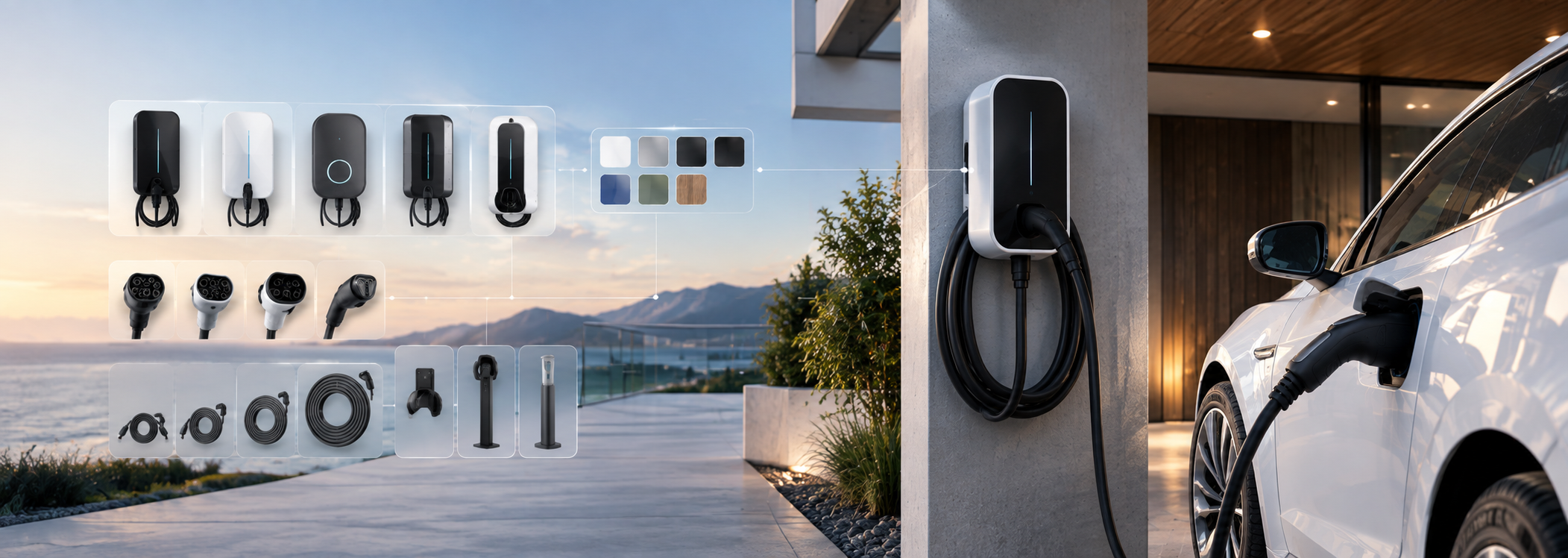
Most EV chargers sold under well-known consumer and automotive brands are not built in those brands’ own factories. They are produced by specialist manufacturers under OEM or ODM agreements. For distributors, e-commerce sellers and automakers, private-label charging is often the fastest way to launch a range without investing in tooling, testing labs and production lines.
OEM vs ODM: The Difference
| OEM (Original Equipment Manufacturing) | ODM (Original Design Manufacturing) | |
|---|---|---|
| Who owns the design? | You provide the design or specification | The manufacturer provides a proven design |
| Typical customization | Full: enclosure, electronics, firmware | Branding, colors, packaging, cable, display graphics |
| Time to market | Longer: design, tooling, certification | Shorter: builds on existing certified models |
| Best for | Automakers and large brands with engineering teams | Distributors, e-commerce brands, installers |
In practice, most private-label EV charger projects sit in between: an existing certified design customized with the buyer’s branding and a few functional changes.
What You Can Customize
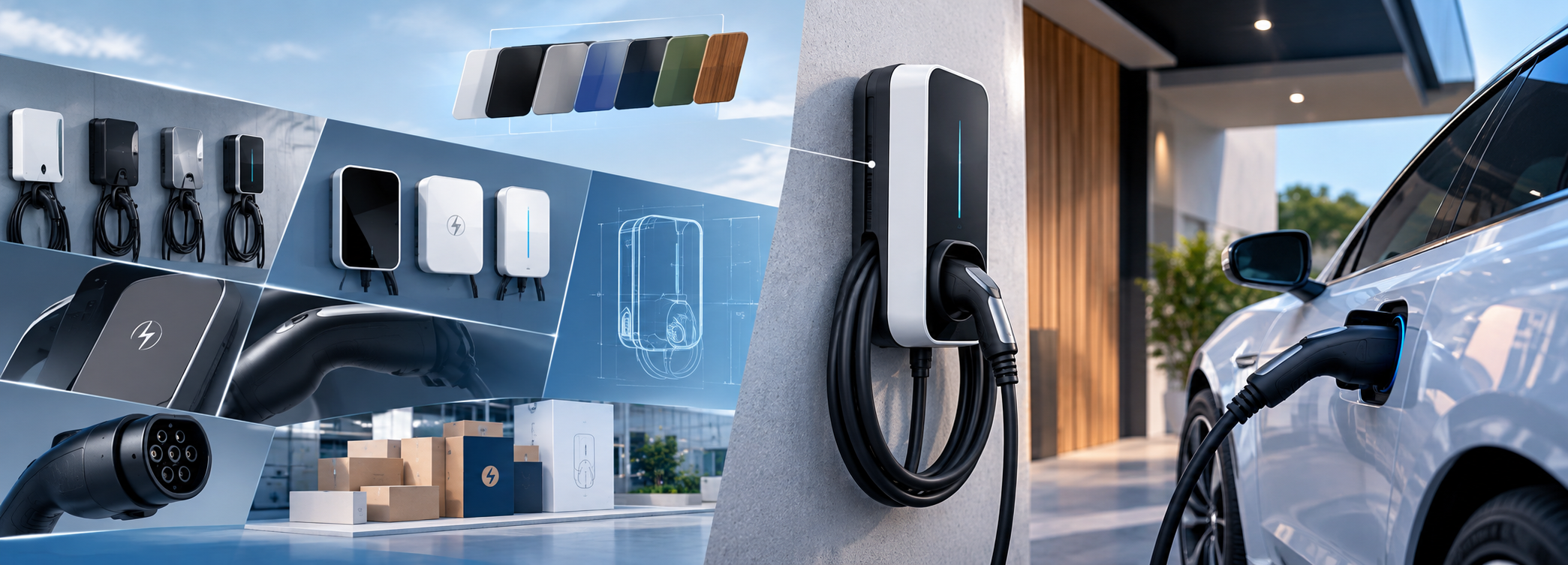
- Branding: logo on the housing and cable, custom colors, laser-etched marks.
- Packaging: retail boxes, manuals and inserts in your language, EVA hard-shell storage cases.
- Configuration: connector type (Type 2, J1772, NACS), cable length, grid plug.
- Display and firmware: boot logo, charging screens, current presets.
- App: white-label mobile app for smart models, with your brand in the app store.
What to Ask a Private-Label Manufacturer
- Which certified base models can be customized without new certification?
- Which changes trigger re-testing, for example a new enclosure or plug?
- What are the minimum order quantities for logo, color and packaging changes?
- Who owns the tooling if you pay for a custom mold?
- How are firmware updates handled after launch?
How EVDANCE Approaches OEM and ODM
EVDANCE builds portable EV chargers, wallboxes, adapters and AC stations for private-label partners from its own Shenzhen factory, with in-house hardware, firmware and app teams. Our OEM programs page describes hardware customization, branded firmware and white-label apps, and our distributor program covers buyers who prefer to sell EVDANCE-branded products.
Related Reading
- OEM and Private-Label EV Chargers: A Complete Guide for Brands
- How Distributors Can Build a Profitable EV Charger Product Line
- How to Choose a Portable EV Charger Supplier: A B2B Checklist for Importers
- EVDANCE Launches New Wallbox Home Charger Lineup with Built-In Display
Key Takeaways
- OEM means you own the design; ODM means you brand a manufacturer’s proven design.
- Most private-label charger projects customize a certified base model to save time and certification cost.
- Clarify which changes require re-testing, what the minimum order quantities are and who owns the tooling.
- Choose a manufacturer with in-house engineering so firmware, display and app changes are realistic.
Sources & Standards
- IEC 61851-1 — Electric vehicle conductive charging system, Part 1: General requirements
- EVDANCE — OEM and automaker programs