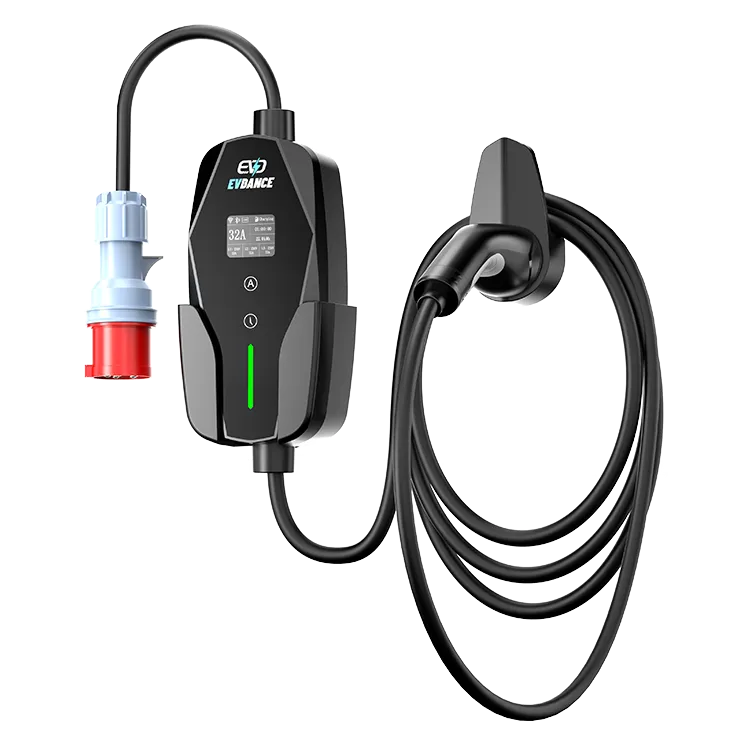
Specification sheets for portable EV chargers and wallboxes often list a “charging mode”. The term comes from IEC 61851-1, the international standard for conductive EV charging systems, and it describes how the car is connected to the supply and where the safety functions sit. For buyers in IEC markets, including Europe, the UK, Australia and much of Asia, the mode affects where a charger may be used and what installation it needs.
The Four Charging Modes
| Mode | Connection | Where the protection sits |
|---|---|---|
| Mode 1 | Car plugged directly into a standard socket, no communication | Only the building’s installation; not permitted in many countries |
| Mode 2 | Standard domestic or industrial socket via a cable with an in-cable control and protection device (IC-CPD) | In the control box on the cable |
| Mode 3 | Dedicated charging equipment (wallbox or station) with a control pilot to the car | In the fixed charging equipment and its dedicated circuit |
| Mode 4 | DC charging with an off-board charger | In the DC charging station |
Most portable EV chargers sold today are designed around the Mode 2 principle: the control box on the cable handles communication with the car and residual current protection. Wallboxes and AC stations are Mode 3 equipment.
What the In-Cable Control Box Does
The IC-CPD in a portable charger is covered by IEC 62752. It checks the protective earth, communicates with the vehicle over the control pilot, tells the car how much current it may draw, and disconnects the supply if it detects a residual current fault. This is why a properly designed portable EV charger is far safer than an extension cord or a Mode 1 cable.
Current Limits and Sockets
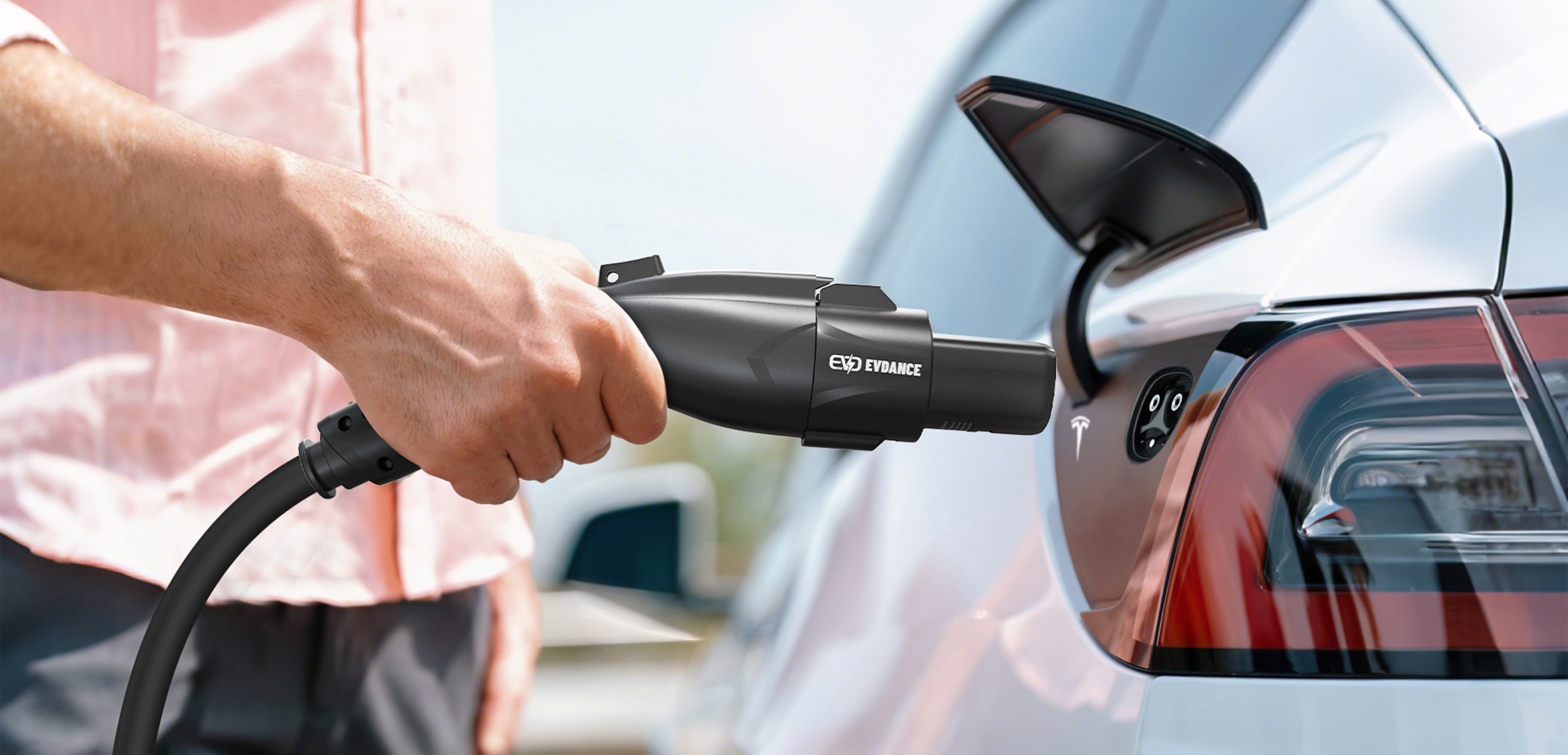
How much current a Mode 2 charger may draw depends on the socket it plugs into. Domestic sockets such as Schuko or BS 1363 are not designed for many hours at high current, so portable chargers for household sockets are usually limited to around 8A to 13A, and some national rules set their own limits. Industrial CEE sockets rated 16A or 32A support much higher charging power, up to 22 kW on a three-phase 32A socket.
When Mode 3 Is the Better Choice
- Daily home charging at 7.4 kW or more is best done from a dedicated circuit with a wallbox.
- Public and shared sites generally require fixed Mode 3 equipment; the EU AFIR, for example, builds public AC charging around Type 2 charging points.
- Smart charging rules such as the UK’s smart charge point regulations apply to fixed private charge points.
- Portable chargers remain ideal for travel, backup, rentals and sites with existing industrial sockets.
Related Reading
- OEM and Private-Label EV Chargers: A Complete Guide for Brands
- How to Test an EV Charger Sample Before Placing a Bulk Order
- RCD Protection for EV Chargers: Type A, Type B and 6 mA DC Detection Explained
- Portable EV Charger News: Why Extension Cords Are a Code Violation, Not a Workaround
Key Takeaways
- IEC 61851-1 defines four charging modes based on how the car connects and where protection sits.
- Portable chargers use an in-cable control and protection device (IEC 62752) and are built around the Mode 2 principle.
- Current limits depend on the socket: household sockets allow modest currents, CEE 16A/32A industrial sockets allow up to 11 kW or 22 kW.
- Wallboxes and AC stations are Mode 3 equipment and are the right choice for daily high-power, public and shared charging.
Sources & Standards
- IEC 61851-1 — Electric vehicle conductive charging system, Part 1: General requirements
- IEC 62752 — In-cable control and protection device for Mode 2 charging (IC-CPD)
- IEC 60309 — Plugs, socket-outlets and couplers for industrial purposes
- Our guide: Portable EV charger safety guide