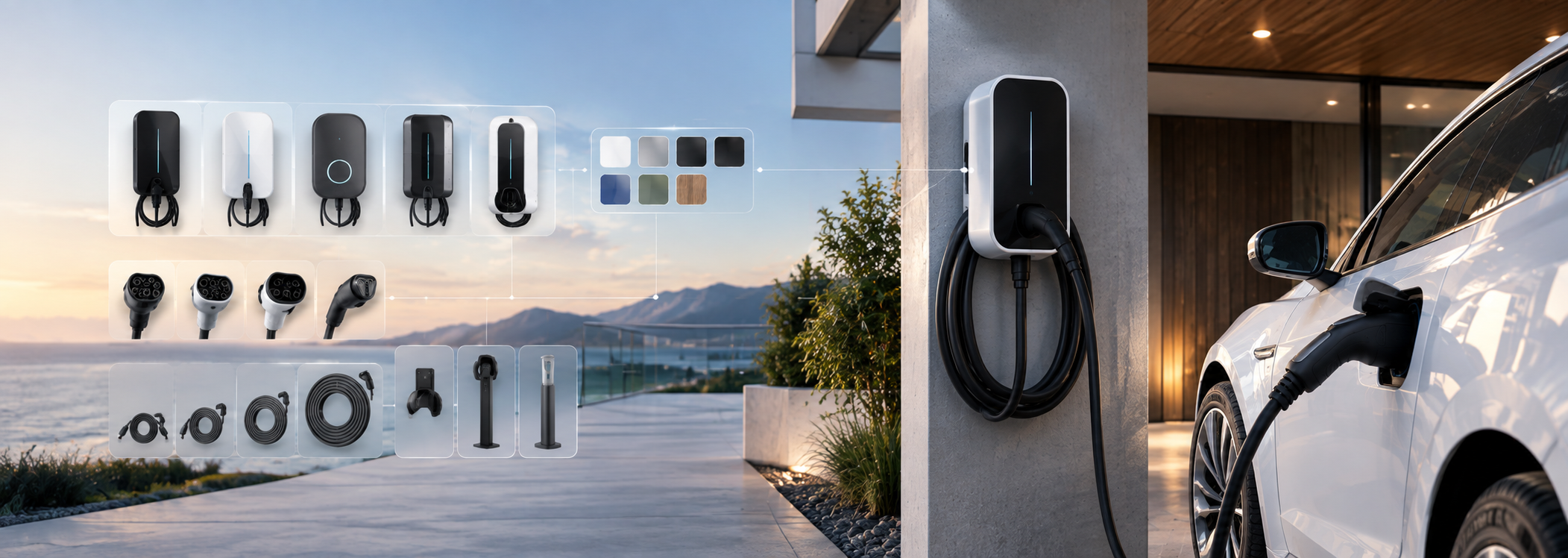
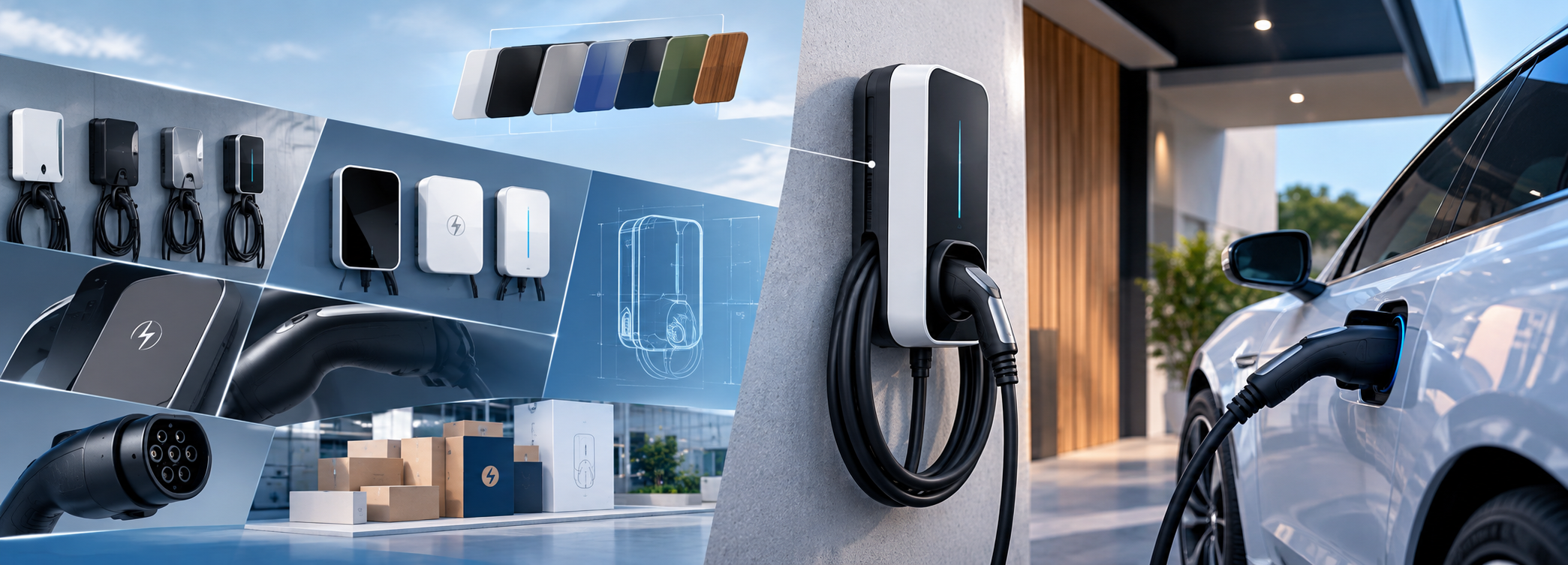
A private-label EV charger carries your brand on the housing, the cable, the packaging and the manual. Some of that branding is built into printing plates and artwork files that are costly to change. If someone else owns the mark in a key market, you may have to rebrand, hold stock or stop selling. Filing for your trademark before the first order is the cheapest way to reduce that risk.
This article covers where to file, why China deserves attention even if you never sell there, and how to fit trademark work into an OEM project. It is part of our guide to OEM and private-label EV chargers. It is general information, not legal advice; a trademark attorney should confirm the strategy for your brand.
Why register before the first order
Trademark rights depend on the market. The USPTO explains that federal registration creates rights throughout the United States and its territories, supports a presumption of ownership, and can be recorded with US Customs and Border Protection to help stop infringing imports. Comparable benefits exist elsewhere, but only where you have registered.
Timing matters for three reasons:
- Artwork and production: logos printed on housings, cables and packaging are expensive to change after a run. Our article on logo and branding options explains each method.
- Marketplaces: Amazon Brand Registry requires a pending or registered trademark; see Amazon Brand Registry for EV charger sellers.
- Disputes: a pending application with an early filing date is a stronger position than unregistered use.
Where to file
| Market | Office or route | What it covers |
|---|---|---|
| United States | USPTO | The whole US and its territories |
| European Union | EUIPO (EU trade mark) | All EU member states with one application |
| United Kingdom | UK Intellectual Property Office | The UK only; an EU trade mark does not cover it |
| Canada | Canadian Intellectual Property Office | Canada only |
| China | CNIPA, through a licensed Chinese agency or a Madrid extension | Mainland China |
| Several countries | WIPO Madrid System | One international application designating member countries, based on a home filing |
The EUIPO notes that an EU trade mark protects a mark across the whole EU with one application, while national filings cover one country each. The Madrid System lets you file one international application designating several members, but it requires a basic mark already applied for or registered with a member office.
Ownership should sit with your company, not with an employee, a distributor or the factory. If a local distributor files your mark in its own name, you may struggle to recover it if the relationship ends. Also look ahead: if you plan to sell in Canada, the UK or Australia within a year or two, consider filing there now, because each country examines applications separately and someone else could file first in the meantime.
China: first to file
China uses a first-to-file system. The US International Trade Administration’s guide to protecting intellectual property in China warns that this can let bad-faith applicants register a foreign brand first, and that US registration does not automatically create rights in China.
Even if you never sell in China, your chargers are made and exported there. A third party holding your mark in China could cause problems for production or exports, and resolving that is slow and costly. CNIPA guidance states that foreign applicants without a business domicile in China must use a licensed Chinese trademark agency, or extend an international registration to China through the Madrid System. Many advisers also suggest registering a Chinese-language version of the brand.
What to register
- The word mark, which protects the name regardless of font or style.
- The logo, if it is distinctive and you plan to keep it.
- The right classes. Chargers for electric vehicles are usually filed in Nice Class 9; related goods or services, such as installation or app services, may need other classes.
- A Chinese-language version, if relevant to your China strategy.
Run a clearance search before you commit to a name. A mark that conflicts with an existing registration for electrical goods can be refused or challenged, and it is better to find out before the logo is on thousands of units.
Fitting trademark work into an OEM project
A practical sequence looks like this:
- Choose the brand name and run clearance searches.
- File in your main sales markets and in China.
- Share artwork with the factory after filing, under a signed NDA; see NDAs, NNN agreements and tooling ownership.
- State in the contract that the factory may use your mark only to make your products.
- Approve samples with final branding, then release mass production.
Trademark filings and sampling can run in parallel, so registration work need not hold up product development. What matters is that the application date comes before your brand is widely shared.
How EVDANCE handles your brand
EVDANCE applies customer logos and colours to the housing, cable and packaging, with private label available from 50 units. Custom boot logos are available on LCD models, and white-label apps on smart-charging models. Your dedicated account engineer manages artwork approval from sampling to mass production. Learn more about our OEM and ODM program or apply to become a partner.
Key Takeaways
- Trademark rights are territorial, so file in each market where you sell and do it before your first private-label order.
- A USPTO registration gives nationwide US rights and can be recorded with CBP, while an EU trade mark covers all EU states with one application.
- China is first-to-file and foreign applicants need a licensed Chinese agency or a Madrid extension, so register there even if you only manufacture there.
- File before sharing artwork widely and limit the factory’s use of your mark in the supply contract.
Sources & Standards
- U.S. Patent and Trademark Office — Why register your trademark?
- European Union Intellectual Property Office — Where to register
- WIPO — Madrid System: Filing international trademark applications
- CNIPA — How can foreign applicants apply for trademark registration?
- U.S. International Trade Administration — China: Protecting Intellectual Property