When a charger carries your logo, customers and regulators look to you if something goes wrong. That is the basic rule of product liability for private-label brands, and it is getting stricter in the EU with a new directive that applies from 9 December 2026.
This article explains how liability attaches to a brand owner in the EU, the US and the UK, and the practical steps that reduce risk. It is part of our guide to OEM and private-label EV chargers. It is not legal advice; speak to a lawyer and an insurer about your own situation.
Why the brand owner is treated as the manufacturer
Product liability rules are written so that an injured person can always find someone to claim against. A factory overseas is hard to reach, so the law also points at the company whose name is on the product. In private label, that company is you.
Our comparison of private label vs reselling a branded charger covers the commercial side of this choice. This article focuses on the legal exposure.
The new EU Product Liability Directive
The European Commission explains that the new Product Liability Directive applies to products placed on the market from 9 December 2026, the deadline for EU countries to transpose it. The 1985 directive continues to apply to products placed on the market before that date.
The text, Directive (EU) 2024/2853, repeals Directive 85/374/EEC. Under Article 4(10)(b), anyone who puts their name, trademark or other distinguishing feature on a product and presents themselves as its manufacturer is treated as the manufacturer. Points that matter for charger brands include:
- Liability is strict: a claimant shows the product was defective and caused damage, without proving fault.
- Software, including firmware and apps, is treated as part of the product, which matters for smart chargers.
- Where the manufacturer is outside the EU, the importer, authorised representative or fulfilment service provider can be liable.
- Brands should keep technical files, test reports and production records, since evidence may be requested in a claim.
If you sell in the EU, plan now for products you will place on the market after the application date. Our article on EU GPSR and the responsible person explains the related safety obligations.
The United States: CPSC reporting and state law
In the US, product liability claims are mostly brought under state law, typically for defective design, defective manufacture or failure to warn. Alongside that, federal law imposes a reporting duty. The CPSC states that manufacturers, importers, distributors and retailers must report immediately when they obtain information that a product could contain a defect creating a substantial risk of injury or fails to comply with a safety rule. The CPSC defines immediately as within 24 hours, and failing to report can lead to substantial civil or criminal penalties.
The CPSC’s Product Safety Planning, Reporting and Recall Handbook adds two points relevant to importers. A reporting obligation can arise even if a firm cannot identify a defect or root cause, and in a recall involving a foreign manufacturer the U.S. importer must be identified. A private-label brand that imports its own chargers should have a written process for reviewing complaints, warranty returns and incident reports against these rules.
The United Kingdom
In Great Britain, product liability for defective products is governed by the Consumer Protection Act 1987, which also treats a business that holds itself out as the producer by putting its name or brand on a product as liable. GOV.UK guidance on placing products on the GB market likewise says an importer using its own brand takes on manufacturer responsibilities. See UKCA vs CE for EV chargers in Great Britain.
Practical controls that reduce risk
No contract removes your legal role as brand owner, but good controls reduce the chance of a defect and give you evidence if one is alleged.
| Control | What it does | Related guide |
|---|---|---|
| Certification for the exact model | Shows the design met recognised safety standards | Certificate ownership |
| Factory audit | Checks process control and traceability | Factory audit checklist |
| Pre-shipment inspection | Catches production defects before shipping | Inspection and AQL sampling |
| Serial number traceability | Limits a recall to affected batches | Ask for batch records |
| Clear manuals and warnings | Reduces misuse and failure-to-warn claims | Packaging and manuals |
| Supply contract terms | Allocates cost of defects and recalls | Review with a lawyer |
| Product liability insurance | Funds defence and claims | Ask a specialist broker |
Insurers will often ask for the same documents regulators do: certificates, test reports, inspection records and a complaint-handling procedure. Building that file from the first order makes cover easier to obtain.
Choosing a manufacturing partner with liability in mind
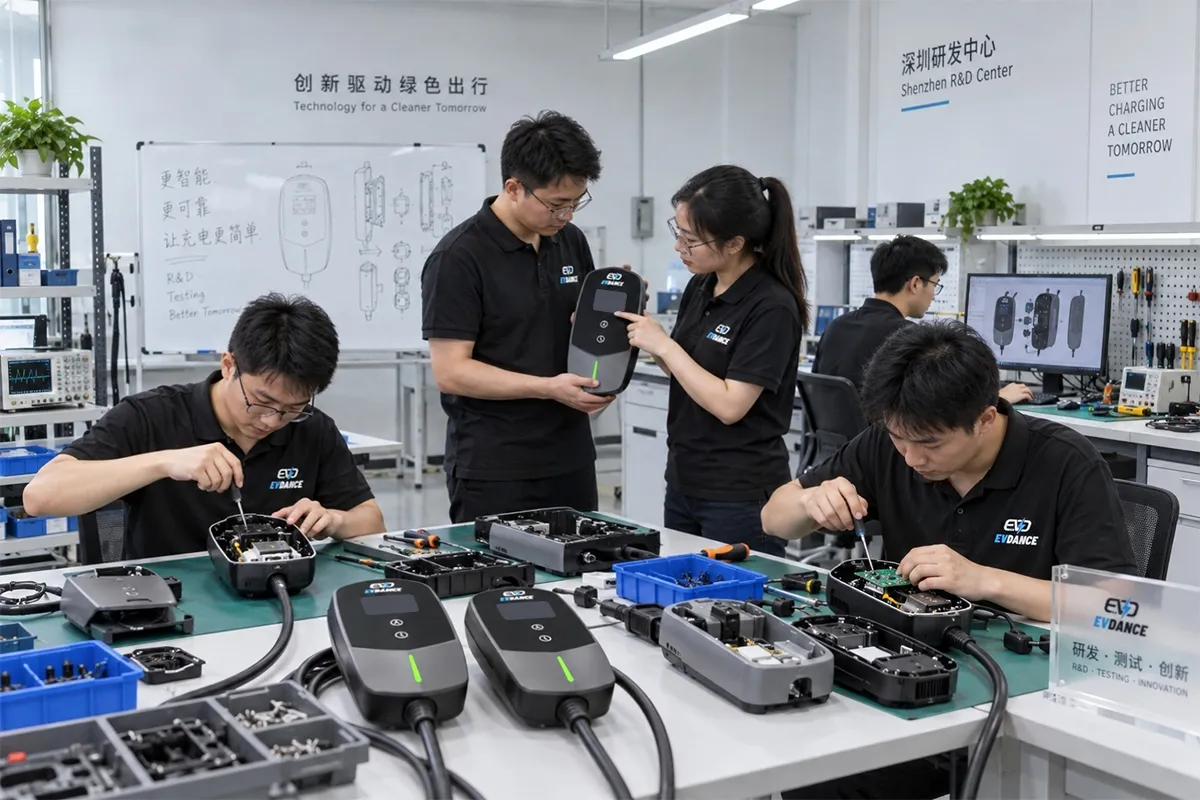
Look for a factory that can show its testing and records, not just its prices. EVDANCE has engineered, molded, assembled and tested chargers in-house in Shenzhen since 2011, gives private-label buyers a dedicated account engineer from sampling to mass production, and offers a 3-year standard warranty. Certification marks vary by model, so request the certificate and test report for the exact configuration you will sell.
You can see how production and testing are organised on our factory tour, or read about our OEM and ODM program.
Key Takeaways
- A brand that puts its name or trademark on a charger is generally treated as the manufacturer for product liability.
- The new EU Product Liability Directive applies to products placed on the market from 9 December 2026 and covers software.
- US importers, distributors and retailers must report qualifying defects to the CPSC within 24 hours, even before a root cause is found.
- Certification, factory audits, inspection, traceability, contracts and insurance together reduce a private-label brand’s exposure.
Sources & Standards
- European Commission — Liability for defective products
- European Union (EUR-Lex) — Directive (EU) 2024/2853 on liability for defective products
- U.S. Consumer Product Safety Commission — Duty to Report to CPSC: Rights and Responsibilities of Businesses
- U.S. Consumer Product Safety Commission — Product Safety Planning, Reporting, & Recall Handbook