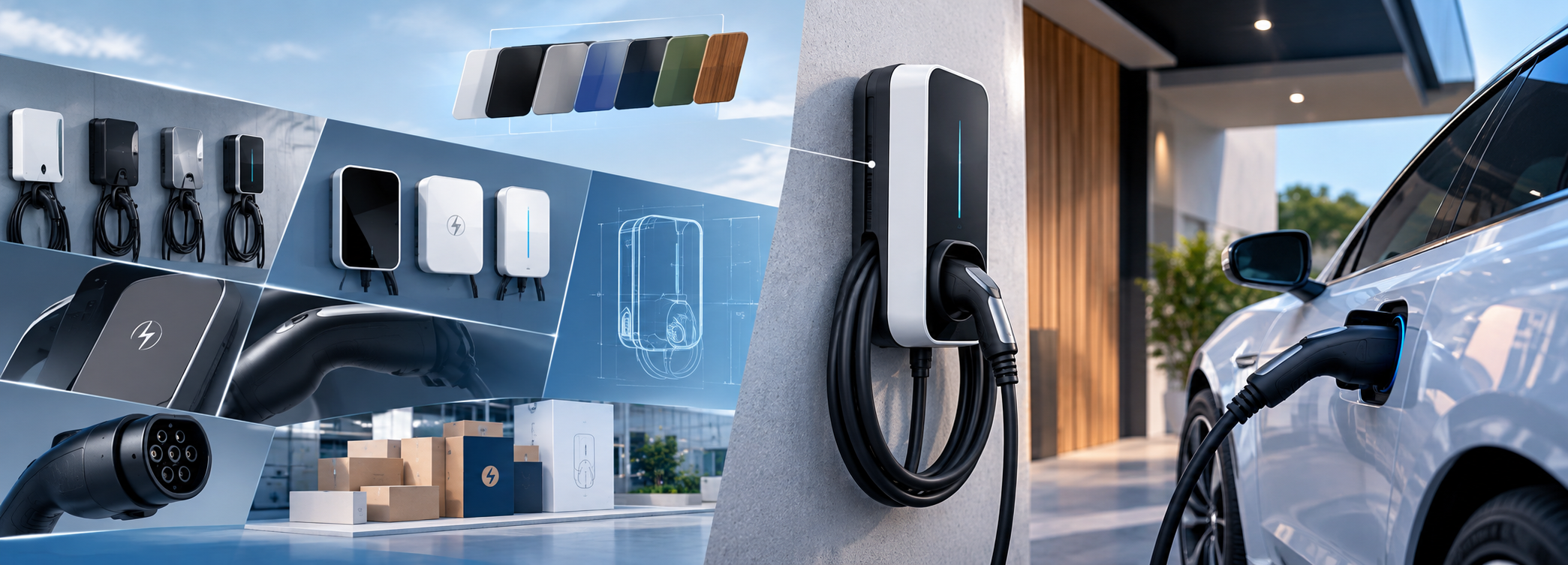
Private-label EV chargers let a brand sell under its own name without building a factory. The charger inside may be a proven platform, but what the customer sees — logo, colour, packaging and manual — is yours. Getting these details right is what turns a generic product into a brand.
What Can Be Customised
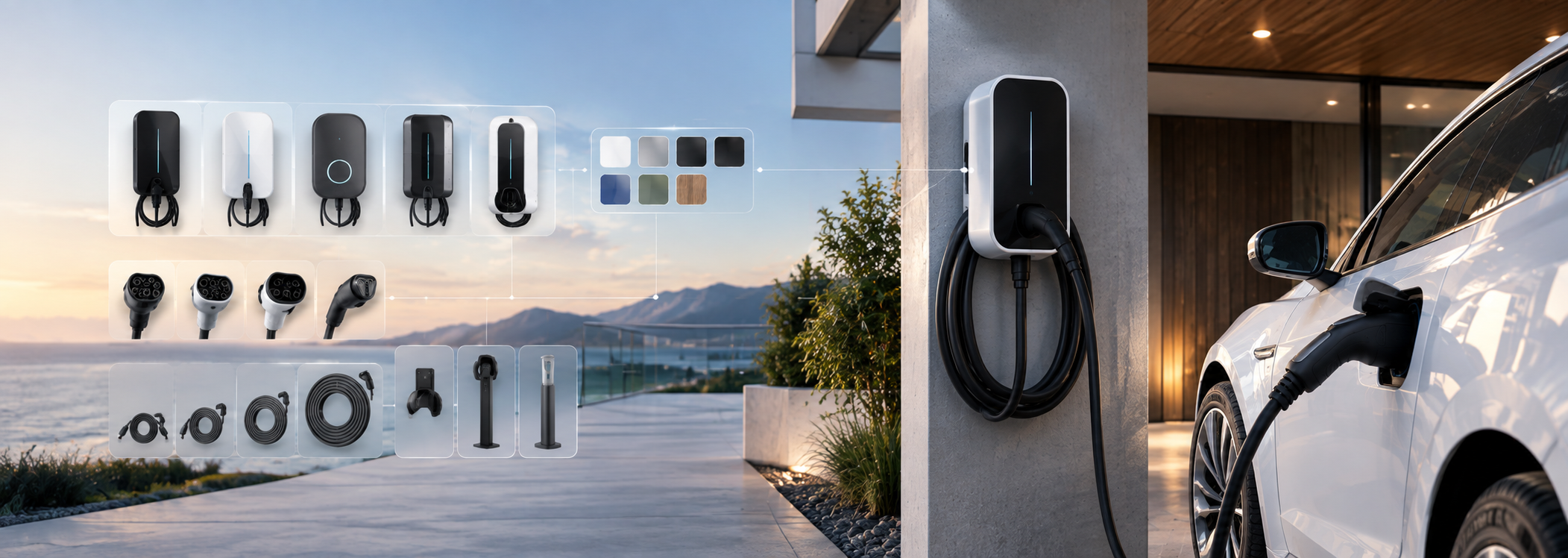
| Element | Typical options |
|---|---|
| Enclosure | Logo printing, colour, front panel design |
| Cable and plug | Cable length, grid plug type, connector type |
| Screen and app | Boot logo, app branding (where supported) |
| Packaging | Box design, inserts, carry bag |
| Documents | Manual, quick-start card, warranty card |
Rating Labels: Accuracy First
The rating label is a legal document as much as a design element. It must show the correct model number, ratings and only the conformity marks the product actually holds for that variant. If you change the plug or cable, confirm with the manufacturer whether certification still applies before printing marks.
Packaging That Survives Shipping
Portable chargers often ship by parcel. Use strong outer cartons, secure inserts and protection for the connector. A carry bag adds value for portable models. Include barcodes and required recycling marks.
Manuals and Quick-Start Cards
- Write in the language of each target market.
- Explain how to choose the correct current for the circuit.
- Include safety warnings such as no extension cords and dedicated circuits.
- List fault codes and what to do.
- Include warranty and support contact details.
Artwork Approval Process
Agree a clear sign-off process: the brand supplies artwork files, the manufacturer returns digital proofs, and a physical sample is approved before mass production. Keep a record of approved versions to avoid mix-ups in reorders.
Common Mistakes
- Printing certification marks the product variant does not hold.
- Using a manual that does not match the product settings.
- Choosing a box size that does not fit the cable.
- Skipping a physical sample check.
EVDANCE offers OEM and ODM service with MOQ from 50 units. See our factory tour and partner program.
Related Reading
- OEM and Private-Label EV Chargers: A Complete Guide for Brands
- EV Charger Warranty and After-Sales Terms: A Distributor’s Checklist
- How to Read an EV Charger Datasheet: A Buyer’s Guide
- EV Charging News: Electrified Cars Pass 50% of Colombia’s New Car Sales
Key Takeaways
- Private label covers enclosure, cable, screen, packaging and documents.
- Rating labels must be accurate for each product variant.
- Use strong packaging for parcel shipping.
- Approve digital proofs and a physical sample before mass production.
Sources & Standards
- IEC 61851-1 — Electric vehicle conductive charging system (marking requirements)
- Directive 2012/19/EU — WEEE marking
- ISO 9001 — Quality management systems