
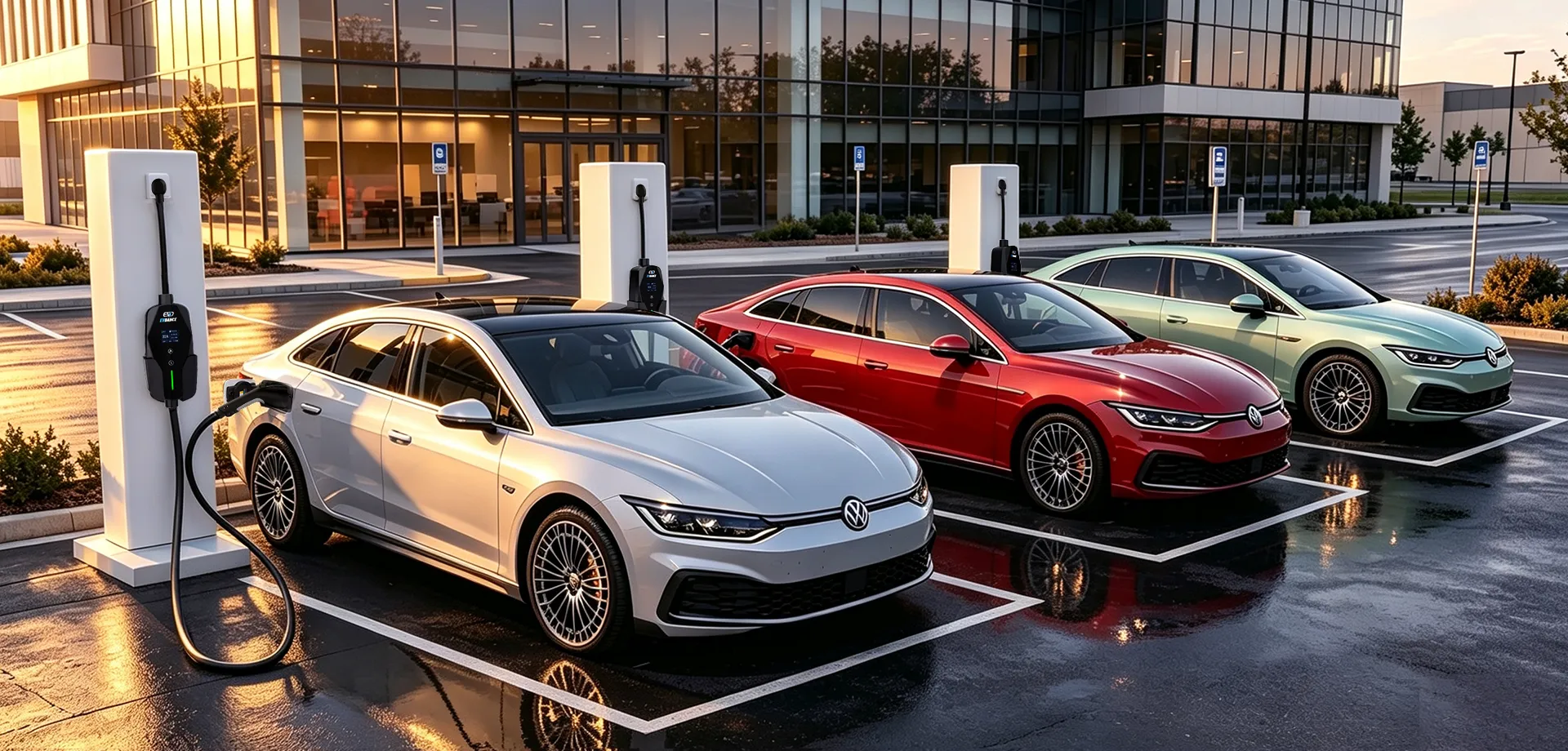
For years, “EV-ready” construction meant leaving an empty conduit behind drywall and calling it future-proofing. That’s changing fast. Starting January 1, 2026, California’s updated building code requires actual EV-ready receptacles — not just conduit — in most new homes, apartments, hotels, and commercial parking lots. The European Union’s building directive follows a similar path through 2027. For developers, contractors, and property managers, the question is no longer whether to plan for EV charging — it’s whether to install it now, while the walls are still open, or pay several times more to retrofit it later. Here’s what the new codes actually require, what the real cost difference looks like using government-modeled data, and how to plan for it without over-building.
Why “EV-Ready” Now Means More Than a Spare Conduit
California’s 2025 Building Standards Code (Title 24), specifically the CALGreen (Part 11) update, takes effect January 1, 2026, and it raises the bar considerably from prior code cycles. According to Charged Future’s breakdown of the new requirements, the code now calls for:
- Single-family homes: one EV-ready (low-power Level 2) receptacle per dwelling unit with parking.
- Multifamily, assigned parking: 100% of assigned spaces must have an EV-ready Level 2 receptacle.
- Multifamily, common/unassigned parking: at least 1 receptacle per unit, plus 25% of additional common spaces with a fully installed charger.
- Hotels and motels: a minimum of 40% of spaces with receptacles plus 25% with installed chargers — 65% total EV-capable coverage, with an optional tier reaching 100%.
- Commercial lots with 200+ spaces: 20% of spaces must be EV-capable, and 75% of those EV-capable spaces need an installed charger, not just wiring.
The shift in language matters: prior code cycles were largely satisfied by “EV-capable” conduit. The 2025 cycle pushes much of that requirement to “EV-ready” (a wired, ready-to-use receptacle) or fully installed hardware.
California isn’t alone. Under the EU’s recast Energy Performance of Buildings Directive (EPBD IV), member states must transpose the rules into national law by May 29, 2026, with full requirements applying from January 1, 2027. New non-residential buildings and major renovations will need at least one charging point per five parking spaces (one per two for office buildings) plus pre-cabling for at least 50% of spaces, and every installed charge point must support smart-charging functionality for grid load management.
The Real Cost Math: Wiring During Construction vs. Retrofitting Later
The financial case for building EV infrastructure in during construction, rather than adding it after the fact, is not just a rule of thumb — it’s been modeled with real numbers. A December 2024 U.S. Department of Energy technical brief (PNNL-31576-1), produced through Pacific Northwest National Laboratory’s Building Energy Codes Program, models exactly this comparison across two representative buildings:
| Case | New Construction | Retrofit Later | Savings |
|---|---|---|---|
| 60-unit multifamily building (9 Level 2 + 45 Level 1 ports) | $1,410/space ($76,142 total) | $4,443/space ($239,909 total) | 68% ($3,033/space) |
| 60-space office building (2 Level 2 + 24 Level 1 ports) | $1,166/space ($34,971 total) | $3,232/space ($96,970 total) | 64% ($2,066/space) |
Source: U.S. DOE Building Energy Codes Program, Technical Brief PNNL-31576-1, December 2024.
The same brief cites California Air Resources Board (CARB) analysis estimating that $7,000 to $8,000 per parking space can be avoided by installing Level 2 charging during construction rather than retrofitting, with statewide avoided retrofit costs projected between $272 million and $386 million for the 2020–2025 period alone. Separately, Virginia Clean Cities, citing the Southwest Energy Efficiency Project, puts construction-phase pre-wiring at roughly four to six times cheaper than retrofitting, since retrofit costs are dominated by demolition, trenching, and re-finishing work that construction-phase wiring simply avoids.
Three Ways to Build In EV Readiness
Not every project needs a fully installed charger on day one. Codes generally recognize a spectrum of compliance levels, and choosing the right one for a given building is mostly a question of budget timing versus flexibility:
| Approach | What It Involves | Trade-off |
|---|---|---|
| EV-capable (conduit only) | Empty conduit and panel capacity reserved, no wiring pulled yet | Lowest upfront cost, but still requires future labor to pull wire and add a breaker — no longer sufficient on its own under California’s 2026 cycle for most space types |
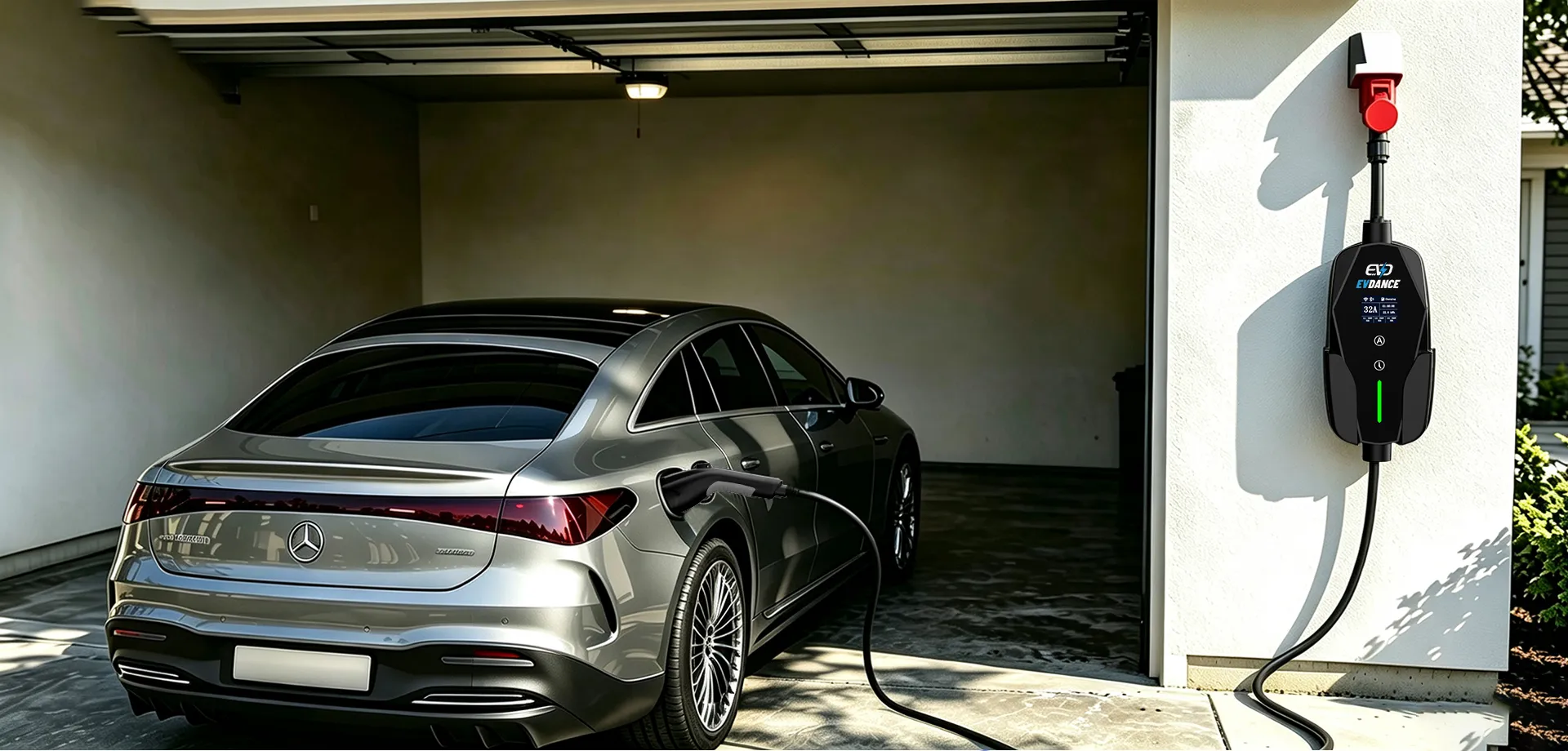
| EV-ready (installed receptacle) | Wiring, breaker, and a 240V receptacle installed and ready for a charger to be plugged in | Meets most of the new minimum code requirements at a fraction of full-charger cost; charger itself can be added by the eventual resident, tenant, or operator |
| Fully installed Level 2 charger | A complete, working charging station, hardwired or plugged in and ready to use | Highest upfront cost per space, but required for a defined percentage of spaces under hotel, multifamily-common, and large commercial-lot rules |
Note: exact thresholds vary by jurisdiction and building type — always confirm the applicable code cycle and occupancy classification with a local building official before finalizing a project’s electrical plan.
What This Means for Developers Sourcing Hardware
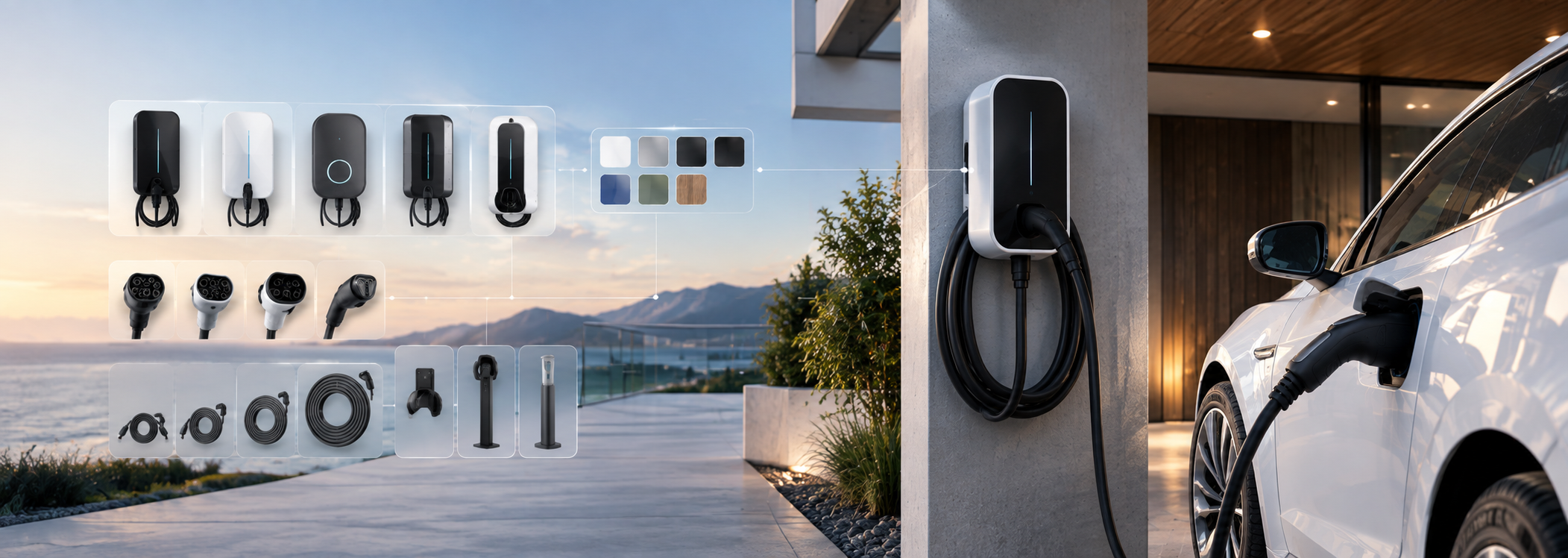
Because most of the new requirements land on “EV-ready” receptacles and a defined percentage of “installed” chargers, developers end up needing two different things from a hardware supplier at once: a large volume of straightforward, code-compliant receptacles or basic chargers for EV-ready spaces, and a smaller number of full-featured, higher-power Level 2 units for the percentage of spaces that must be installed and working from day one. Sourcing both from a single manufacturer — rather than mixing vendors — keeps warranty terms, firmware, and app support consistent across a property.
EVDANCE designs and manufactures both ends of that range: wall-mount Level 2 chargers for the installed-and-working spaces, and adjustable, lower-cost hardware suited to EV-ready receptacle programs, all built in-house with CE, cETL, UKCA, SAA, and CB Scheme certification coverage so a single hardware spec can serve projects across multiple markets. For developers and property groups planning multi-site rollouts, our OEM/ODM program supports custom branding, firmware, and bulk pricing so a 60-unit building and a 600-unit portfolio can both standardize on one hardware family.
A Practical Checklist Before Ground Is Broken
- Confirm the applicable code cycle early. Requirements differ by jurisdiction and by whether a project falls under residential, multifamily, hotel, or commercial classification — check with the local building department before finalizing electrical drawings, not after.
- Size the electrical panel for tomorrow, not just today’s minimum. Moving from EV-ready receptacles to fully installed chargers later is far cheaper if the panel and service capacity were already sized for it.
- Consider load management for common-area installations. Multiple Level 2 chargers on a shared panel can share adjustable current and scheduling to avoid the cost of oversized electrical service — see our related guide on charging multiple EVs on one circuit for how adjustable-current hardware handles this at the unit level.
- Separate “EV-ready” spaces from “installed” spaces on the drawings early, since the two have very different hardware and labor costs, and mixing them up during budgeting is a common source of change orders.
- Talk to a manufacturer before finalizing a spec, especially for portfolios with more than a handful of buildings — bulk OEM pricing and certification coverage can change the cost-per-space math significantly.
Key Takeaways
- California’s 2025 CALGreen update (effective January 1, 2026) requires EV-ready receptacles or installed chargers across most new residential, multifamily, hotel, and large commercial parking projects — conduit alone is no longer enough for most space types.
- The EU’s EPBD IV follows a similar path, with transposition due by May 29, 2026 and full requirements from January 1, 2027, including a smart-charging mandate for installed points.
- Wiring during construction costs roughly 64–68% less per space than retrofitting later, per DOE/PNNL modeling — a gap of $2,000–$3,000+ per space in the modeled cases.
- Not every space needs a full charger on day one — EV-capable, EV-ready, and fully installed are three distinct compliance tiers with very different costs.
- Sourcing both entry-level and full-featured hardware from one manufacturer keeps multi-site portfolios consistent on firmware, warranty, and support.
Sources & Standards
- Charged Future — What Are the New California EV Charging Requirements in the 2025 Building Code?
- U.S. Department of Energy Building Energy Codes Program — Technical Brief PNNL-31576-1 (Dec 2024)
- Easee — EU Building Rules Accelerate Rollout of EV Charging Infrastructure (EPBD IV)
- Virginia Clean Cities — Cost Analysis for Construction-Phase vs. Retrofit EV Installation