

If your home charger is recalled, follow the notice in order: confirm your model and serial number match, obey any stop-use instruction immediately, and contact the manufacturer or the seller for the remedy they are offering — repair, replacement or refund. Do not open the unit, modify it, or keep using a charger that a notice tells you to stop using. Everything else is paperwork: keep the notice and any case number until the remedy is complete.
Key Takeaways
- Match model and serial number to the notice, then follow its stop-use instruction exactly.
- Never open, modify or repair a recalled charger yourself — the remedy runs through the manufacturer.
- Keep the notice, proof of purchase and case number until the replacement is in and working.
- Registering your charger when you buy it is what lets a recall notice reach you at all.
Step by Step: What to Do
- Match the unit. Compare the notice’s model names and serial ranges with your charger’s nameplate. A photo of the nameplate, taken when the charger was installed, makes this a two-minute job.
- Read the stop-use instruction first. Some notices say stop using the charger immediately; others limit charging or set conditions. The notice, not guesswork, decides.
- Stop safely. Unplug a portable unit. For a hard-wired wallbox, switch off its breaker if you need to take it out of service, and let an electrician handle anything beyond that.
- Contact the manufacturer. Use the contact route in the notice. You will usually be asked for the model, serial number and proof of purchase.
- Follow the remedy. Replacement units, repair kits fitted by a technician, and refunds are all handled differently; do not throw the old unit away until the manufacturer confirms the process is finished.
- Keep the file. Save the notice, emails and the case or reference number until the replacement is installed and working.
How a Recall Normally Reaches You
Manufacturers announce recalls through their own channels and through official product-safety listings, and they try to contact owners directly — which only works if they know you own the unit. Registering a charger with the manufacturer after purchase, keeping the app account current, and keeping your receipt are what make that contact possible. If you bought the house with a charger already installed, a periodic check of the manufacturer’s support pages against your nameplate is the substitute. The background on why listed, certified equipment matters is in our article on home EV charger safety.
What Not to Do
| Sensible | Not sensible |
|---|---|
| Follow the notice’s stop-use instruction exactly. | Keep charging because the unit “seems fine”. |
| Let the manufacturer or an electrician handle repair or replacement. | Open the enclosure, tape damage, or fit parts yourself. |
| Use the remedy process, even if it takes a few weeks. | Discard the recalled unit before the case is closed — you may lose the remedy. |
| Keep the notice and case number on file. | Rely on remembering a phone call if a dispute comes up later. |
If You Need a Charger in the Meantime
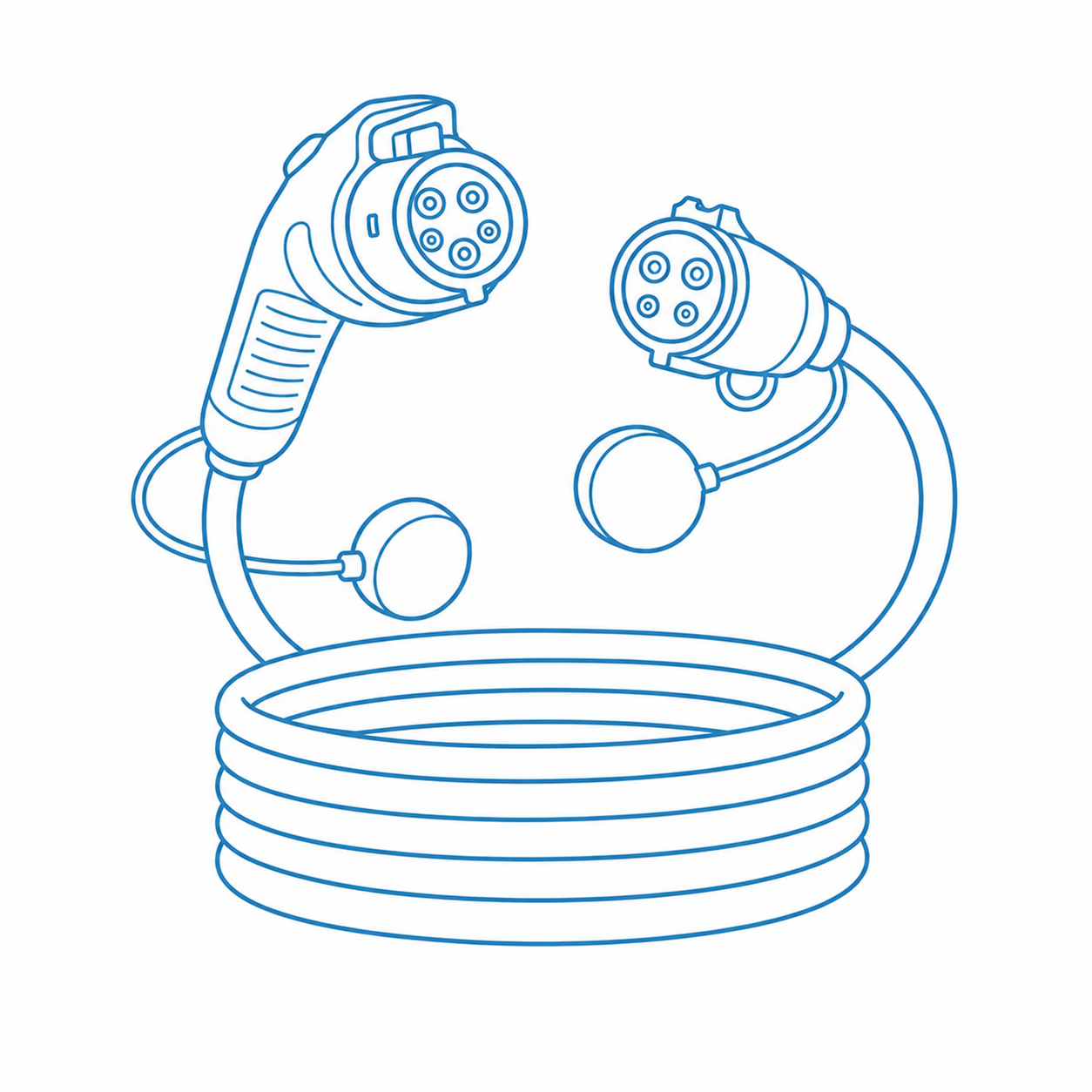
A listed portable charger is the simplest stand-in, because it plugs into a suitable outlet and needs no installation. The EV-AC04001U is a 40 A J1772 portable charger (9.6 kW, NEMA 14-50P, IP66, 25 ft cable). Whatever you buy as a replacement or stopgap, check that it carries a recognised testing-laboratory listing and that the circuit matches the continuous-load rule — the breaker is sized at 125% of the charger’s current. Warranty terms are worth comparing before you buy; see which EV charger has the best warranty.
Frequently Asked Questions
How do I check whether my charger is recalled?
Start with the nameplate: note the exact model and serial number, then check the manufacturer’s support or recall pages and the notice details against them. If you registered the product or use its app, watch those channels too.
My charger works perfectly. Can I keep using it during a recall?
Only if the notice allows it. A stop-use instruction means stop, even when nothing looks wrong — the defect a recall addresses is not always visible.
Who pays to swap a hard-wired wallbox?
Remedies vary by manufacturer and by recall, so ask when you open the case, and keep any electrician invoice. Do not assume, and do not pay for unauthorised repairs before the manufacturer has agreed the process.
Related Reading
- Are Home EV Chargers Safe?
- Which EV Charger Has the Best Warranty?
- Wallbox Home Charger Installation Guide 2026

