
EV parking means a parking space reserved for electric vehicles. The term covers two different things: charging bays, which have a charger and are meant for cars that are actively charging, and EV-only spaces without a charger, which some car parks and cities reserve to encourage EV use. The rules for any given space come from its signage, the site operator, and local council or state rules. That is why the same painted EV logo can mean different things in different places.
Key Takeaways
- EV parking means spaces reserved for EVs, with or without a charger.
- Charging bays are for active charging; EV-only bays are for parking.
- Rules come from signage, the site operator and local law, and they vary by site.
- When in doubt, the sign at the bay is the rule that applies to you.
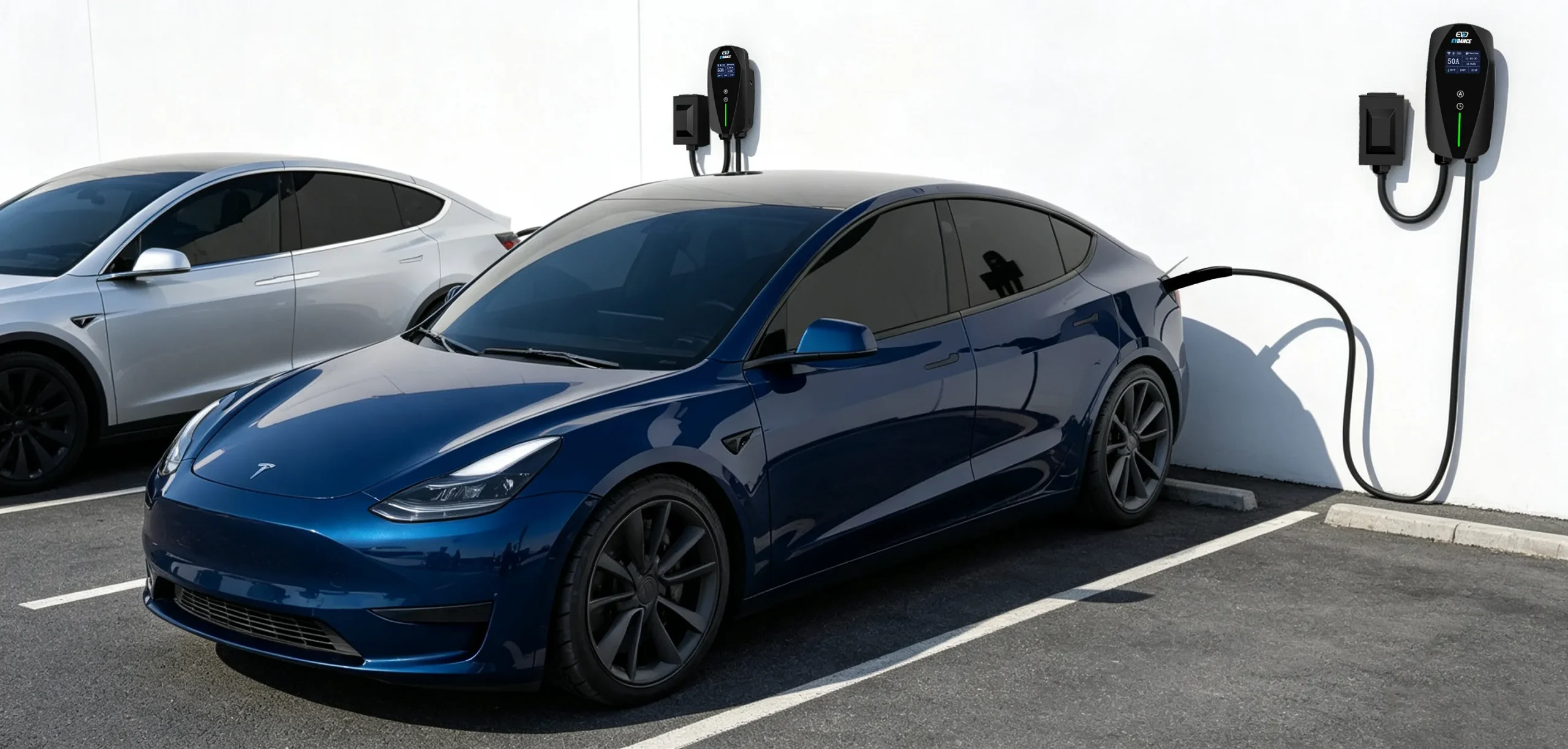
The Three Kinds of EV Parking Space
| Type of space | What it has | Who may use it, and for how long |
|---|---|---|
| Charging bay | A charger at the space | EVs that are actively charging; posted time limits are common |
| EV-only bay | Markings and signs, no charger | EVs only, for normal parking within the site’s time limits |
| Accessible EV bay | A charger plus accessible space design | Permit holders with an EV, while charging |
The distinction matters most with charging bays. An EV-only bay is a parking privilege. A charging bay is a shared piece of equipment that happens to include a parking space, and it is managed so the charger keeps turning over for the next driver.
The Rules That Usually Apply
- Charging bays are for charging. Plugging in and staying connected only while the car charges is the baseline rule almost everywhere; some operators add overstay or idle charges after the session ends.
- Time limits apply even while charging. A two-hour sign limits a charging car too, unless the sign says otherwise.
- Petrol and diesel cars do not belong in EV bays. A combustion car parked in one is known as ICE-ing. Where local rules and signage make it an offence, fines can apply; amounts and enforcement vary widely by jurisdiction.
- On private land, the operator’s terms rule. Shopping centres, airports and hotels set conditions of entry and parking terms for their bays, and enforce them the same way they enforce other parking rules.
- The sign at the bay wins. Hours, limits and penalties differ between sites, so read the specific sign rather than assuming the last site’s rules.
Who Sets the Rules
On-street bays are set by councils and state or national traffic rules, and new public sites are increasingly planned as part of charging policy; one example is the push for mandatory charging in parking lots covered in Philippines plans for mandatory EV charging in parking lots. In shared residential car parks, the building’s management sets the terms, which is why apartment and condo EV charging in shared parking is arranged building by building. Public fast-charging sites are designed as open-access stops; U.S. federal corridor rules, for example, require stations that are open around the clock with payment open to everyone.

Adding EV Bays to a Car Park
For operators, an EV bay is paint, signage and hardware together: clear markings, the rules posted where drivers can read them, and a charger that can manage two spaces at once. The EVDANCE EV-AC03201T dual-connector AC station serves two bays from one unit, delivering up to 22 kW per connector, with RFID access control for sites that limit use to members or staff. Layout, bay counts and rollout planning are covered in our commercial EV charging solutions.
Frequently Asked Questions
Can I park in an EV charging bay without charging?
Treat the answer as no. Charging bays exist so drivers can charge, and most operators and local rules reserve them for cars that are plugged in and charging. An EV-only bay without a charger is the exception; there, parking without charging is the point.
Can a petrol car be fined for parking in an EV bay?
Where signage and local rules make it an offence, yes. In private car parks it is handled under the operator’s parking terms instead. There is no single worldwide fine; the sign at the bay and your local rules decide.
Do EV parking rules apply overnight?
Usually, yes. Unless the sign limits its hours, time limits and charging-only rules run around the clock, and overnight overstay charges apply at sites that use them.
Related Reading
- Apartment and Condo EV Charging: Solutions for Shared Parking
- EV Charging News: Philippines Plans Mandatory EV Charging in Parking Lots
- Hotel EV Charging: How to Plan Guest Charging That Pays Off
- Do EV Charging Stations Cost Money? Free vs Paid Charging Explained

