
No — a bigger battery does not charge faster by itself. Charging speed is a flow, measured in kilowatts (kW); battery size is a tank, measured in kilowatt-hours (kWh). On the same charger, the bigger tank takes longer to fill. What decides your wait is the energy you need divided by the power you get.
Key Takeaways
- Speed is kW; size is kWh. Filling time is energy divided by power.
- On the same charger, a bigger battery takes longer to fill but adds miles at the same rate.
- Big packs often pair with higher maximum rates, but that is a separate specification — check it.
- At home, size your charger to the energy you use each day, not to the full battery.
Two Numbers, Two Different Jobs
The charger offers power in kW. The battery stores energy in kWh. Time is the second divided by the first: hours = kWh ÷ kW. A 40 kWh battery and an 80 kWh battery plugged into the same 7 kW home charger draw exactly the same flow — the bigger one simply has twice as far to go. How much energy a full charge takes is covered in How Many kWh Does It Take to Charge an EV?
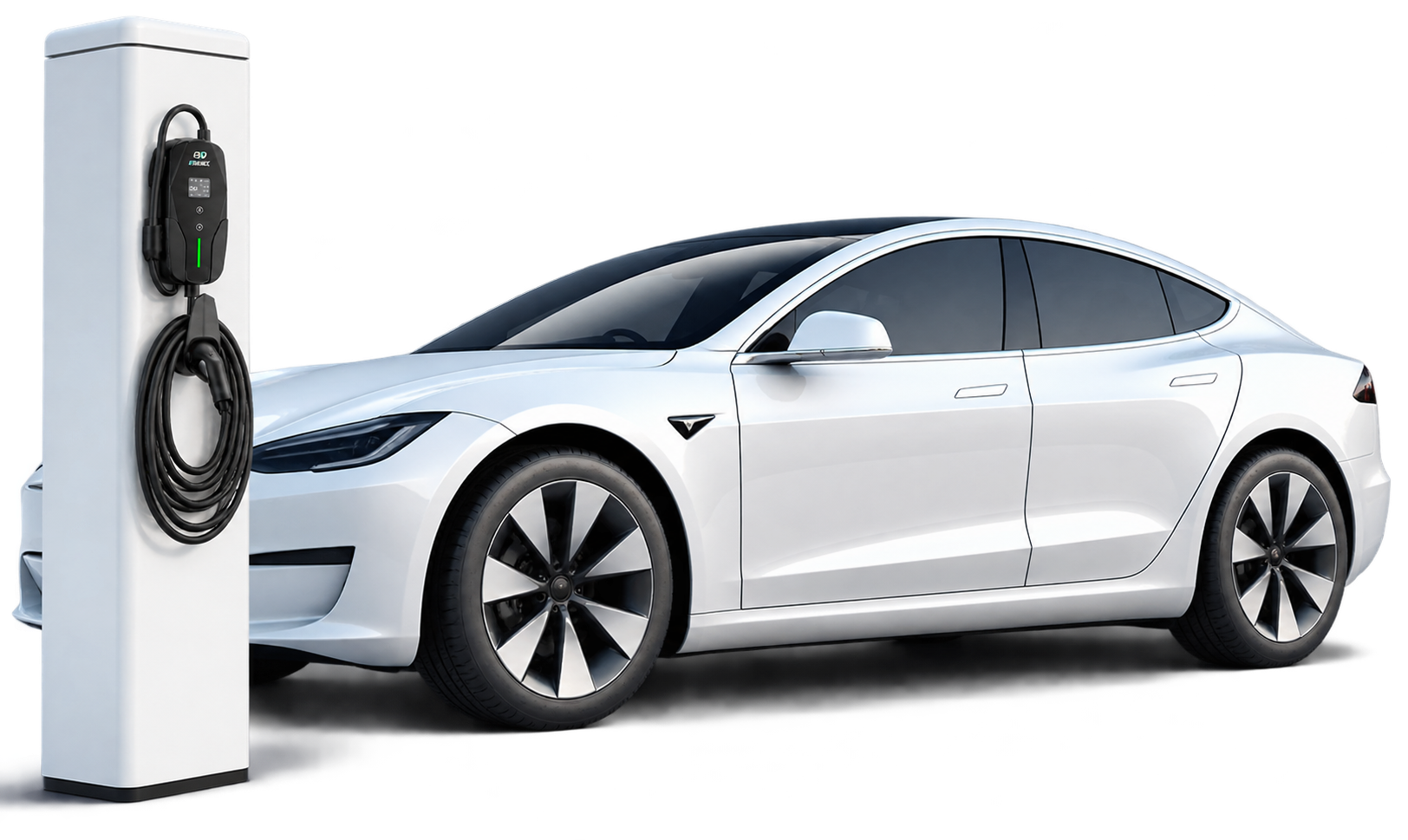
The Same Charger, Two Pack Sizes
The table uses two example pack sizes to show the arithmetic. It assumes both cars accept the charger’s full output throughout, so treat the DC row as best-case maths — real sessions taper.
| Example pack | Energy, empty to full | At 7 kW at home | Energy, 10–80% | At 150 kW DC (best case) |
|---|---|---|---|---|
| 40 kWh | 40 kWh | About 5.7 hours | 28 kWh | About 11 minutes |
| 80 kWh | 80 kWh | About 11.4 hours | 56 kWh | About 22 minutes |
Read the 10–80% columns carefully, because that is the window drivers actually use on a trip. The 80 kWh car spends twice as long adding its window — but it also leaves with twice the energy, so it drives roughly twice as far before the next stop. Per mile added, the two cars charge at the same speed.
Miles per Hour Ignores Pack Size
The U.S. DOT expresses charging speed as miles of range per hour: about 2–5 for Level 1, 10–20 for Level 2, and 180–240 for DC fast charging (DOT, Charger Types and Speeds). Nothing in those figures mentions battery size, because miles per hour is set by the charger’s power and the car’s efficiency — how much energy it uses per mile. A bigger, heavier car that uses more energy per mile can add miles more slowly than a small car on the same charger.
Why Big Packs Often Come With Higher Peak Rates
There is one real link between size and speed, and it is about heat, not capacity. A larger pack spreads the incoming current across more cells, so car makers often pair bigger batteries with a higher maximum DC charge rate. But that maximum is a separate specification, printed in the car’s spec sheet. Two cars with the same size battery can have very different maximum rates, and the rate also falls as the battery fills — which is why charging slows down after 80%. Judge a car by its stated maximum rate and its 10–80% time, never by pack size alone. The class picture is set out in Level 1 vs Level 2 vs DC Fast Charging.

Sizing Home Charging for a Bigger Pack
At home, the question is whether your overnight window covers the energy you used that day — not the whole battery. If a big pack needs a deep refill before morning, the highest Level 2 rates help most: the EVDANCE EV-ACT5006T is a 48 A wall charger (hard-wired or NEMA 14-50P, NACS, 25 ft cable, IP65/IP66), and the EV-ACS4005T is a 40 A portable charger delivering 9.6 kW with adjustable current. Both sit in the DOT’s 7–19 kW Level 2 class; your daily energy need decides which is enough.
Frequently Asked Questions
Does a bigger battery take longer to charge?
To full, yes — at the same charging power it needs more energy, so it takes more time. To add the same number of miles, no: that depends on the charger and the car’s efficiency, not the pack size.
Will a bigger battery charge faster on a rapid charger?
Only if that model also has a higher maximum charge rate. Check the car’s stated maximum in kW and its published 10–80% time. Battery size alone tells you neither.
Should I choose a bigger battery for faster charging?
Choose the range you need for your driving. Then check the maximum charge rate and the home charging window. A bigger pack mainly buys distance between stops, not speed at the plug.
Related Reading
- How Many kWh Does It Take to Charge an EV?
- Level 1 vs Level 2 vs DC Fast Charging: A Practical Comparison
- How Fast Is a DC Fast Charger?
- Why Does EV Charging Slow Down After 80%?

