
A virtual power plant (VPP) is a network of many small energy devices — home batteries, electric cars and smart chargers — coordinated by software so they act together like one power station. Instead of building a large plant, a utility or aggregator enrols hundreds or thousands of homes and calls on them at peak times: batteries discharge, or EV charging pauses and resumes later. Each device is small; pooled, they are big enough for the grid to plan around.
Key Takeaways
- A virtual power plant pools home batteries, EVs and chargers under one dispatch system, acting like one power station.
- EVs join two ways: exporting through V2G where approved, or flexing — pausing and resuming charging during events.
- Most owners join through flexing, with an ordinary smart charger and limits they set.
- Credits and event rules vary by programme; there is no standard rate.

What Gets Pooled
| Resource in the home | What it contributes to the pool |
|---|---|
| Home battery | Stored energy discharged into the home or grid during an event |
| V2G-capable EV with a bidirectional charger | Export from the car’s battery, within the limits the owner sets |
| Ordinary EV on a smart charger | Flexible demand: charging delayed, slowed or paused for the event, then completed later |
The first two rows supply energy; the third supplies something just as valuable to a strained grid — demand that moves out of the way. That is why a VPP does not stand or fall on bidirectional cars alone, as the background in bidirectional charging explained helps to place.
The Two Ways an EV Takes Part
Exporting. Where the car, a bidirectional charger and a utility programme all allow vehicle-to-grid export, the car can be one of the pool’s generators. Which cars can do this is a short list — see which EVs can do bidirectional charging — and export runs inside limits you set, such as the charge the car must keep for the morning.
Flexing. Far more EVs join the second way: the programme shifts their charging. During an event the session pauses or slows; afterwards it resumes and still finishes by the time you set. Nothing leaves the battery, and the grid gets the same relief — a peak lowered because a thousand cars waited an hour.
What Happens During an Event
- The operator sees a peak coming and sends a dispatch signal to the pool.
- Enrolled devices respond within the limits their owners set: batteries discharge, exporting cars send power out, charging cars pause.
- The event lasts a limited time; afterwards, devices return to normal and paused cars complete their charge.
- How participation is recognised — bill credit or payment — is set by each programme’s terms; there is no standard rate, so read them first.
In Australia, this pooling is being organised deliberately: ARENA’s national roadmap for bidirectional charging works through the standards, approvals and market rules that let cars join such schemes, and our status check on bidirectional charging in Australia covers what is available there today.
What Joining One Requires
- An eligible device. A home battery, a V2G-capable car with its approved charger, or an EV on a smart charger the programme supports.
- Enrolment with the operator — your utility or an aggregator — under terms that state how events are called and how you are credited.
- Your limits, set once. The charge your car must hold, the hours you will not be disturbed, and the right to skip an event — confirm all three before you sign.
Where a Smart Charger Fits Today
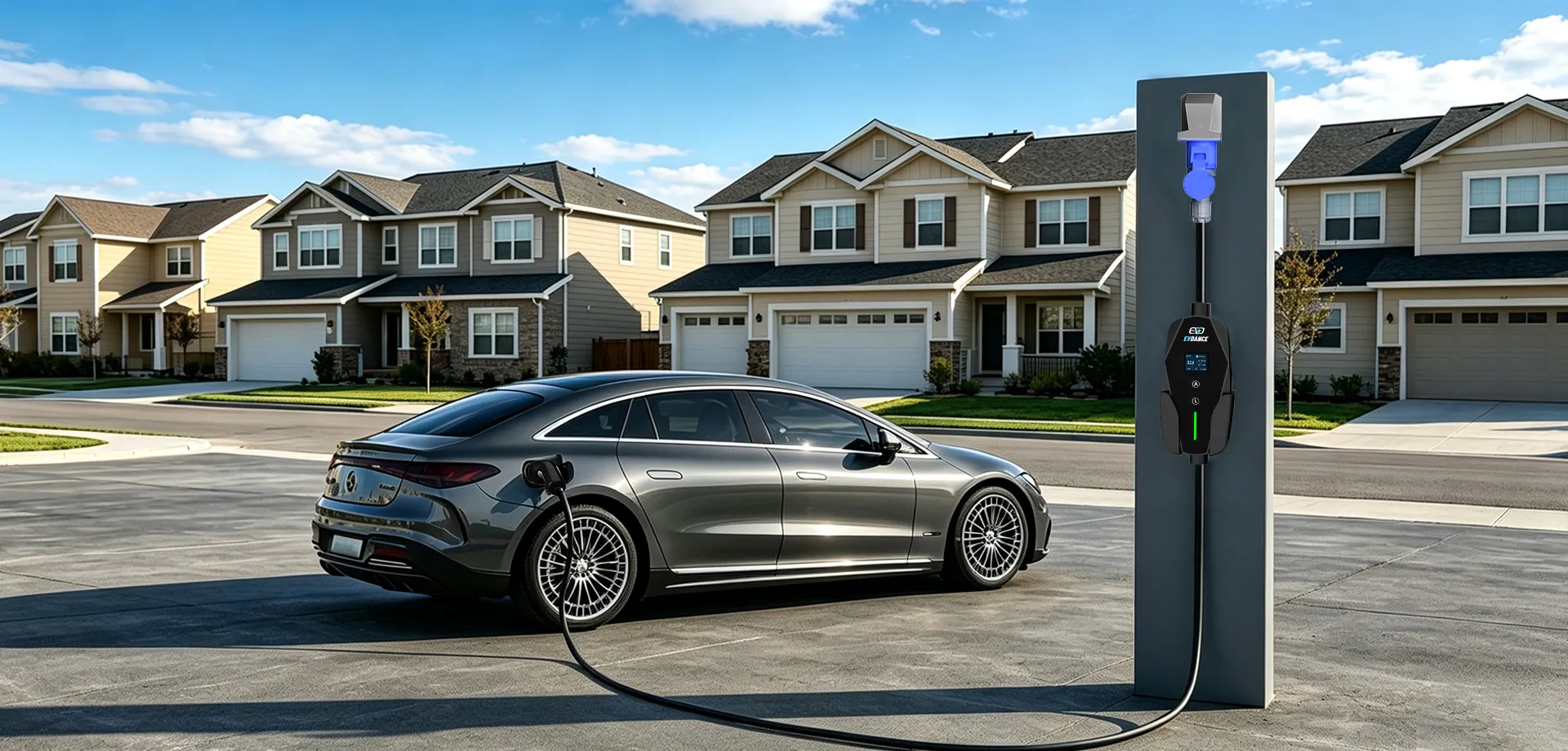
Most homes join through the flexing door, and the entry equipment is an ordinary smart wall charger with scheduling — one-way, like every charger in the current EVDANCE range. The EVDANCE EV-ACT5006T 48A Level 2 wall charger (up to 48 A, NACS, 25 ft cable) covers the daily charge a programme would shift; see the residential charging solutions page for the range. The boundary is clear: a one-way charger can move charging in time, but it cannot export — that half needs a bidirectional car and charger.
Frequently Asked Questions
Is a virtual power plant the same as V2G?
No. V2G is one car’s technology for exporting power through a bidirectional charger. A virtual power plant is the coordination layer above many devices: it can include V2G cars, but also home batteries and ordinary EVs that charge at better times.
Do I need a bidirectional car to join a virtual power plant?
Not for flexible-charging programmes, which accept ordinary EVs on enrolled smart chargers and move sessions out of peak events. Export programmes need a bidirectional car, its matched charger and utility approval.
Does joining mean the utility controls my car?
Within the limits you agree to. Programmes operate inside owner-set floors — the charge the car must keep, the finish time for charging — and events are time-limited. Read how events are called, how often, and how you can opt out before enrolling.
Related Reading
- Bidirectional Charging Explained: V2L, V2H and V2G
- Which EVs Can Do Bidirectional Charging?
- Is Bidirectional Charging Available in Australia?
- Is Bidirectional Charging Worth It?

