
A charging gully is a narrow channel set flush into the pavement outside a home with no driveway, with a cover that closes over your charging cable. You lay the cable in the channel while the car charges at the kerb, then take it out again, and the footway stays flat and trip-free in between. It is one of the cross-pavement solutions in UK government guidance for drivers who park on the street.
Key Takeaways
- A charging gully is a covered channel set flush into the pavement; your removable cable sits in it while you charge.
- It is permanent street furniture, installed by an approved contractor with the highway authority’s permission.
- It pairs with a socketed charge point or portable charger, so the cable comes in after each session.
- It is not a cable ramp: nothing sits on top of the pavement, and the footway stays flat for everyone.

What a Gully Is Made Of
| Part | What it is |
|---|---|
| The channel | A shallow trough set into the pavement, running from your property edge to the kerb |
| The cover | A hinged or lift-out lid that closes level with the pavement, so feet and wheels pass over it |
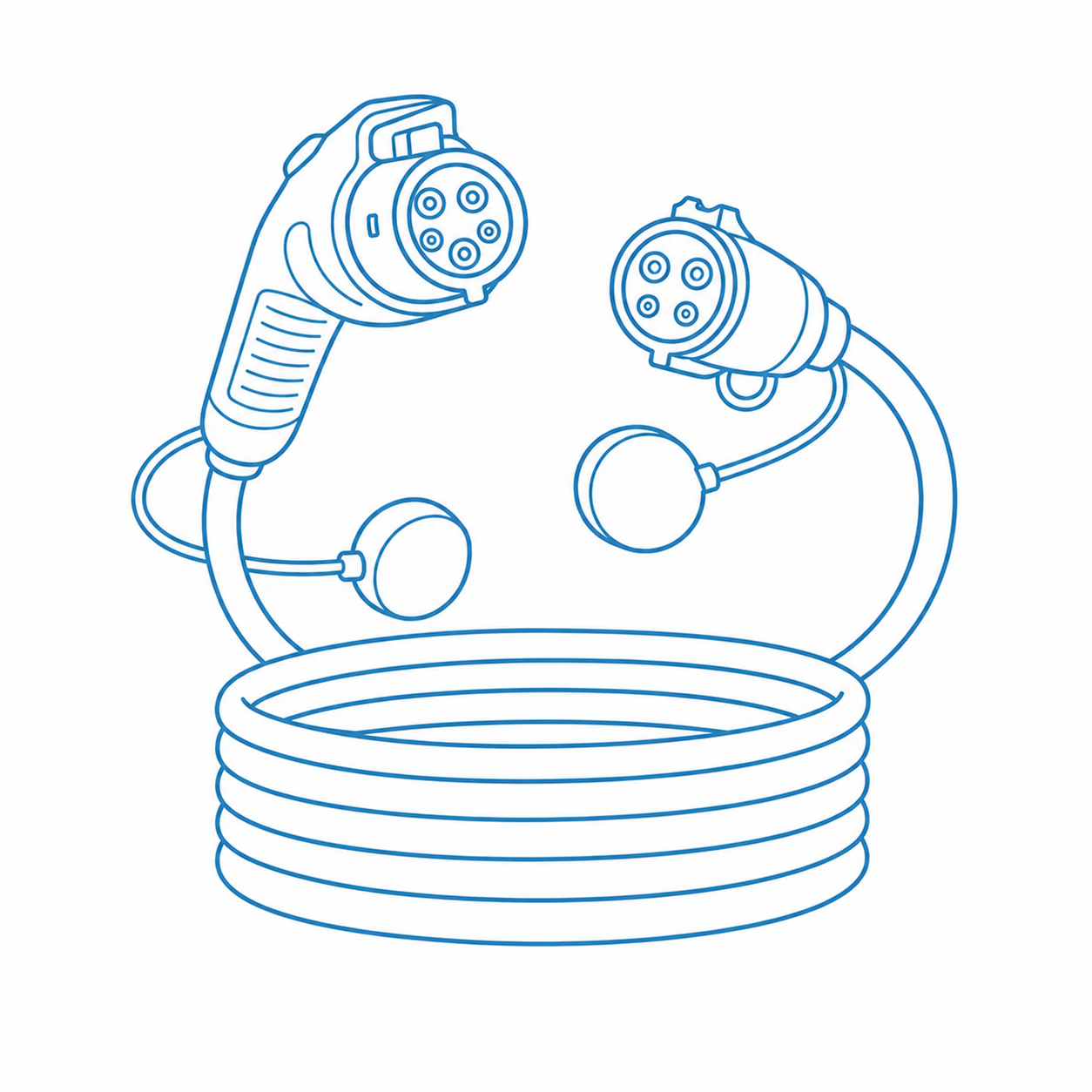
| Your cable | Your ordinary removable charge-point cable; it sits in the channel only while you charge |
| The charge point | Stays on your house wall or an outdoor socket; the gully only carries the cable across |
Because the channel sits in the public footway, it is installed once, as permanent street furniture, by a contractor approved by the highway authority. It is not a rubber ramp, and it is not something you cut into the pavement yourself.
Using One, Day to Day
- Park at the kerb outside your home, lift the cover, lay the cable in the channel and close the lid over it.
- Plug in at the car and the charge point, and charge as normal — most kerbside sessions run overnight.
- Afterwards, unplug, take the cable out and store it at the house; the empty channel stays closed and flush.
- Brush out grit and leaves now and then; debris can stop the cover sitting level.
The setup pairs best with a removable cable: a socketed charge point leaves no fixed cable to store. Home charge points sold in Great Britain must also meet the Electric Vehicles (Smart Charge Points) Regulations 2021, so the unit on your wall is a smart charger with scheduling — well suited to a car at the kerb all night.
Gully, Buried Cable or Kerbside Post?
| Solution | How it works | Best for |
|---|---|---|
| Charging gully | Your own cable rests in a flush, covered channel | Homes where the car parks directly outside |
| Under-pavement cable | A permanent cable buried under the footway to a kerbside socket or post | Homes wanting a fixed point at the kerb with nothing to carry out |
| Kerbside charge point | A public or shared post at the kerb, run by a council or an operator | Streets where personal cross-pavement installations are not offered |
Our guide to running a charging cable across the pavement sets these routes against the rules, including why a loose trailing cable is not a fourth option.
Permission, in Brief
The decision rests with your local highway authority. Expect an application, a licence for works on the footway, an approved product and installer, and a bill that normally falls to the resident, sometimes with council funding support. The full process — and the highways law behind it — is in the pavement guide linked above. Check your council’s position before choosing a charger: a growing number of authorities offer gullies, but not all do yet.
The Charger End of a Gully Setup
The EVDANCE EV-ACT3204PE wallbox can be fitted with a Type 2 socket, making the cable fully removable — what a gully needs — and adds RFID and app control on a 22 kW three-phase unit. A portable alternative is the EVDANCE EV-ACS3210E: 32A, Type 2, about 7 kW single-phase, IP66, plugged into a suitable outdoor outlet. A licensed electrician should fit the house end; the pavement end belongs to the approved installer.
Frequently Asked Questions
Is a charging gully the same as a cable protector ramp?
No. A ramp sits on top of the pavement, leaves a bump, and is often not accepted by councils. A gully is set into the surface, closes flush, and is installed with the highway authority’s permission.
Can I install a gully myself?
No. The footway is public highway; cutting into it needs the highway authority’s licence and an approved installer.
What happens to the cable when I am not charging?
It comes out and is stored at home, like any removable charging cable. Nothing of yours stays in the street; the closed channel is simply part of the pavement.
Related Reading
- Can You Run an EV Charging Cable Across the Pavement? (UK)
- Tethered vs Socketed Wallbox Chargers: Which Should You Install?
- How to Hide and Manage an EV Charger Cable
- How to Charge an EV When You Live in an Apartment

