
There is no single charging time for an electric truck, because “truck” covers everything from a pickup to a long-haul semi. The pattern is consistent, though: trucks that return to a base charge overnight like cars, only with more energy to replace, while heavy trucks charging mid-route need far more power than a car charger offers, or the stop stretches into hours. Time is set by the battery’s size, the charger’s power, and how long the truck is parked anyway.
Key Takeaways
- “Electric truck” spans pickups to long-haul semis, so charging time spans an overnight trickle to a megawatt stop.
- Trucks that return to base charge like cars, only more: size the charger to the overnight dwell, using energy divided by power.
- At car-scale DC power a heavy truck battery takes hours — megawatt charging exists to fit charging inside rest breaks.
- The grid connection and dwell time, not the post’s headline power, decide most real truck charging plans.
Start With the Class of Truck
| Truck class | Where it usually charges | What the time looks like |
|---|---|---|
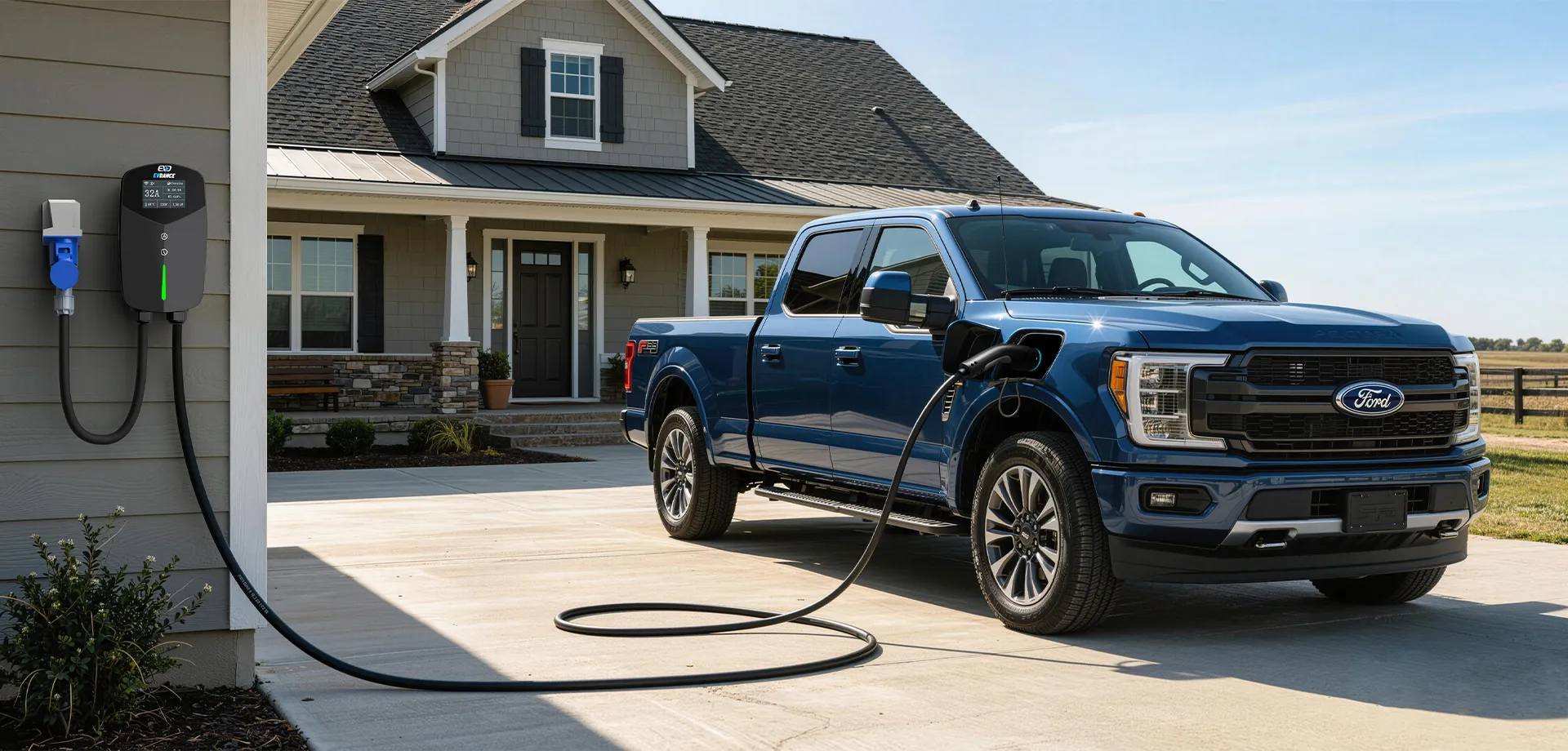
| Electric pickup | At home or at base, on Level 2 AC | Overnight — daily miles take a few hours; deep refills most of the night |
| Delivery vans and light trucks | At the depot, on AC or modest DC | Fits the overnight dwell or the gap between shifts |
| Heavy long-haul trucks | Mid-route, at high-power DC or megawatt charging sites | Hours at car-scale power; megawatt charging fits a driver’s rest break |
The bands behind the first two rows are the U.S. DOT’s: Level 2 delivers 7–19 kW and DC fast charging 50–350 kW, figures set for the car network (DOT, Charger Types and Speeds). A truck battery is several times a car’s, so the same charger needs proportionally longer — why the third row exists at all.
Trucks That Come Home: The Overnight Pattern
Most working trucks are parked far longer than they are driven. A van returning to base each evening sits for ten hours or more, and even a modest charger works that whole window. Our guide to sizing fleet depot chargers for vans and light commercial vehicles matches dwell time to charger size. The estimate for any one vehicle is simple division:
- Energy needed: read it from the truck’s own display or trip record — the kilowatt-hours the day’s work used.
- Divide by charger power: as a labelled example only, a van that used 60 kWh, on a charger delivering about 10 kW, needs roughly six hours — comfortably inside one night.
- Compare with the dwell: if the answer beats the parked window with hours to spare, the setup works; if it is close, add power or a second point before the fleet grows.
Heavy Trucks on the Road
A long-haul truck cannot wait overnight mid-route, and its battery is the largest of all. At the 50–350 kW of the car fast-charging network — the band behind how fast a DC fast charger is — a full heavy-truck battery would take hours a freight schedule does not have. That is why a separate megawatt charging standard exists: power an order of magnitude higher, with its own heavy-duty connector, sized so a meaningful share of a truck battery arrives inside the rest breaks drivers already take. Those sites are still at an early, corridor-by-corridor stage, so most electric freight today is planned around routes ending at a depot.

Depot Hardware That Exists Today
For trucks that dwell, the practical choices are already on the market. The EVDANCE EV-RHDC30K-L compact DC fast charger delivers 22 kW DC with OCPP 1.6J, turning a van around inside a shift break rather than a full night. The EV-AC03201T dual-connector AC station shares up to 43 kW between two vehicles (22 kW per connector) for fleets parking pairs of vans overnight. The full range is on the commercial EV charging page.
Frequently Asked Questions
Can an electric pickup use car fast chargers?
Yes. Pickups use the same connectors and public network as electric cars and charge at car speeds — their larger batteries simply take longer to fill. Heavy trucks need their own megawatt-class sites.
Why not fit the most powerful charger at every depot?
Because the limit is usually the site’s grid connection, not the post — and cost climbs steeply with power. The DOE cites roughly $38,000–$90,000 of equipment plus $20,000–$60,000 of installation for a single car-scale DC fast charger. A vehicle parked ten hours rarely needs that speed, so depots size power to dwell time.
Does a truck have to charge to full every night?
No. Like a car, it needs tomorrow’s work plus a margin. Topping up the day’s use nightly is the normal pattern; the deep refill is the rare exception.
Related Reading
- Fleet Depot Charging: How to Size AC Chargers for Vans and Light Commercial Vehicles
- How Do Commercial EV Charging Stations Work?
- How Fast Is a DC Fast Charger?
- How Do DC Fast Chargers Work?

