
On AC, yes — with an adapter. On DC, no. Almost every plug-in hybrid sold in North America has a J1772 port and an AC-only onboard charger, so it can use a NACS station only where that station delivers AC power, through a NACS-to-J1772 adapter. A NACS DC fast charger stays off-limits, because most plug-in hybrids have no DC charging hardware at all.
Key Takeaways
- A plug-in hybrid charges on AC only, so a NACS site works for it only where the post delivers AC.
- A NACS-to-J1772 adapter bridges AC posts and destination chargers; nothing bridges DC for a PHEV.
- The car’s onboard charger, not the adapter or the post, sets the speed.
- Your J1772 home equipment is unaffected by the spread of NACS.
One Connector Carries Two Kinds of Charging
The confusion starts with the plug itself. As our explainer on whether the Tesla charger is NACS sets out, NACS (standardised as SAE J3400) carries both AC and DC charging through the same compact connector. Your plug-in hybrid splits the two apart: its J1772 port accepts AC only, and the car’s onboard charger converts that AC to DC for the battery. The car never takes DC directly. So at any NACS site, the only question that matters is which kind of power that particular post delivers.
Where a Plug-In Hybrid Can and Cannot Plug In
| Post you find | Can a PHEV use it? | What you need |
|---|---|---|
| J1772 Level 2 post | Yes | Nothing — it plugs straight in |
| NACS AC post or destination charger | Yes | A NACS-to-J1772 adapter |
| NACS DC fast charger (Supercharger-type) | No | No adapter fixes this — the car has no DC inlet hardware |
| CCS1 DC fast charger | No, for almost all models | Only the rare PHEV built with a DC port can use DC at all |
The AC rows are the useful ones. A plug-in hybrid battery is small, so an AC post refills it fully during a workday, a shopping trip or a hotel night. Nothing is lost by skipping the DC row: the car could not take that power even with the right plug shape.
The Adapter That Bridges AC
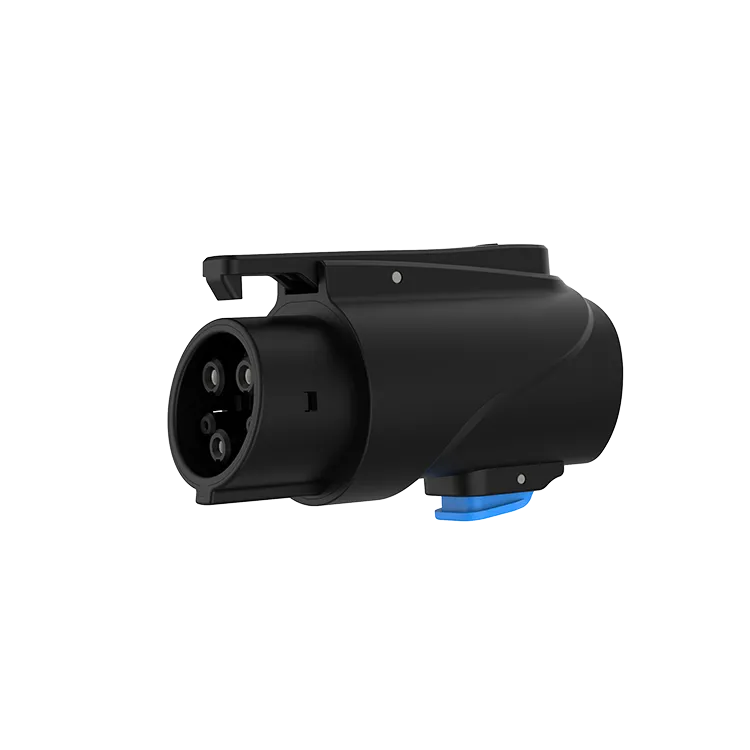
The bridge is a passive adapter with a NACS face on one side and a J1772 face on the other. The EVDANCE JT02 NACS-to-J1772 adapter is rated for AC charging at up to 80 A and sealed to IP65 — far above the 3.3 to 7.4 kW ceiling most PHEV onboard chargers accept, so the adapter is never the bottleneck. Two rules keep it safe: use an adapter listed by a recognised testing laboratory, and never stack adapters or use one to attempt a DC session. Our guide to whether EV charging adapters are safe covers what to check before you buy.

At Home, Nothing Changes
The spread of NACS posts does not strand your home setup. Your J1772 wallbox or portable charger keeps working exactly as before, and the car’s charging routine is untouched. If you are adding home equipment, the EV-AC04001U 40A J1772 portable charger (9.6 kW, NEMA 14-50P, IP66, 25 ft cable) plugs into a 240 V outlet and speaks the J1772 language your hybrid already uses; the car simply takes what its onboard charger allows. Whether a plug-in hybrid needs dedicated home equipment at all is covered in our guide to EV chargers for plug-in hybrids.
Frequently Asked Questions
Can I use a Tesla home charger for my plug-in hybrid?
If it is an AC unit (a Wall Connector or destination charger), yes, with a NACS-to-J1772 adapter such as the JT02. The car draws AC at its own onboard limit, exactly as it does from any other AC post.
Is there an adapter that lets my PHEV use a Supercharger?
No. Adapters for J1772 cars are AC-only. DC fast charging needs DC pins and hardware inside the car that almost no plug-in hybrid has, so no adapter can add it.
Will the adapter slow my PHEV down?
No. The limit is the car’s onboard charger, typically a few kilowatts. A correctly rated AC adapter passes that power without reducing it.
Related Reading
- Is the Tesla Charger NACS? NACS, J3400 and Adapters Explained
- Do I Need an EV Charger for a Plug-In Hybrid?
- Are EV Charging Adapters Safe?
- Level 1 vs Level 2 vs DC Fast Charging: A Practical Comparison

