
Barely. An electric motor draws no power when the car is standing still — there is no idling engine burning fuel at a standstill. What does use energy in a jam is everything else in the car: heating or air conditioning is the big one, while lights, screens and the 12-volt system sip by comparison. A long queue costs you cabin comfort energy, not driving energy, and it is the opposite problem to a petrol car, which burns fuel the whole time it sits there.
Key Takeaways
- An EV motor draws nothing at a standstill — there is no idling loss.
- In a jam you pay for cabin heating or cooling, not for sitting still.
- Lights, screens and creeping forward cost very little by comparison.
- Replacing what a jam uses costs cents at home electricity prices.

Where the Energy Actually Goes at a Standstill
| Load | Running while you wait? | How much it matters |
|---|---|---|
| Drive motor | No — it only draws power when moving the car | This is the saving versus an idling petrol engine |
| Cabin heating | Yes, if you keep it on | The main cost of a long jam, especially in cold weather |
| Air conditioning | Yes, if you keep it on | Significant on a hot day, still smaller than driving |
| Lights, screens, wipers, radio | Yes | Small — notice them over hours, not minutes |
| Creeping forward in the queue | In short bursts | Very little; gentle acceleration at walking pace is cheap, and slowing down recovers some energy |
The pattern is simple: in a jam, your consumption follows the weather, not the traffic. A mild day with the windows down can pass almost free. A freezing evening with the heater, heated seats, lights and wipers all running is the expensive version — and even then, the comparison that matters is with driving the same distance, which uses far more. The U.S. Department of Energy notes the same relationship in its overview of how electric vehicles use energy: cabin loads are the accessory draw, while the motor only works when the wheels turn.
Different From “Parked”, Different From City Driving
Two neighbouring questions are worth separating. Charge lost while the car is parked for days is a slow background drain, covered in does an EV battery drain when parked — a jam is far shorter and dominated by the heater, not standby systems. And stop-start city driving, where the car keeps moving between lights, plays to an EV’s strengths: no idling losses and energy recovered at every stop. A stationary queue keeps the no-idling benefit and drops the driving almost to zero.
What a Jam Costs You at Home Afterwards
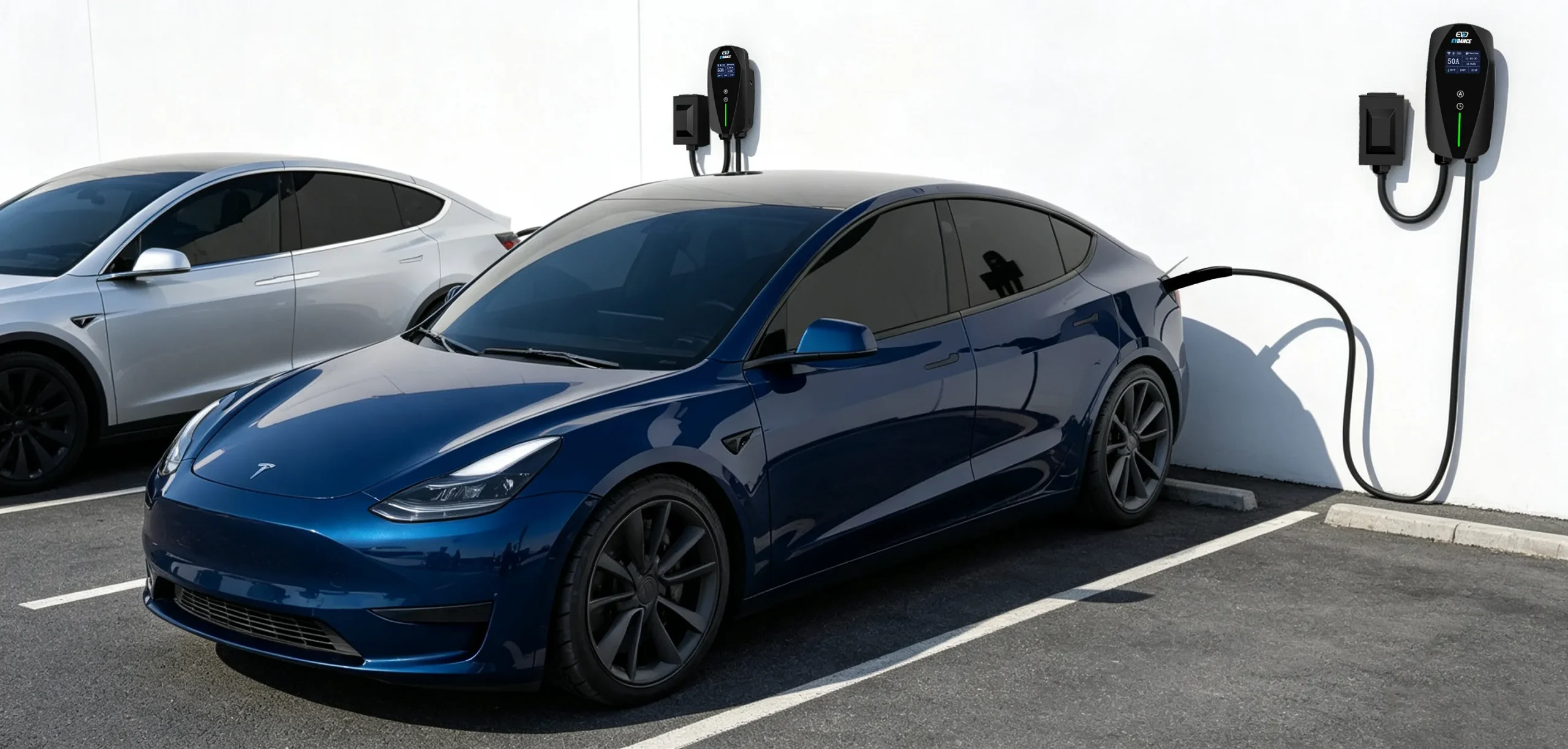
Because the amounts are small, topping up is uneventful. A labelled example: if a bad commute’s worth of queuing and cabin heating used 2 kWh, replacing it at the U.S. average residential electricity price of 18.31 cents per kWh (EIA) costs about 37 cents. Whether that energy arrives slowly overnight or in a short session makes no difference to the energy total — and how you replace it is a home-charging question, where Level 1 and Level 2 use roughly the same electricity overall.
A home charger sized for overnight recovery, such as the EV-ACS3210T 32A NACS portable charger (about 7.7 kW, NEMA 14-50P, adjustable from 10 to 32 A), restores far more than a traffic jam can take. See EVDANCE residential charging for the home setup options.
Frequently Asked Questions
Will sitting in traffic damage my battery?
No. Low-power cabin loads and gentle creeping are gentle use. Nothing about a queue stresses the battery the way sustained fast charging or extreme temperatures can.
Should I turn the car off in a long jam?
If you are stopped for a long stretch and do not need heating or cooling, switching off removes the cabin loads too. If you need the heater or air conditioning, staying on is exactly what the car is designed to do — just watch the charge gauge on a very low battery.
How long could an EV sit in a jam before it matters?
Far longer than jams last, in most conditions. The exception is a very cold day, a low starting charge and the heater running hard for many hours — the same combination that would make you plan carefully in any car.
Related Reading
- Does an EV Battery Drain When Parked?
- Does Level 1 Charging Use More Electricity Than Level 2?
- What Is a 7kW Portable EV Charger? Speed, Range, and Compatibility Explained

